Studiofoam
☆ Top Pick
Auralex Studiofoam Wedgies (24-pack)
Price history
We have been recording this product's price at its dealers since July. Player members see the 90-day trend, what it has been at its highest and lowest, and whether today is actually a good day to buy it.
Auralex Studiofoam Wedgies are the industry-standard acoustic foam for home studios. They are 1 ft squares of 2 in foam, so a 24-pack covers 24 square feet, which is enough for the critical reflection points in most bedrooms and spare rooms. Place them at the mirror points (where you can see your monitors from your mix position) and the wall behind your monitors. That alone eliminates most flutter echo and harsh early reflections.
Why it made the list
Auralex has been the go-to acoustic foam for home studios since the 1990s. The Studiofoam Wedgies are the most proven starting point because they work, they're affordable, and Auralex provides placement guides that help first-timers get it right on the first try. A 24-pack covers the three most important surfaces: the side wall reflection points, the back wall behind your monitors, and the ceiling above your mix position.
Deep Dive: Who It's Really For
The ideal buyer: Anyone setting up their first treated room. The Studiofoam Wedges are the most approachable starting point because they're effective, affordable, and come with clear placement guidance.
Where to start: Use the mirror trick: sit at your mix position, have a friend slide a mirror along the side wall. Wherever you can see your monitor speaker in the mirror, that's where a panel goes. Then add behind monitors, then ceiling. That order gives you the biggest improvement per panel.
The limitation: Foam absorbs mid and high frequencies effectively but does almost nothing for bass. If your room has boomy low-end problems, you'll need bass traps in addition to foam panels. Foam plus bass traps is the classic full-spectrum treatment combination.
▶ Featured Review

Video Reviews & Tutorials

Auralex Studiofoam Wedgies - Tested and Reviewed
Full Review

Auralex Sonolite Panels Studio Acoustic Foam Review
Review
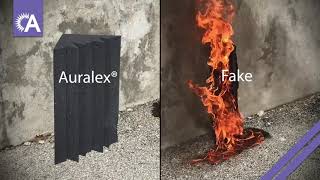
Authentic Auralex® Acoustics Studiofoam vs. Knockoff foam
Comparison
Pros
Industry standard acoustic foam with 40+ year track record Effective at mid/high frequency absorption Easy to install with adhesive or command strips 2 in thickness on 1 ft squares, so you can place them preciselyCons
Foam doesn't absorb low frequencies Adhesive can damage walls on removal Quality varies with third-party alternatives244 Panel
Best Broadband Absorption
GIK Acoustics FlexRange Bass Trap Panel (pair)
Price history
We have been recording this product's price at its dealers since July. Player members see the 90-day trend, what it has been at its highest and lowest, and whether today is actually a good day to buy it.
GIK's FlexRange panel, which replaced the 244 and Monster lines, uses rigid fiberglass insulation wrapped in acoustically transparent fabric. Unlike foam, which only absorbs above ~500Hz, the 244 absorbs down to 125Hz and below, the frequency range where most room problems actually live. GIK also provides free acoustic consultation: send them your room dimensions and photos, and their engineers tell you exactly where to place panels.
Why it made the list
If you're serious about treating your room, skip foam and go straight to GIK. Their 244 panels address the low-mid frequencies (200-500Hz) that foam leaves untouched: the muddiness in vocals, the boxy sound in small rooms, the room resonances that make mixing decisions impossible. GIK's free acoustic consultation eliminates the guesswork that leads to wasted money on the wrong treatment placement.
Deep Dive: Who It's Really For
The ideal buyer: Anyone who has tried foam and still has room problems: boomy bass, uneven frequency response, or mixes that don't translate. The 244s absorb the frequencies foam misses.
Fiberglass vs. foam: Foam absorbs frequencies above ~500Hz effectively but does little below that. Rigid fiberglass panels absorb down to 125Hz and below, addressing the low-mid mud and room resonances that foam leaves. The difference is immediately audible.
Free consultation: GIK's engineers will analyze your room photos and dimensions and provide a placement plan at no charge. This eliminates the guesswork and ensures you buy exactly what you need, not more, not less.
▶ Featured Review

Video Reviews & Tutorials
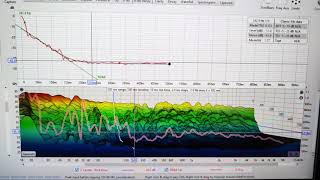
GIK Acoustics FlexRange 244 Base Trap Panel Performance Review - RT-60 Decay Time
Full Review
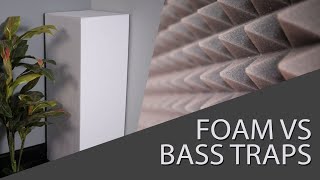
GIK 244 Bass Traps vs Foam bass traps with REW measurements!
Comparison

GIK Acoustics: Mounting 242 Acoustic Panels or 244 Bass Traps in Corners
Review
Pros
Broadband absorption (works on lows AND highs) Professional-grade rigid fiberglass construction Free acoustic consultation from GIK engineers Multiple fabric color options availableCons
$249/pair is a serious investment Larger panels need proper wall mounting hardwareLondon Bass Trap
Best Bass Control
Primacoustic London Bass Trap (pair)
Price history
We have been recording this product's price at its dealers since July. Player members see the 90-day trend, what it has been at its highest and lowest, and whether today is actually a good day to buy it.
Low frequencies build up in corners; it's physics. Two traps in the front corners (behind or beside your monitors) make an immediately audible difference in bass clarity. The Primacoustic London Bass Traps are two flat panels that mount diagonally across a corner and absorb low frequencies from about 75 Hz up, solving the boomy, muddy bass that makes mixing impossible in small rooms.
Why it made the list
Bass buildup in corners is the hardest room problem to solve without treatment. Low frequencies have long wavelengths that bounce off walls and pile up in tri-corners (where two walls meet the ceiling or floor). The London Bass Traps intercept that energy before it can reflect back into the room and cause destructive interference with your direct monitor sound. Two traps in the front corners: that's the first step in any serious bass treatment plan.
Deep Dive: Who It's Really For
The ideal buyer: Anyone whose room sounds boomy or whose bass decisions don't translate to other systems. If you're fighting with low-end that seems to change character depending on where you sit, your room is lying to you, and bass traps are the fix.
Placement priority: Install in front corners first (the corners behind or beside your monitors), then rear corners if budget allows. Front corners have the biggest impact on what you hear at the mixing position because bass buildup is strongest in the corners nearest the sound source.
Why corners: Sound waves reflect off walls and accumulate in corners. Low frequencies, because of their long wavelengths, pile up dramatically in tri-corners. Placing absorption there intercepts the bass energy before it can cause destructive interference with the direct sound from your monitors.
▶ Featured Review

Video Reviews & Tutorials
Home Studio : Hanging Primacoustic London Bass Traps 3M Command Strips
Full Review

Studio Build 2021 | Installing Acoustic Treatment | Primacoustic London 16 Part 2
Review

Installing Affordable Studio Sound Panels - Primacoustic London 8 Kit
Review

Primacoustic London 12 - What's The Difference?
Review
Pros
Effective bass absorption from about 75 Hz up Two flat panels mount diagonally across a corner on the included impalers Beveled edges look professional in any studio Acoustic fiberglass constructionCons
$485/pair is a serious investment Two traps only covers two corners, full treatment needs fourAcoustic Panels
Budget Pick
ATS Acoustic Panels (24 x 48 x 2 in)
Price history
We have been recording this product's price at its dealers since July. Player members see the 90-day trend, what it has been at its highest and lowest, and whether today is actually a good day to buy it.
The step up from foam, at about $80 a panel. ATS acoustic panels use compressed fiberglass board with fabric covering, similar to what professional studios use at a fraction of the price. Two panels handle the first reflection points in a small room, and four to six treat it properly. They're also light enough to hang with adhesive strips, making them ideal for renters who can't drill into walls.
Why it made the list
The budget foam panels you find on Amazon for $20 are often glorified packaging foam: thin, inconsistent density, and ineffective below 1kHz. ATS panels use actual compressed fiberglass board with proper acoustic density. The difference in build quality is immediately apparent, and the absorption performance is noticeably better. At about $80 a panel you are getting real acoustic treatment, not decorative panels.
Deep Dive: Who It's Really For
The ideal buyer: Renters who can't put holes in walls, beginners who want real acoustic treatment without spending $300+, and anyone building out a home studio on a tight budget.
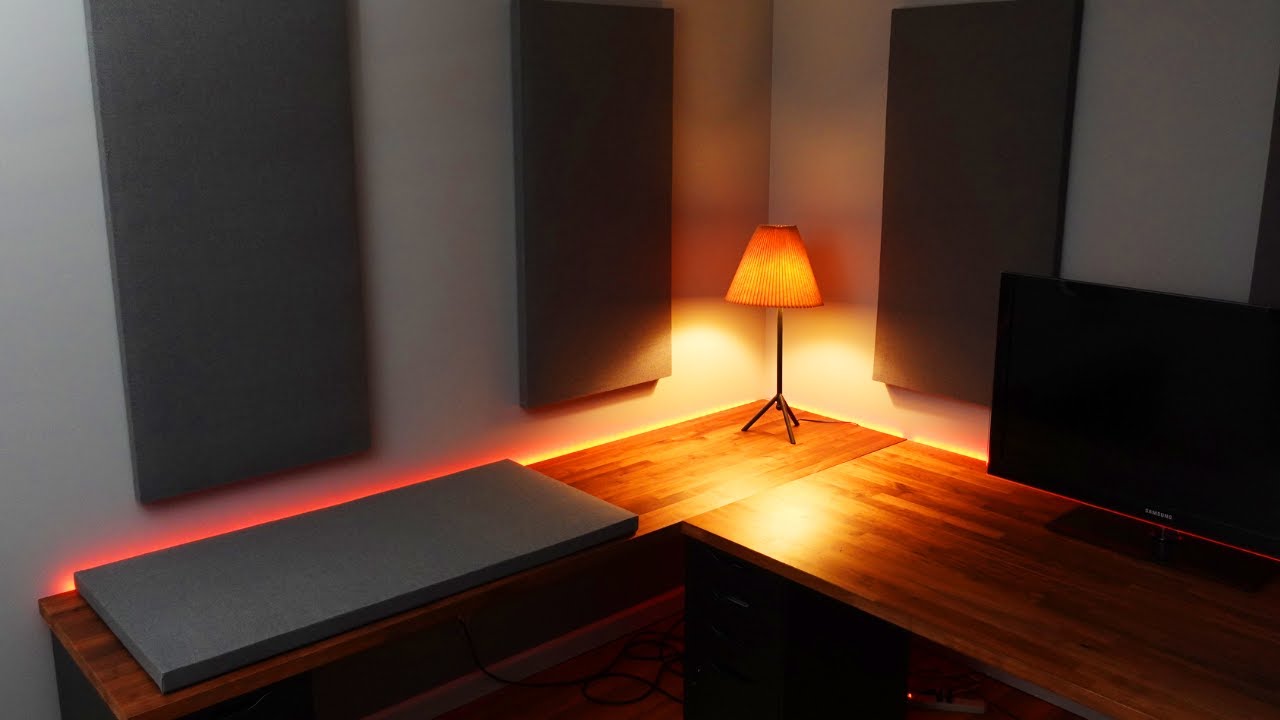
Where to place: Start with 2 panels on each side wall at ear height (sitting at your desk), positioned between you and your monitors. Put the remaining 2 on the wall directly behind your monitors. That covers the three most critical reflection points and will noticeably clean up your monitoring and recording quality.
Renter-friendly installation: The panels are light enough to hang with adhesive strips (like Command brand) without needing screws or wall anchors. This means no damage to walls when you move out, a critical consideration for anyone renting their studio space.
▶ Featured Review
Video Reviews & Tutorials
ATS Acoustic Panels, Installation & Review - IKEA Corner Desk (Part 2)
Full Review

Easy & Cheap DIY Acoustic Panels
Review

$30 vs $500 Sound Panels - Is There Any Difference?
Comparison

Cheapest, Easiest, & Best DIY Acoustic Panels
Review
Pros
Real compressed fiberglass, not decorative foam 24 x 48 in panels, so two of them cover a first reflection point Light enough for adhesive strip installation (renter-friendly) Multiple color options to match studio decorCons
Only absorbs high frequencies effectively (not bass) Thinner profile than GIK panels means less low-mid absorptionRadiator
Best Diffusion
Primacoustic Radiator Diffuser
Price history
We have been recording this product's price at its dealers since July. Player members see the 90-day trend, what it has been at its highest and lowest, and whether today is actually a good day to buy it.
A 24 x 24 inch Baltic birch grid of 64 cubicles that scatters reflections rather than absorbing them. It is the most expensive item on this list by a wide margin, and it is deliberately last: diffusion is the final step in treating a room, not the first.
Why it made the list
Read the price before the pitch: this is a $525 panel, and most home studios should not buy one. Real wood diffusion does not scale down in cost, because you are paying for machined hardwood rather than foam, and the cheap moulded alternatives do not scatter meaningfully. It is on the list because the problem it solves is real and the alternatives are not honest. If you have already trapped the corners and treated your first reflection points and the room now sounds lifeless, this is what fixes it. If you have not done those things yet, buy the panels above instead and come back to this page in a year.
Deep Dive: Who It's Really For
The ideal buyer: someone whose treated room has gone too far the other way. Foam on every surface produces a dead, flat space where reverb tails and spatial cues disappear, and mixes made there tend to lose dimension everywhere else. That is a genuine problem, but it is a late-stage one.
Absorption versus diffusion: absorption converts sound energy to heat and removes it. Diffusion scatters it in many directions without removing it. A good room needs both, but in that order: absorption and bass trapping first, diffusion once the room is otherwise controlled.
Where it works: the rear wall behind the mix position, or overhead as a cloud. Its published effective range is roughly 565 Hz to 2.2 kHz, so treat it as a mid-band tool. It does nothing for bass, and a small room may not have enough distance behind the listening position for diffusion to develop properly, which is worth measuring before you spend.
Specifications: 24 x 24 in and 3 in deep, Baltic birch plywood with a lacquered natural finish, 8.2 lbs. Wall and ceiling mounting hardware is included and it fits standard T-bar ceilings. Third-party tested at Riverbank Acoustical Laboratories.
▶ Featured Review
Video Reviews & Tutorials

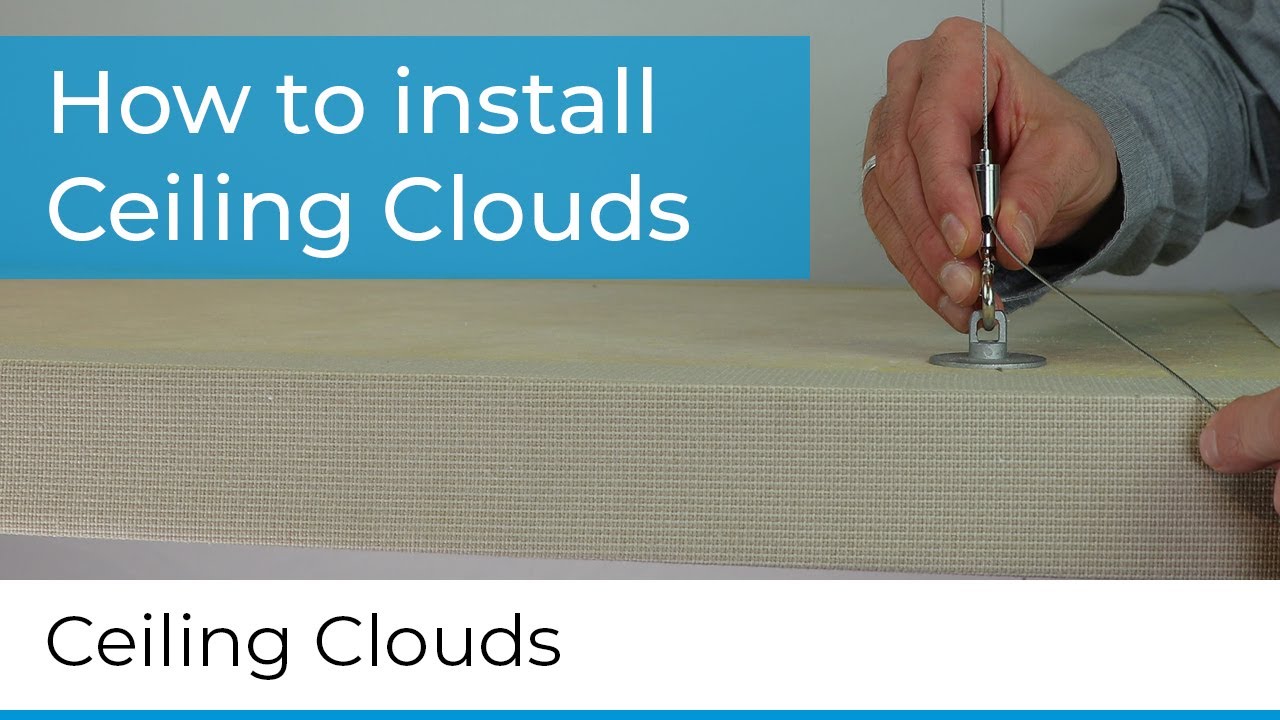
How to Install Primacoustic Ceiling Clouds
Tutorial
Primacoustic Panels, Diffusers, Bass Traps, Attenuators & Acoustic Solutions | Full Compass
Review
Phase Gradient Diffusers vs. Tube Radiators. Which gets better results. Church Acoustics
Comparison
Pros
Real machined wood diffusion, independently tested Restores life to an over-absorbed room Wall or ceiling mount, hardware included Looks like furniture rather than studio foamCons
Around $525, far more than anything else here Does nothing below roughly 565 Hz Wasted money until absorption and bass trapping are done Small rooms may lack the depth to use it properly