
FP-30X
☆ Top Pick
Roland FP-30X
Price history
We have been recording this product's price at its dealers since July. Player members see the 90-day trend, what it has been at its highest and lowest, and whether today is actually a good day to buy it.
The FP-30X is the piano this whole category gets measured against. Its PHA-4 Standard keyboard has escapement, the faint click an acoustic action makes as the hammer lets go, and an ivory-feel key top that stops your fingers sliding when you sweat. Under it sits Roland's SuperNATURAL engine with 256-note polyphony, 56 sounds, and a 22-watt stereo speaker pair that fills a bedroom without strain. Bluetooth carries both audio and MIDI, USB carries audio and MIDI to a DAW on one cable, and there are two headphone jacks on the front. At $649.99 it is not the cheapest piano here, but it is the one that makes the fewest compromises.
Why it made the list
Two things put it at the top. The action is the same PHA-4 Standard that Roland fits to the FP-60X at twice the price, so what you practice on here transfers straight to a better instrument later. And the USB audio interface built into it means the piano is a recording device as well as a controller: plug in one cable and the piano's own sound lands in your DAW at full quality, no interface required. For a producer who is going to spend most of their time triggering plugins from these keys, that is the difference between a piano and a piece of studio equipment.
Deep Dive: Who It's Really For
The ideal buyer: A producer or player who wants one weighted keyboard that handles practice, recording and MIDI duty without a second thought.
The honest caveat: The onboard sounds beyond the pianos are functional rather than inspiring, and the speakers, good as they are for the size, are not a substitute for monitors.
Worth knowing before you buy: Roland's KSC-70 stand and KPD-70 three-pedal unit turn it into an upright-style console, but both are extra. The box includes a single sustain pedal and a music rest.
▶ Featured Review
Video Reviews & Tutorials

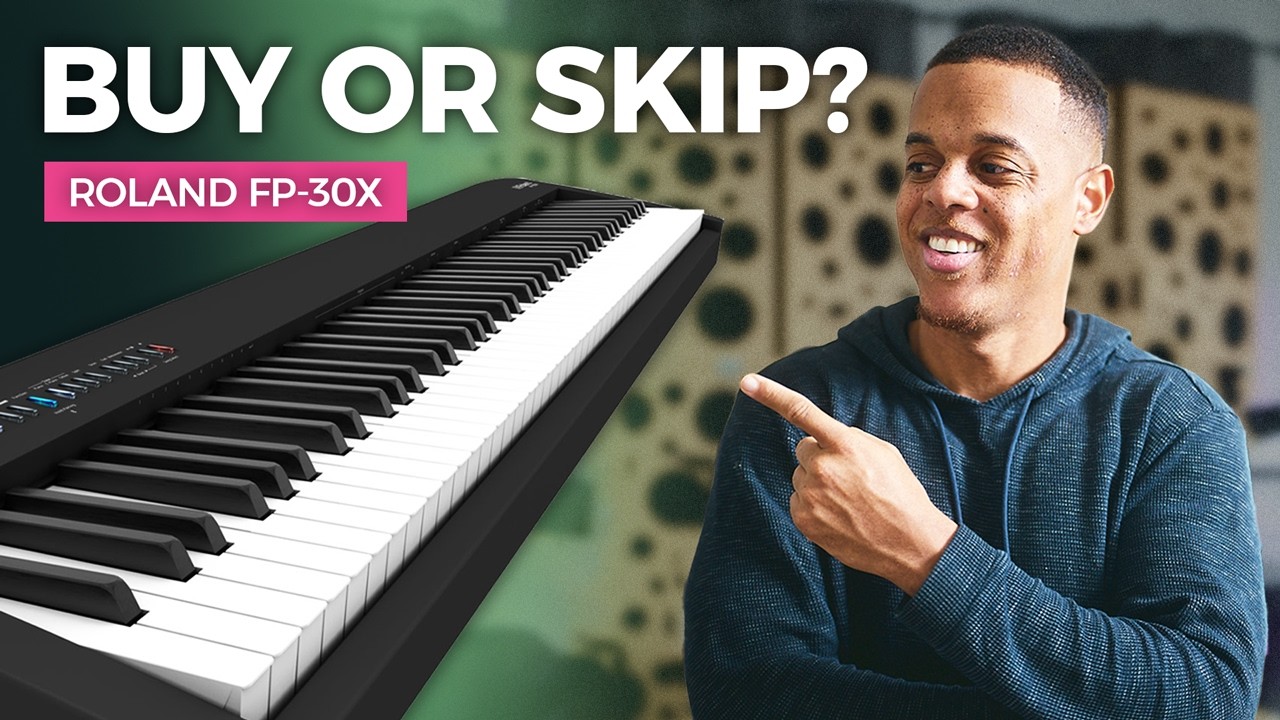
Roland FP-30X Review | Still the Mid-Tier King in 2025?
Full Review
Roland FP-30X ALL SOUNDS - Full Demo!
Sound Demo

Roland FP-30X | The SuperNATURAL Sound
Playing Demo
Pros
PHA-4 Standard action with escapement and ivory-feel keys USB audio and MIDI to a DAW on one cable Bluetooth audio and MIDI, plus two headphone jacks 256-note polyphony, so nothing drops out under a sustain pedalCons
Costs more than the entry-level boards without matching the Kawai action Non-piano sounds are ordinary Stand and three-pedal unit are extra
P-225
Best All-Rounder
Yamaha P-225
Price history
We have been recording this product's price at its dealers since July. Player members see the 90-day trend, what it has been at its highest and lowest, and whether today is actually a good day to buy it.
The P-225 replaced the P-125, which was the best-selling piano in this bracket for years, and it kept the recipe while shrinking the box. The Graded Hammer Compact action is Yamaha's shortest-key weighted mechanism, heavier in the bass and lighter in the treble like a real piano, in a body barely deeper than the keys themselves. The headline sound is the CFX, Yamaha's flagship concert grand, with VRM Lite modeling the string and damper resonance that makes a sampled piano feel alive under a sustain pedal. You get 24 voices, 192-note polyphony, twin 7-watt speakers, Bluetooth audio, USB audio to a computer, and the Smart Pianist app for settings you would otherwise be doing with button combinations. The dealer price is $769.99, and Amazon has been running it well under that.
Why it made the list
It is the piano that does everything competently and nothing badly. The CFX sample is the best-sounding acoustic piano at this price, the action is quick enough for real repertoire, and at around 25 pounds it is the one you will actually carry to a rehearsal. The GHC action is the compromise: it is a short-key mechanism, and pianists with an acoustic at home notice that the pivot point is closer to the front of the key than they are used to. For a producer it is a non-issue. For a classical student it is worth playing first.
Deep Dive: Who It's Really For
The ideal buyer: Someone who wants the best piano sound in the group, plays a lot of pop and singer-songwriter material, and moves the instrument around.
The honest caveat: The dealer price went up this year, and the gap between it and the Amazon price has been large enough that it is worth checking both before you buy.
Worth knowing before you buy: The optional L-200 stand and LP-1 three-pedal unit make it a tidy home piano. USB audio means the piano can also be your interface for a vocal-and-piano demo.
▶ Featured Review

Video Reviews & Tutorials

YAMAHA P-225 Piano Review | Better Music
Full Review
Yamaha P-225 vs. P-125: What's New?
Comparison
Yamaha P-225 vs. P-125 Voices: All Playing, No Talking
Sound Demo
Pros
CFX concert grand sample with VRM Lite resonance Lightest and most compact body in the group Bluetooth audio and USB audio recording Smart Pianist app takes the guesswork out of settingsCons
GHC action has a short pivot that some pianists feel Dealer price is the highest here after the Kawai Only 192-note polyphony, which is fine for playing and tight for layering
ES120
Best Action
Kawai ES120
Price history
We have been recording this product's price at its dealers since July. Player members see the 90-day trend, what it has been at its highest and lowest, and whether today is actually a good day to buy it.
Kawai builds acoustic pianos first and digital ones second, and it shows in the ES120's Responsive Hammer Compact action, which is the most convincing keyboard on this page. It has weight in the bass, speed in the treble, and a rebound that lets you play fast repeated notes without the keys fighting back. The sound comes from Kawai's Shigeru Kawai SK-EX and EX concert grands, sampled note by note with Harmonic Imaging, with 25 sounds in total and 100 drum rhythms to practice against. There are 20 watts of speakers, Bluetooth MIDI and audio, and a pair of proper quarter-inch line outs, which matters if you plan to run it into an interface or a mixer. It costs $899, which is the top of this guide, and the three-year warranty is the longest here.
Why it made the list
If you play piano seriously and you are buying a digital because you cannot fit or afford an acoustic, this is the one. The action is the reason. Everything else in the bracket is good; the ES120 is the only one that pianists routinely describe as forgetting they are on a digital. The line outs are the studio bonus: most portable pianos make you take a recording signal out of a headphone jack, and this one does not.
Deep Dive: Who It's Really For
The ideal buyer: A trained pianist, or a producer who plays a lot of real piano parts and wants them to feel right going in.
The honest caveat: It is the most expensive piano here, the Amazon rating is the lowest in the group on a small sample, and there is no USB audio, so recording it means the line outs and an interface.
Worth knowing before you buy: Neither zZounds nor most big-box stores stock it, so the button below goes to Amazon. Kawai's dealer network (Kraft Music has it in stock) is the other route, and the price is the same.
▶ Featured Review
Video Reviews & Tutorials
🎹 Kawai ES120 | Digital Piano Review & Demo | ES110 Update 🎹
Full Review

Kawai ES120 Piano Sound Demo (No Talking) | Digital Piano Demo
Sound Demo
Piano PRO Reviews STUNNING Kawai ES120 Digital Piano - Best In Class?
Review
Pros
Responsive Hammer Compact action, the best feel in the group Shigeru Kawai SK-EX and EX concert grand samples Dedicated quarter-inch line outs, not just a headphone jack Three-year warrantyCons
The most expensive piano on this page No USB audio, so recording it needs an interface Fewer retailers carry it than the Roland or Yamaha
Privia PX-S1100
Slimmest
Casio Privia PX-S1100
Price history
We have been recording this product's price at its dealers since July. Player members see the 90-day trend, what it has been at its highest and lowest, and whether today is actually a good day to buy it.
The PX-S1100 is 232 mm deep, which makes it one of the slimmest 88-key weighted pianos you can buy and the only one here that sits comfortably on an ordinary desk in front of a monitor. Casio's Smart Scaled Hammer Action fits a full weighted mechanism into that depth by scaling the feel of every key individually, and the touch is lighter and quicker than the Roland or Kawai without feeling like a synth. There are 18 tones led by a German concert grand with damper and string resonance, a redesigned speaker system that fires towards both player and audience, an included WU-BT10 Bluetooth adapter for audio and MIDI, a class-compliant USB port, and the option of running on six AA batteries. The dealer price is $729.99; Amazon has been selling it for considerably less.
Why it made the list
Every other piano here needs a stand or a table of its own. This one shares your desk. That, plus battery power, makes it the natural pick for a bedroom producer who wants weighted keys but not a second piece of furniture. The glossy touch-sensor top panel is the trade: it looks fantastic and it is fingerprint-prone and harder to operate by feel than physical buttons.
Deep Dive: Who It's Really For
The ideal buyer: A producer with a small room who wants weighted keys under the monitor rather than a piano that owns a wall.
The honest caveat: The action is lighter than the Roland or Kawai, and pianists moving from an acoustic tend to prefer those. For a producer it is arguably a plus.
Worth knowing before you buy: The Bluetooth adapter is a small dongle that lives in a rear port; keep hold of it. The CS-68 stand and SP-34 three-pedal unit are extra.
▶ Featured Review

Video Reviews & Tutorials
Casio PX-S1100 Review
Full Review

Casio PX-S1100 SOUNDS
Sound Demo

Casio PX-S1100 Review After 4 Months
Long-term Review
Pros
Slimmest weighted 88 here, fits on a normal desk Runs on six AA batteries as well as mains Bluetooth audio and MIDI adapter included Speakers voiced towards both player and audienceCons
Touch-sensor panel is hard to use by feel Lighter action than the Roland or Kawai Dealer price is high for what is, on paper, the same class of instrument
FP-10
Best Budget
Roland FP-10
Price history
We have been recording this product's price at its dealers since July. Player members see the 90-day trend, what it has been at its highest and lowest, and whether today is actually a good day to buy it.
The FP-10 is the FP-30X's little sibling and it shares the thing that matters most: the same PHA-4 Standard keyboard, with escapement and ivory-feel keys, in the most compact 88-key body Roland makes. The SuperNATURAL engine is here too, with the same core piano tone. What you give up is around it: smaller speakers, fewer sounds, less polyphony, and Bluetooth that carries MIDI but not audio, so you cannot stream a backing track through its speakers. USB MIDI is there for a DAW, along with a metronome and a Twin Piano mode that splits the keyboard into two equal ranges for lessons. At $499.99 it is the cheapest piano on this page and the one with the best action per dollar by a wide margin.
Why it made the list
Nothing else at this price has an action this good. The 1,735 Amazon reviews and 435 Thomann ratings both land it at four and a half stars or better, which for a budget instrument is remarkable, and the reason is simple: Roland put the expensive part of the FP-30X into a cheaper box. If your budget stops here, buy this and do not look back.
Deep Dive: Who It's Really For
The ideal buyer: A first weighted keyboard for a producer or a student, where the action matters more than the speakers or the extras.
The honest caveat: Bluetooth MIDI only. If you want to play along to a track through the piano's own speakers, you need the FP-30X or a cable into the audio input.
Worth knowing before you buy: The KSC-FP10 furniture stand is the tidy option. It ships with a basic sustain pedal, and a DP-10 style pedal with half-damper support is a worthwhile upgrade.
▶ Featured Review
Video Reviews & Tutorials

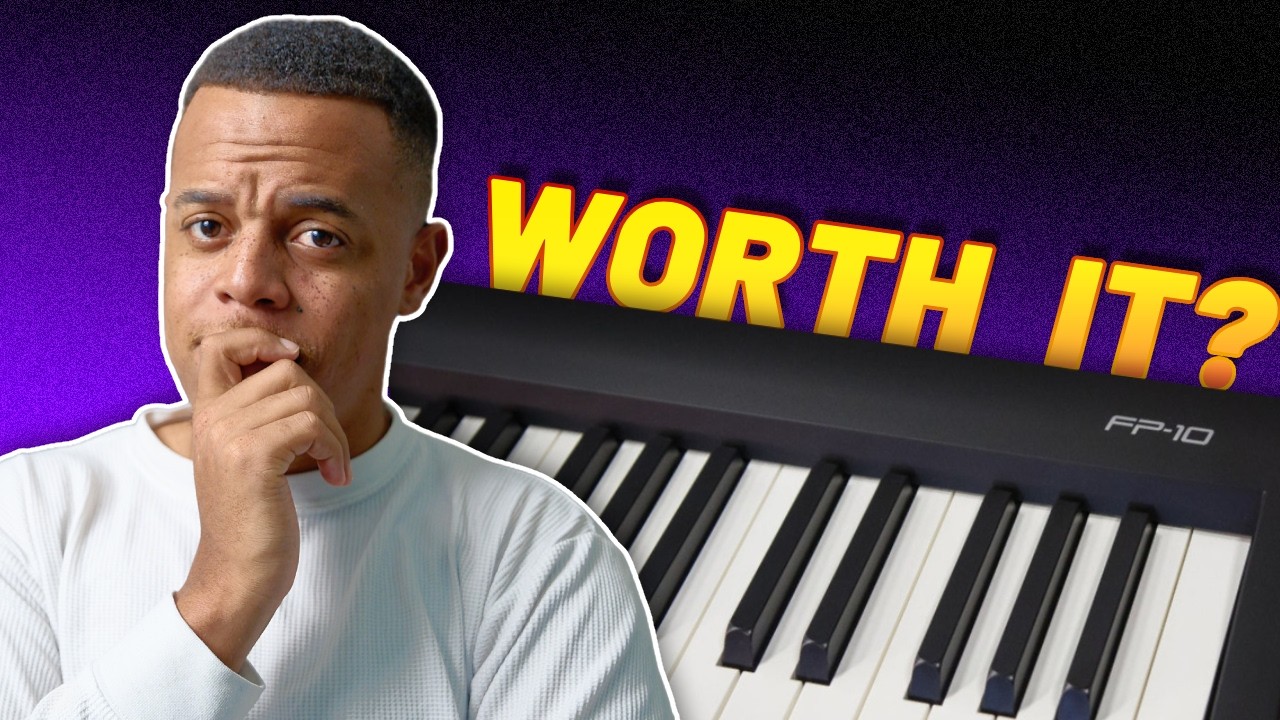
Roland FP-10 Digital Piano Review | Perfect for Beginners?
Full Review
Roland FP-10 Demo (Playing Only!)
Playing Demo

Roland FP-10 Review: The Best Budget Digital Piano in 2025?
Review
Pros
Same PHA-4 Standard action as the FP-30X The most compact 88-key body in the group SuperNATURAL piano tone The highest-rated piano here across two retailersCons
Bluetooth carries MIDI only, not audio Small speakers and the fewest sounds here Basic included pedal
Prestige Artist
Most Features per Dollar
Alesis Prestige Artist
Price history
We have been recording this product's price at its dealers since July. Player members see the 90-day trend, what it has been at its highest and lowest, and whether today is actually a good day to buy it.
The Prestige Artist is Alesis's argument that you should not have to pay for a badge. For $499 you get 88 graded hammer-action keys with adjustable touch response, 30 multi-sampled voices, 256-note polyphony, a 50-watt speaker system that is the loudest on this page, and an OLED screen that lets you change sounds and settings by reading them rather than by memorising button combinations. Layer, split, lesson and record modes are all here, plus five reverb types and an arpeggiator, and it ships with a piano-style sustain pedal, which several dearer pianos do not. USB-MIDI and quarter-inch stereo outputs handle the studio side.
Why it made the list
Feature for feature it embarrasses instruments at twice the price, and the screen alone makes it the easiest piano here to actually use. The honest caveat is the action: it is a real graded hammer mechanism and it is fine, but it is not the PHA-4 or Kawai's RHC, and the piano samples are a tier below the Yamaha and Kawai. You are trading a little feel and tone for a lot of everything else.
Deep Dive: Who It's Really For
The ideal buyer: Someone who will use the extra sounds and modes, plays through the speakers a lot, and wants an instrument that explains itself on a screen.
The honest caveat: Stock has been patchy this year: Guitar Center lists it at $499 with open-box units alongside, and Kraft Music's product page has come and gone. Amazon's price has swung a long way below the dealers. Check what is in the cart before you pay.
Worth knowing before you buy: The 256-note polyphony and the screen are what separate the Artist from the plain Prestige, which is cheaper and sold under a similar name. Make sure the listing says Artist.
▶ Featured Review
Video Reviews & Tutorials
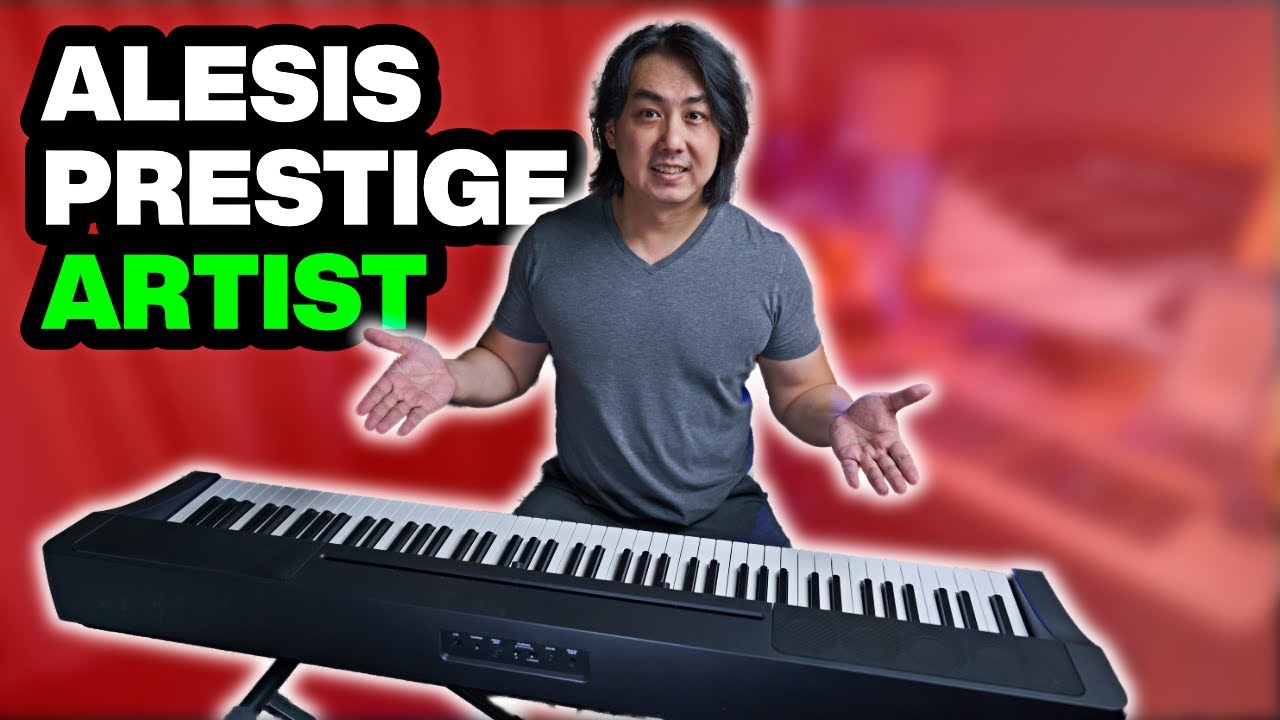
Alesis Prestige ARTIST - 5 Reasons It's Best Piano under $600 for Beginners
Full Review
Sounds and Extra Functions // Alesis Prestige Artist Piano
Sound Demo

Alesis Prestige Artist Piano: Unboxing & Jam
Overview
Pros
OLED screen, so settings are readable rather than memorised 50-watt speakers, the loudest here 30 voices with layer, split, lesson and record modes Piano-style sustain pedal includedCons
Action and piano samples are a tier below the Roland, Yamaha and Kawai Retail stock has been inconsistent The plain Prestige is easy to buy by mistake
B2+
Best First Piano
Korg B2+
Price history
We have been recording this product's price at its dealers since July. Player members see the 90-day trend, what it has been at its highest and lowest, and whether today is actually a good day to buy it.
The B2+ is Korg's 2025 update to the B2, and the change list is short and sensible: a clearer, more dynamic piano engine, USB-C carrying audio as well as MIDI, and the same Natural Weighted Hammer Action keyboard with three velocity curves underneath. There are twelve sounds, five of them acoustic pianos including Italian and German concert grands, with electric pianos, organs, strings and a harpsichord filling out the rest, and 120-note polyphony. It ships with a damper pedal and a music rest, and Korg's included software bundle covers notation and practice. Korg lists it at $799.99; the dealer price is $599.99.
Why it made the list
It is the piano for someone who does not want to think about the piano. No screen, few buttons, a good weighted action and five pianos that sound the way a beginner expects a piano to sound. USB audio over a single USB-C cable is the studio-friendly touch, and it is unusual at this price. It is new enough that reviews are thin, which is the honest reason it sits at the bottom of this list rather than higher.
Deep Dive: Who It's Really For
The ideal buyer: A first piano for a student or a returning adult player, where simplicity is the feature.
The honest caveat: Only a handful of reviews exist so far, split between very high and middling, and it was on backorder at Kraft on the day this was written. The older B2 still turns up at some retailers: it is a different, discontinued product.
Worth knowing before you buy: zZounds still lists the old B2 rather than the B2+, so the button below goes to Amazon. The B2+SP adds a matching stand and three-pedal unit for a few hundred more.
▶ Featured Review
Video Reviews & Tutorials
Korg B2 + Plus Digital Piano Overview & Demo w/ Justin
Overview
First Look: KORG B2+ / B2+SP Digital Piano – All New Features & Sound Demo 🎹
First Look
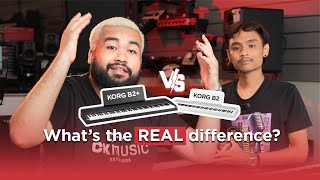
Korg B2+ vs Korg B2 | What's the Differences | Demo
Comparison
Pros
Natural Weighted Hammer Action with three touch curves USB-C audio and MIDI on one cable Five acoustic piano sounds that suit a beginner Damper pedal and music rest in the boxCons
Very few reviews yet Only twelve sounds and 120-note polyphony The discontinued B2 is still sold under a near-identical name