MBS5000
★ Top Pick
On-Stage MBS5000 Broadcast Boom Arm
Price history
We have been recording this product's price at its dealers since July. Player members see the 90-day trend, what it has been at its highest and lowest, and whether today is actually a good day to buy it.
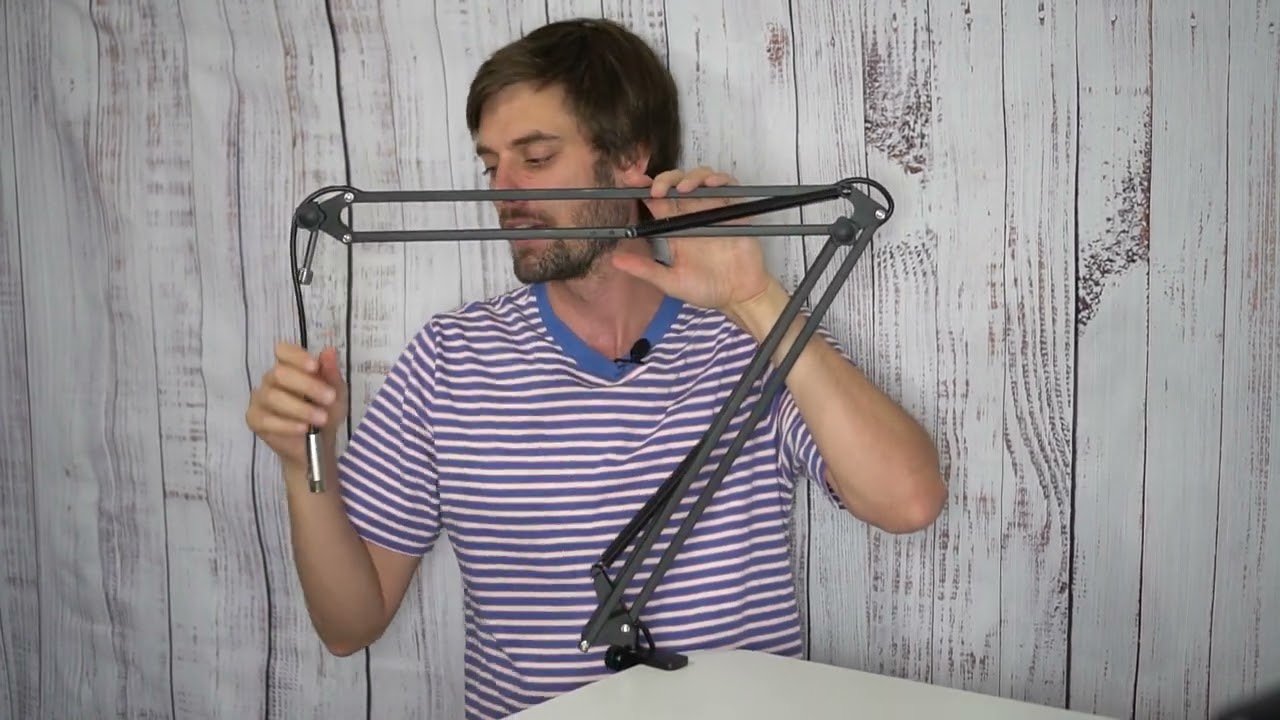
A spring-counterbalanced broadcast arm that clamps to the edge of your desk and holds a microphone wherever you put it. It ships with the XLR cable already run inside the tubing, which is the detail that separates it from the cheap arms: no cable slapping the frame every time you reposition.
Why it made the list
A boom arm is the least glamorous upgrade in a vocal chain and often the most audible one. Getting the mic off a desk stand stops it picking up keyboard clicks, mouse movement and every knock transmitted through the desk surface, and it lets you position the capsule properly relative to your mouth instead of angling your neck to reach it. The MBS5000 earns the top spot here because it comes with both a C-clamp and a screw-down flange mount in the box, so it fits desks that a clamp-only arm cannot, and the internal cable routing keeps the whole setup quiet.
Deep Dive: Who It's Really For
The ideal buyer: Anyone recording at a desk who currently has the mic on a short stand next to the keyboard. That is the setup where mechanical noise creeps into takes, and an arm fixes it more reliably than any amount of post-processing.
Check the weight first: capacity is 3.5 lbs. That covers the overwhelming majority of studio condensers and dynamics, but a heavy mic in a heavy shock mount can approach it. A Shure SM7B is about 1.7 lbs on its own, so it fits with room to spare; add a large shock mount and a windscreen and you are still fine, but it is worth checking if you are stacking accessories.
Reach: 19.5 in horizontal and 19.5 in vertical, about 38 in of total reach. That is enough to bring the mic to a seated mouth position from a desk edge without the arm fully extended, which is where these arms hold position best.
Compatibility: the thread is 5/8"-27, the studio standard, so it accepts essentially any mic clip or shock mount. A 10 ft XLR cable is pre-installed inside the tubing.
▶ Featured Review
Video Reviews & Tutorials
On-Stage MBS5000 Broadcast Mic Boom Arm Review (Link Below 👇)
Full Review

[On-stage] MBS5000 관절형 마이크스탠드 인터넷방송 붐 마이크스탠드
Review
Пантограф OnStage MBS5000 - Распаковка
Review
Pros
C-clamp and flange mount both included XLR cable pre-routed inside the arm Spring counterbalance holds position quietly Standard 5/8"-27 thread fits any mic clipCons
3.5 lb capacity, so check heavy mic and mount combinations Costs more than the generic arms it resembles Needs a desk edge or a drilled hole to mountPS-1
Best Pop Filter
Avantone PS-1 Pro-Shield
Price history
We have been recording this product's price at its dealers since July. Player members see the 90-day trend, what it has been at its highest and lowest, and whether today is actually a good day to buy it.
A rigid metal-screen pop filter rather than fabric stretched over a hoop. The screen is curved to follow the shape of a large-diaphragm mic grille, and it mounts on a gooseneck and clamp that fit any stand or boom arm.
Why it made the list
Nylon mesh filters work fine until someone with hard P and B consonants sings close to the mic, at which point the fabric itself moves and you get a dull thud through the take anyway. A rigid metal screen cannot flap, so it keeps working at the exact moment the cheap ones stop. The metal also washes: soap, water, done. That is not a luxury when a filter is shared between vocalists, and it is the reason studios buy metal ones rather than replacing nylon every year.
Deep Dive: Who It's Really For
The ideal buyer: anyone who has already tried a $12 nylon filter and still hears plosives. If you sing quietly and at a distance, a nylon filter is genuinely fine and you can spend the money elsewhere. This is the fix for close, loud, consonant-heavy delivery, which describes most rap and most pop vocal recording.
Metal versus nylon, honestly: a metal screen deflects the blast sideways rather than absorbing it, so position matters more. Set it a few inches off the grille rather than pressed against it, or you trade the plosive for a reflection back into the capsule.
Mounting: the gooseneck and clamp assembly fits standard mic stands and boom arms. The screen edge is piped, so there is no exposed metal rim to catch a hand on in a dark booth.
▶ Featured Review

Video Reviews & Tutorials

Vintage Neumann U87 vs Avantone CV12 - $4,000 vs $500 Mic Shootout
Comparison

Avantone Pro CV-12 - most popular tube mic at $499
Review
Avantone BV-1 Microphone
Review
Pros
Rigid screen cannot flap under heavy plosives Curved to match a large-diaphragm grille Washable, so it survives shared use Clamp fits any stand or boom armCons
More position-sensitive than nylon Three times the price of a basic mesh filter Overkill for quiet or distant singersEA 4
Best Pro Studio
Neumann EA 4 Elastic Shock Mount
Price history
We have been recording this product's price at its dealers since July. Player members see the 90-day trend, what it has been at its highest and lowest, and whether today is actually a good day to buy it.
The EA 4 is Neumann's elastic suspension for the TLM 102, TLM 103 and TLM 107, and for the Sennheiser MK 4. Check the fit before you buy: the U 87 takes the EA 87, not this one. The elastic suspension system isolates the microphone from mechanical vibrations (desk footsteps, HVAC rumble, floor vibration) that would otherwise color your recordings with low-frequency rumble. If you're recording in an imperfect space, a shock mount is as important as acoustic treatment.
Why it made the list
Sound is vibration. When you talk, your voice moves the air, and that air moves the mic diaphragm. But vibrations also travel through solid objects (the desk, the floor, the stand), and those vibrations reach the microphone through the mounting system. The EA 4's elastic suspension breaks that vibration path, letting your mic hear only what you want it to hear: your voice. In a professional studio with concrete floors and HVAC systems running, the EA 4 is standard equipment.
Deep Dive: Who It's Really For
The ideal buyer: Anyone recording in a space where mechanical noise is a factor: home studios with people walking nearby, studios near HVAC systems, or anyone who records while tapping their foot. If you've ever seen low-frequency rumble in your waveform that isn't from your voice, that's vibration being transmitted through the stand and mount.
Compatibility: The EA 4 is cut for Neumann's TLM bodies and the Sennheiser MK 4 rather than for large-diaphragm mics in general. The U 87 and U 47 take the EA 87 instead. Always check the diameter of your mic against the mount's compatible range before purchasing.
What you hear vs. what you don't: Without a shock mount, you'll hear floor vibration as low-frequency rumble below 80Hz. With a shock mount, your recordings are clean from the start, which means less corrective EQ work in post, and a more professional-sounding result from the first take.
▶ Featured Review
Video Reviews & Tutorials
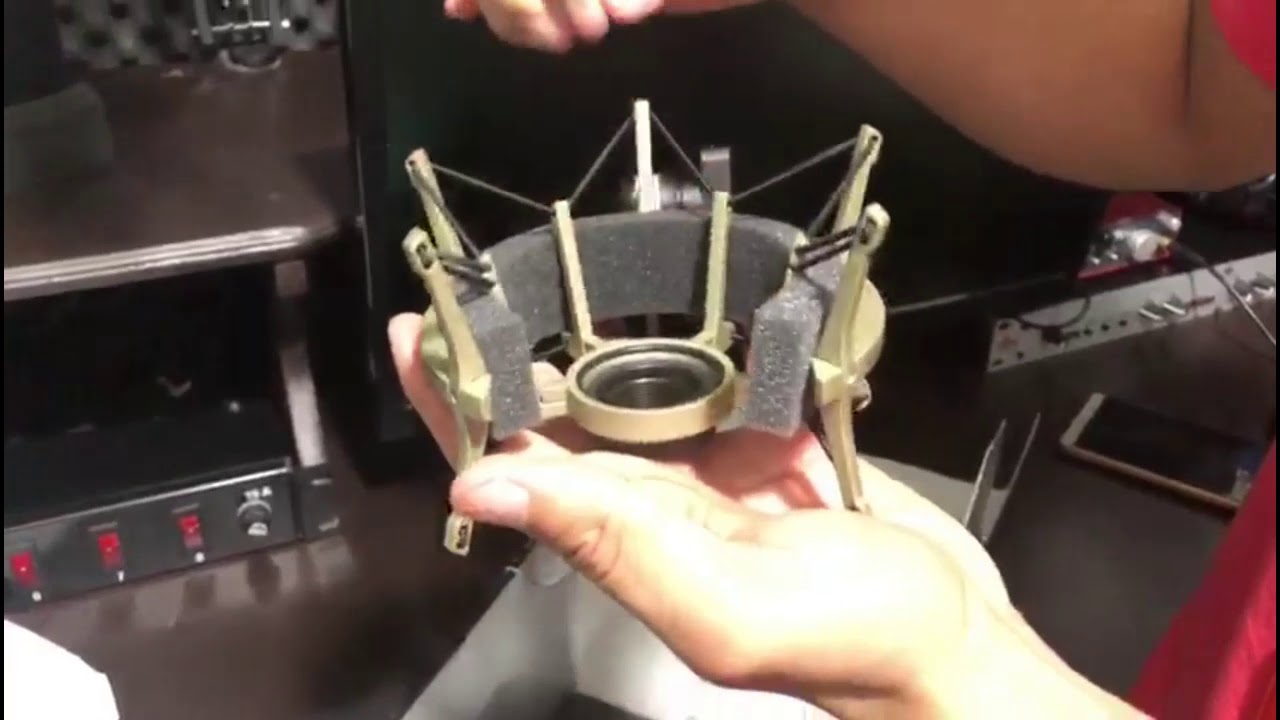
NEUMANN EA 4 SHOCK MOUNT UNBOXING
Full Review

Do YOU NEED a Shockmount?
Review
Do I Really Need a Shockmount? by Sweetwater
Review
Neumann How to reassemble the EA 1 Shockmount
Tutorial
Pros
Professional-grade elastic isolation Eliminates vibration transmitted through stand and desk Standard mount in professional recording studios Fits the Neumann TLM series and the Sennheiser MK 4Cons
$162 is expensive for a home studio Sized to specific Neumann bodies, so it is not a universal mountFrameworks
Budget Pick
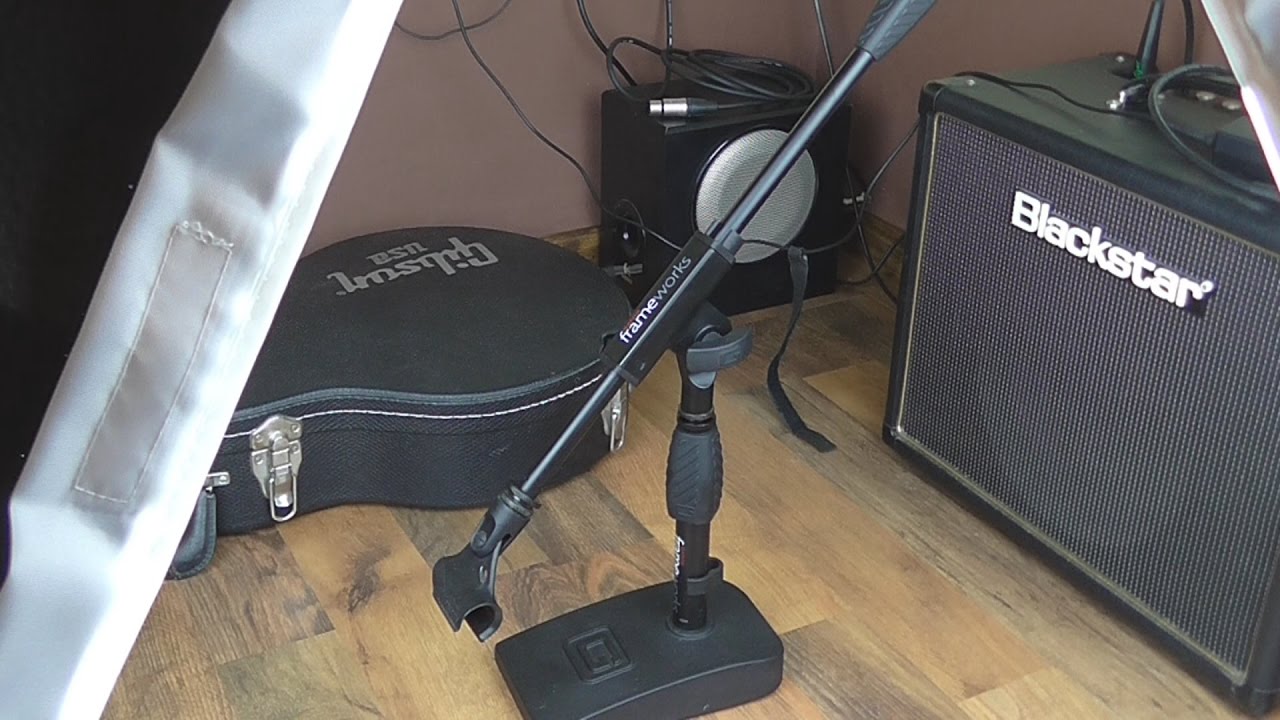
Gator Frameworks GFW-MIC-0821 Compact Base Mic Stand
Price history
We have been recording this product's price at its dealers since July. Player members see the 90-day trend, what it has been at its highest and lowest, and whether today is actually a good day to buy it.
At about $55, the Gator Frameworks GFW-MIC-0821 is the answer for podcasters and streamers who need a stable mic position without a full boom arm setup. The weighted base keeps it from tipping, the adjustable angle lets you position for proper polar pattern alignment, and the 5/8" thread fits most standard mics. It's not a long-term solution for serious vocalists, but it's the right tool for the job at the right price.
Why it made the list
Not everyone needs a boom arm. If you're podcasting at a desk, streaming at a gaming setup, or doing voiceover work where the mic stays in one position, a compact stand at about $55 gets the job done without taking up space or adding complexity. The Gator's weighted base means it won't tip when you bump the cable, and the angle adjustment lets you set the mic at the correct distance from your mouth.
Deep Dive: Who It's Really For
The ideal buyer: Podcasters who share a desk with other equipment, streamers who need a simple setup, and anyone doing voiceover work where the mic stays in a fixed position. Also useful as a secondary stand for recording a second voice source or an interview mic.
What you give up vs. boom arms: Desktop stands don't have the flexibility of a boom arm; you can't quickly reposition the mic mid-session, and the fixed height means you're committed to one sitting posture. For short podcast episodes this is fine; for full-day vocal sessions, a boom arm is worth the investment.
Stability matters: The Gator's weighted base is the key feature. A cheap desktop stand that tips over mid-recording is worse than no stand at all. The Gator's base provides enough weight to keep the mic stable even when the USB cable gets tugged.
▶ Featured Review
Video Reviews & Tutorials

Gator Frameworks GFW-MIC-0821 mic stand unboxing and review
Full Review

Gator Frameworks Bass Drum Mic Stand Review (GFW--MIC-0821)
Full Review
Pros
Cast base stays put without clamping to anything Weighted base won't tip over 5/8" thread fits most standard mics Good for podcasters and streamersCons
No repositioning flexibility mid-session Short by design, so a tall desk needs a boom instead Not suitable for long vocal sessionsSSM-POP
Best Value All-in-One
Sabra Som SSM-POP Shock Mount and Pop Filter Kit
Price history
We have been recording this product's price at its dealers since July. Player members see the 90-day trend, what it has been at its highest and lowest, and whether today is actually a good day to buy it.
The SSM-POP puts two jobs on one stand mount: Sabra Som's SSM-1 elastic suspension and a 5 inch double-face pop filter, both carried on an articulated hexagonal aluminium arm. The suspension is the interesting half. Instead of a moulded clip sized to one mic body, you weave the mic through parallel rubber bands, which is why it takes tubular and conical bodies up to 2 inches across rather than one family of microphones. Sabra Som rates the isolation at roughly 15dB.
Why it made the list
Buying a mount and a filter separately means two purchases, two mounting points, and a gooseneck that sags by the third session. This puts both on one ratcheted elbow that holds where you set it, and it does so without tying you to a single microphone. If you own a large-diaphragm condenser now and expect to own a different one in two years, that fit range is the whole argument: the mount outlives the mic.
Deep Dive: Who It's Really For
The ideal buyer: Someone with one stand and more than one microphone, or one microphone they expect to replace. The rubber-band weave is slower to set up than a clip, so if you swap mics mid-session every day this is not the pick. If you mount once and leave it, the versatility costs you nothing.
What you get vs. buying separately: Shock mount ($40-80) + pop filter ($20-30) = $60-110 in separate components, on two mounting points. At $90 the kit lands inside that range and gives you one arm to position instead of two.
What we cannot tell you yet: this has barely been reviewed. Guitar Center shows two ratings and Amazon shows two, so there is no meaningful body of buyer feedback behind it. The construction is unremarkable in the good sense (aluminium bar, steel mesh, rubber bands, nothing to dry out or delaminate), but treat the long-term durability as unproven rather than proven.
Watch: Reviews
We have not found a review we would stand behind for this one. Search on YouTube
Pros
Fits tubular or conical mics up to 2 inches, not one mic family Full 5 inch double-face filter, not a floppy gooseneck Ratcheted elbow holds position once you set it Mount and filter on a single stand pointCons
Barely reviewed: two ratings at Guitar Center, two on Amazon Weaving the mic through the bands is slower than a clip