HS8S
★ Top Pick
Yamaha HS8S
Price history
We have been recording this product's price at its dealers since July. Player members see the 90-day trend, what it has been at its highest and lowest, and whether today is actually a good day to buy it.
An 8" cone driven by a 150 W amplifier in a ported MDF cabinet, with a quoted response of 22 Hz to 160 Hz. The rear panel gives you a level control, a phase switch, a high-cut sweepable from 80 to 120 Hz, and a switchable low-cut on the same 80–120 Hz range so you can high-pass your monitors from the sub itself. Inputs are balanced XLR and TRS; outputs are balanced XLR for left, right, and an external sub.
Why it made the list
The HS8S does the one thing a studio sub has to do: it stays out of the way. Yamaha voiced the HS line to be unflattering on purpose, and the sub matches that character: it extends the bottom without adding the fat, boomy hump that consumer subs use to sell themselves in a showroom. It is also the easiest of these four to integrate, because the switchable low-cut sends a properly high-passed signal to your monitors instead of asking them to keep reproducing bass they can't handle. If you already run HS5s, HS7s, or HS8s, this is a straight drop-in. Under $500 it remains the default recommendation.
Deep Dive: Who It's Really For
The ideal buyer: Someone on HS monitors, or any neutral pair, who wants the bottom extended without the sound changing character.
The integration feature that matters: The switchable low-cut sends a properly high-passed signal on to your monitors, so the sub and the speakers stop overlapping in the range where small rooms are already lumpy. That is the difference between one system and two speakers fighting.
Real-world use: Expect it to be unexciting, because that is the design. Set the crossover just above where your monitors roll off, then check that a bass line does not jump in level as it crosses over. The ported cabinet needs space behind it.
▶ Featured Review
Video Reviews & Tutorials

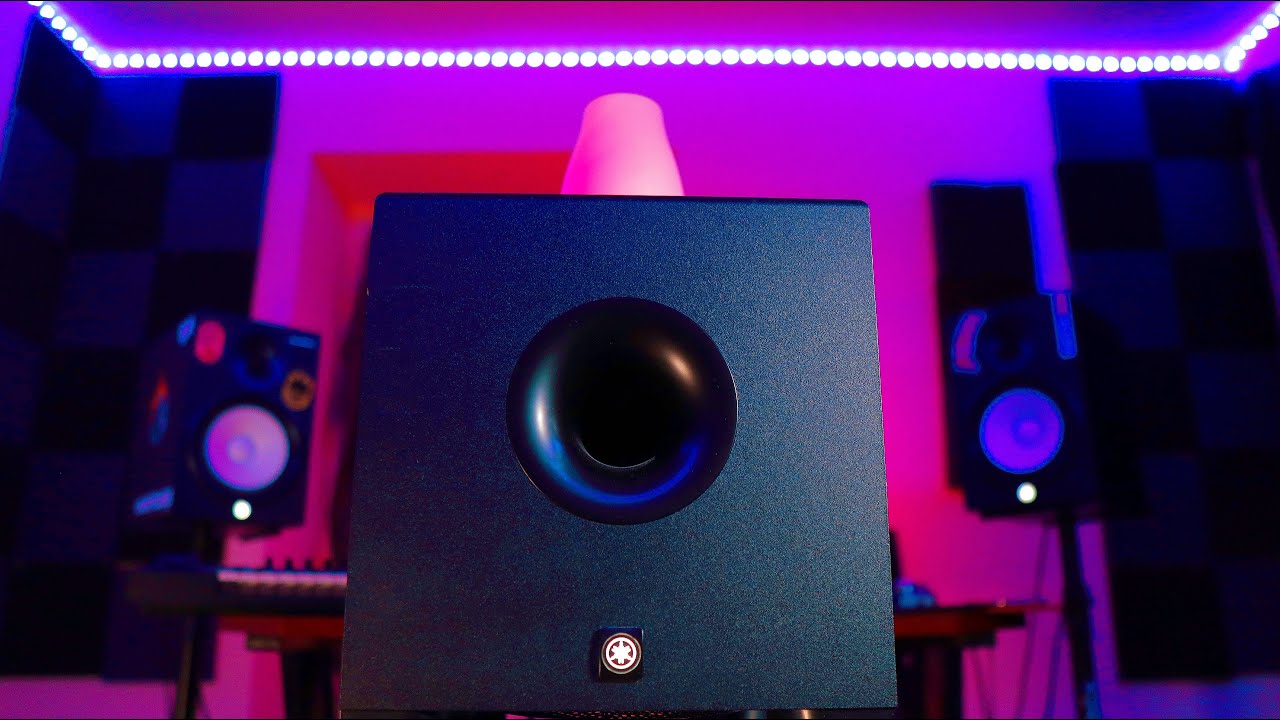
Why you NEED the Yamaha HS8S Subwoofer with your HS5, HS7, HS8 Best Studio Monitors Setup
Full Review
Yamaha HS5 / HS8S Powered Studio Monitors Review BBoyTechReport.com -
Full Review

Yamaha HS8 Studio Monitor Review! Why Did I Wait So Long?
Full Review

JBL LSR310s Subwoofer vs Yamaha HS8s Studio Subwoofer Review/Comparison
Comparison
Pros
Neutral, uncolored low end Switchable low-cut properly high-passes your monitors Balanced XLR and TRS in, XLR out Perfect tonal match for the HS monitor line Solid 27.6 lb MDF cabinetCons
8" driver, less headroom than the 10" picks No RCA input for consumer sources Ported cabinet needs space behind it Deliberately unexciting; it will not flatter anythingT10S
Deepest Extension
ADAM Audio T10S
Price history
We have been recording this product's price at its dealers since July. Player members see the 90-day trend, what it has been at its highest and lowest, and whether today is actually a good day to buy it.
A 10" down-firing paper-cone driver on a 130 W Class-D amplifier, rated 28 Hz to 120 Hz at −6 dB with 0.6% THD above 60 Hz and roughly 104 dB max SPL at one meter. The crossover is switched rather than swept (80 Hz, 120 Hz, or full bypass), with 0°/180° phase inversion, XLR and RCA on both input and output, a bypass footswitch jack, and auto-standby after fifteen quiet minutes.
Why it made the list
The T10S is the pick when you genuinely need to hear the bottom octave rather than just feel more weight. That −6 dB point at 28 Hz is a meaningfully honest number, and the down-firing 10" driver couples to the floor in a way that fills a small room evenly instead of beaming at your chair. The bypass footswitch is the feature nobody mentions and everyone should use: tap it to drop the sub out and instantly hear what your mix does on a system without one. Priced against the HS8S, you're paying roughly the same for two more inches of driver and deeper extension, and giving up the swept crossover.
Deep Dive: Who It's Really For
The ideal buyer: Someone who needs to hear the bottom octave rather than just feel more weight, in a room small enough that even coverage matters.
Down-firing, and why it helps: Coupling to the floor spreads the low end through a small room instead of aiming it at your chair, which makes the response less dependent on exactly where you sit.
Real-world use: Use the bypass footswitch constantly. Dropping the sub out mid-listen is the fastest way to tell whether you are mixing the track or mixing the subwoofer. The crossover is switched rather than swept, so check both points against your monitors.
▶ Featured Review
Video Reviews & Tutorials

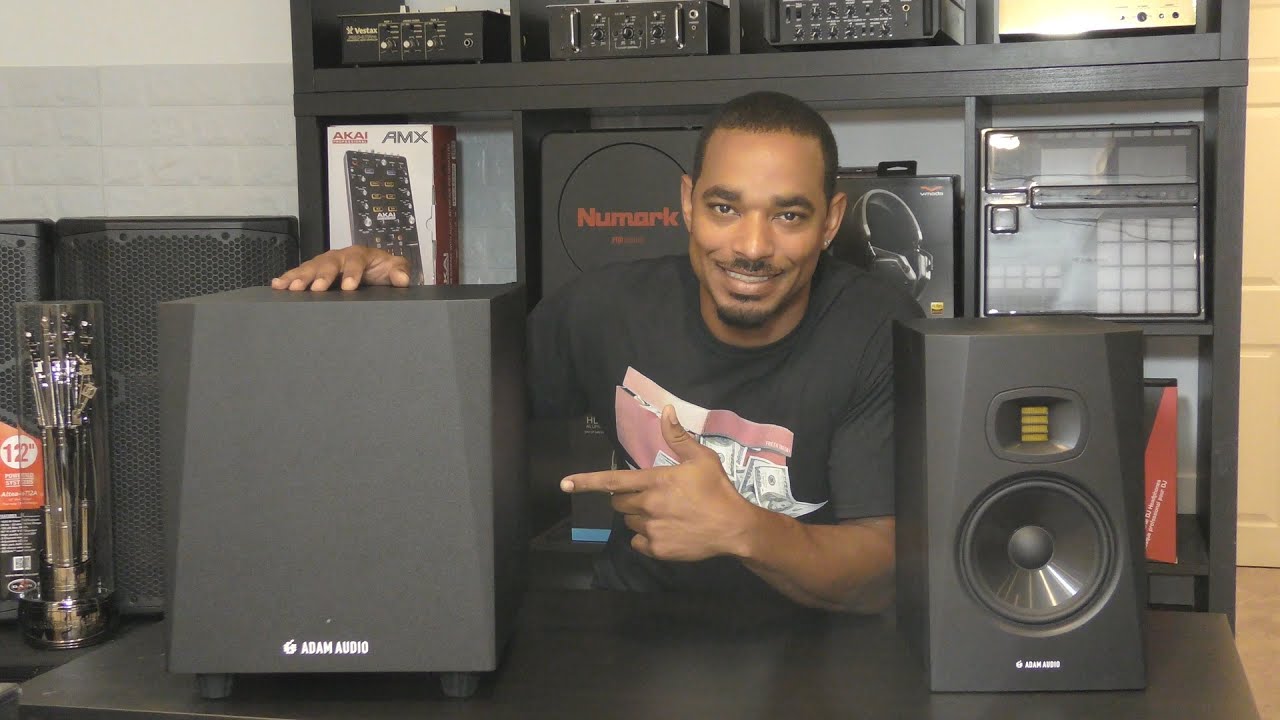
Adam Audio T10S Powered Subwoofer Review
Full Review

Mojaxx Reviews the ADAM Audio T10S Studio Subwoofer | Tips and Tricks
Review

Adam T10S Subwoofer - BEFORE you buy WATCH this!
Review

Adam Audio T5V & T10S - How To connect A Subwoofer
Tutorial
Pros
28 Hz extension from a 10" down-firing driver Bypass footswitch for instant A/B XLR and RCA in and out Even room coverage from floor coupling Ideal partner for ADAM T5V / T7V monitorsCons
Crossover is switched (80/120 Hz), not swept 130 W is the least power here 27 lb and physically large for a small desk Auto-standby can cut off quiet passagesS10.4
Most Flexible
KRK S10.4
Price history
We have been recording this product's price at its dealers since July. Player members see the 90-day trend, what it has been at its highest and lowest, and whether today is actually a good day to buy it.
A 10" glass-aramid composite woofer on a 160 W Class-D amplifier, rated 30 Hz to 110 Hz with a maximum SPL around 117 dB. The crossover switches between 60, 70, 80, and 90 Hz, and the connectivity is the most complete here: XLR, TRS, and RCA on both the stereo input and the pass-through output, so it drops into almost any signal chain without an adapter. Sold in the US as the S10.4; the same unit is badged S10G4 elsewhere.
Why it made the list
This is the loudest, most physical sub in the roundup, and that matters if you produce hip-hop, EDM, or anything else where the sub-bass is the arrangement. The 117 dB max SPL means it never sounds like it's straining, and the four crossover points let you tune the handover to 5" monitors (90 Hz) or 8" monitors (60 Hz) rather than accepting one compromise setting. The full XLR/TRS/RCA set on both ends is the quiet hero: it is the only sub here you can wire into a mixed pro-and-consumer setup without hunting for cables. The tradeoff is voicing: KRK's house sound leans forward in the low end, so trust it less than the Yamaha until you've referenced a few finished tracks through it.
Deep Dive: Who It's Really For
The ideal buyer: A producer working in hip-hop, EDM or anything where the sub-bass is the arrangement rather than a supporting layer.
Loud, and slightly forward: The headroom means it never sounds like it is straining, and the voicing leans exciting rather than neutral. That is a feature when you are designing bass and a liability when you are balancing a mix, so level it conservatively.
Real-world use: Four crossover points let you match 5-inch monitors up high or 8-inch monitors down low rather than accepting one compromise. The full connector set means it drops into an existing chain without adapters.
▶ Featured Review

Video Reviews & Tutorials

KRK S10.4 Subwoofer Review | Tips and Tricks
Full Review

YOU NEED THIS SUB! | NEW KRK S10.4 SUBWOOFER REVIEW
Full Review

HOW TO set up KRK Rokit 7 G4 Studio Monitor Pair With S10.4 10-inch Powered Studio Subwoofer Bundle
Tutorial

Do You Really Need A Subwoofer? KRK Systems S10.4 Powered Studio Subwoofer Review
Full Review
Pros
160 W and ~117 dB max SPL, loads of headroom XLR, TRS and RCA on input and output Four crossover points from 60 to 90 Hz 10" glass-aramid woofer stays tight when drivenCons
Forward, slightly flattering low-end voicing Only reaches 30 Hz, less deep than the T10S Big and heavy; wants a real floor, not a shelf Easy to over-level and fool yourselfEris Sub 8BT
Best Budget
PreSonus Eris Sub 8BT
Price history
We have been recording this product's price at its dealers since July. Player members see the 90-day trend, what it has been at its highest and lowest, and whether today is actually a good day to buy it.
An 8" composite driver on a 50 W RMS Class-AB amplifier, rated 30 Hz to 200 Hz, with a continuously variable low-pass filter from 50 to 130 Hz. Inputs and pass-through outputs are balanced TRS and unbalanced RCA in stereo, and it adds a Bluetooth 5.0 stereo input, which turns the whole monitor rig into a reference playback system for streaming from your phone.
Why it made the list
At roughly $210 the Eris Sub 8BT is less than half the price of everything else here, and for a producer on 3.5" or 5" monitors it is a genuine upgrade rather than a toy. The continuously variable low-pass is more useful than it sounds: with small satellites you often want the handover at 110 or 120 Hz, and the fixed-point subs simply can't go there. The Bluetooth input is not a mixing feature, but it is a very good referencing feature: play a commercial track from your phone through the exact same speakers and compare. Just be clear about what 50 W buys you. This is a sub for hearing the low end, not for feeling it at volume.
Deep Dive: Who It's Really For
The ideal buyer: Someone on small monitors and a real budget, where the alternative is no low end at all rather than a better sub.
The variable low-pass is the point: With small satellites you often want the handover above 100 Hz, and fixed-point subs simply cannot go there. Continuous adjustment is what makes this work with 3.5-inch monitors.
Real-world use: Do not mix loud on it, because the amplifier runs out of headroom before the driver does. The Bluetooth input is not a mixing feature, but it does make referencing commercial tracks from a phone effortless.
▶ Featured Review
Video Reviews & Tutorials
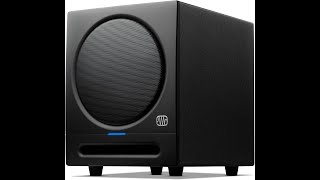
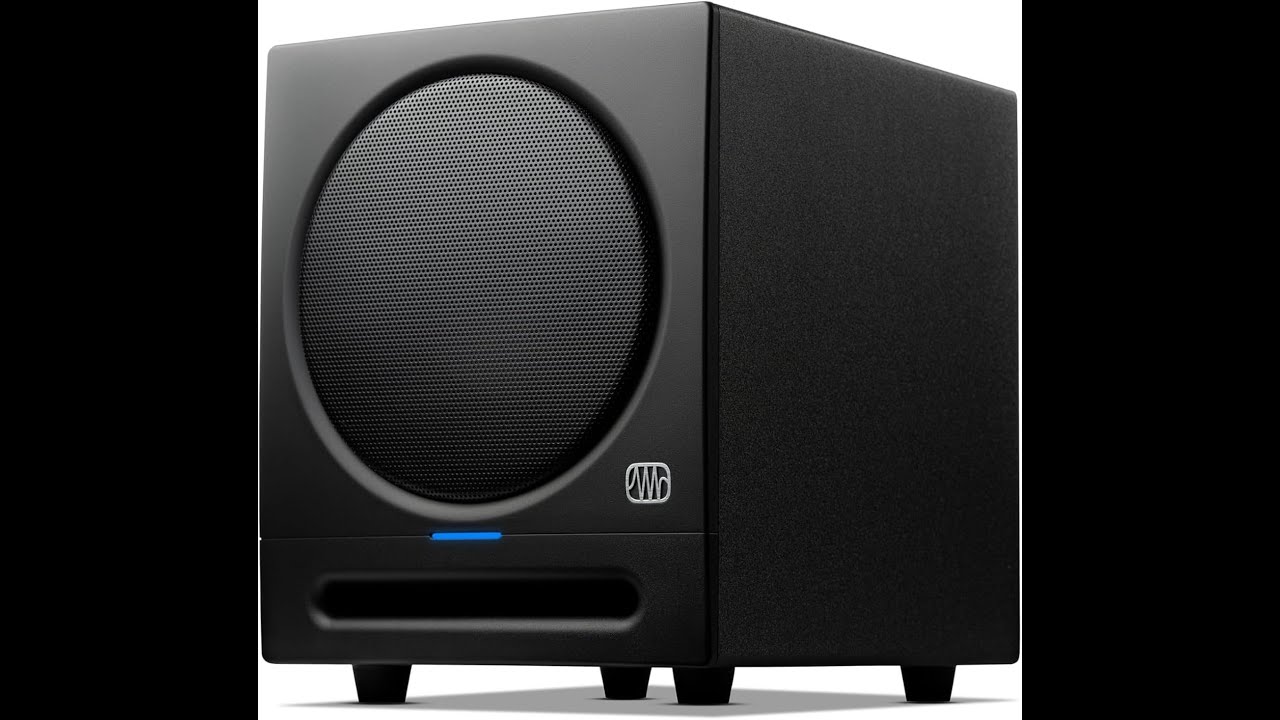
Review: PreSonus Eris Sub 8BT - 8” Powered Subwoofer with Bluetooth
Full Review
Is the PreSonus Eris Sub 8BT Worth It? Honest 2025 Subwoofer Review
Full Review

PreSonus Eris Sub 8BT Review (2025): Best Budget Studio Sub or Overhyped?
Full Review
Review: PreSonus Eris Sub 8BT Powered Bluetooth Subwoofer for Gaming & Music
Full Review
Pros
Less than half the price of the others Continuously variable 50–130 Hz low-pass TRS and RCA in and out Bluetooth 5.0 makes referencing effortless Compact enough for a real deskCons
50 W RMS, limited headroom at volume Class-AB amp runs warm No XLR connectivity Stock has been intermittent at some retailers