
KH 120 II
☆ Top Pick
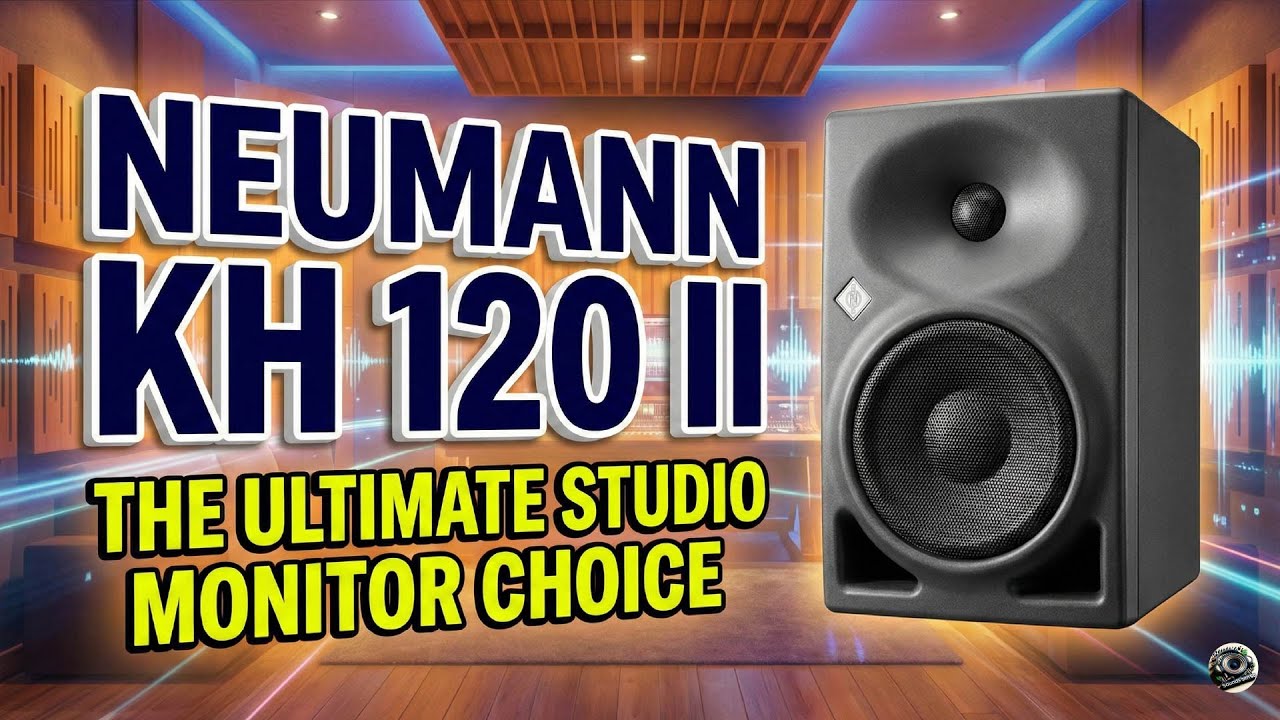
Neumann KH 120 II
Price history
We have been recording this product's price at its dealers since July. Player members see the 90-day trend, what it has been at its highest and lowest, and whether today is actually a good day to buy it.
The KH 120 II is a 5.25-inch two-way with DSP alignment built in, and it is the monitor the rest of this list gets measured against. Neumann's argument is simple: correct the speaker and the room electronically, and you stop guessing. At $949 each it is the most expensive pick here, and the one that changes how quickly you finish a mix.
Why it made the list
Every other monitor on this page asks you to learn its character. The KH 120 II asks you to learn your room, which is the problem actually worth solving. The DSP alignment lets you compensate for boundaries you cannot move, so the speaker stops fighting the space it sits in. If you have already treated your room and still do not trust your low end, this is the fix.
Deep Dive: Who It's Really For
The ideal buyer: Engineers making final decisions that other people pay for. If a mix leaves your room and comes back with notes about the bass, the KH 120 II removes that failure mode.
The honest caveat: It is unforgiving. A rough arrangement sounds rough, and a badly recorded vocal sounds badly recorded. That is the job, but it is not a comfortable listen and it is not what you want for casual playback.
Worth knowing before you buy: There is an AES67 network variant at roughly $1,249 each. Unless you specifically need networked audio, the standard model is the one you want, and the price gap buys acoustic treatment that will help you more.
▶ Featured Review
Video Reviews & Tutorials
Neumann KH 120 II Review: The New King of Nearfield Studio Monitors?
Full Review
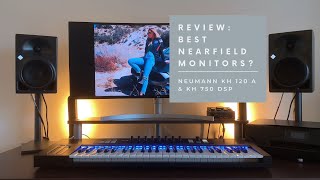
Best nearfield monitors for home studios? Review Neumann KH 120 A & KH 750 DSP.
Full Review

Neumann KH 120A Studio Monitor User Review
Full Review

Neumann KH 120 A vs. KH 120 II
Comparison
Pros
DSP room alignment built in Reference-grade accuracy Compact enough for a real desk The industry benchmark at this sizeCons
The most expensive pick here at $949 each Unforgiving: it will not flatter anything The AES67 variant costs more and most people do not need it
A7V
Best Value at the Top
ADAM Audio A7V
Price history
We have been recording this product's price at its dealers since July. Player members see the 90-day trend, what it has been at its highest and lowest, and whether today is actually a good day to buy it.
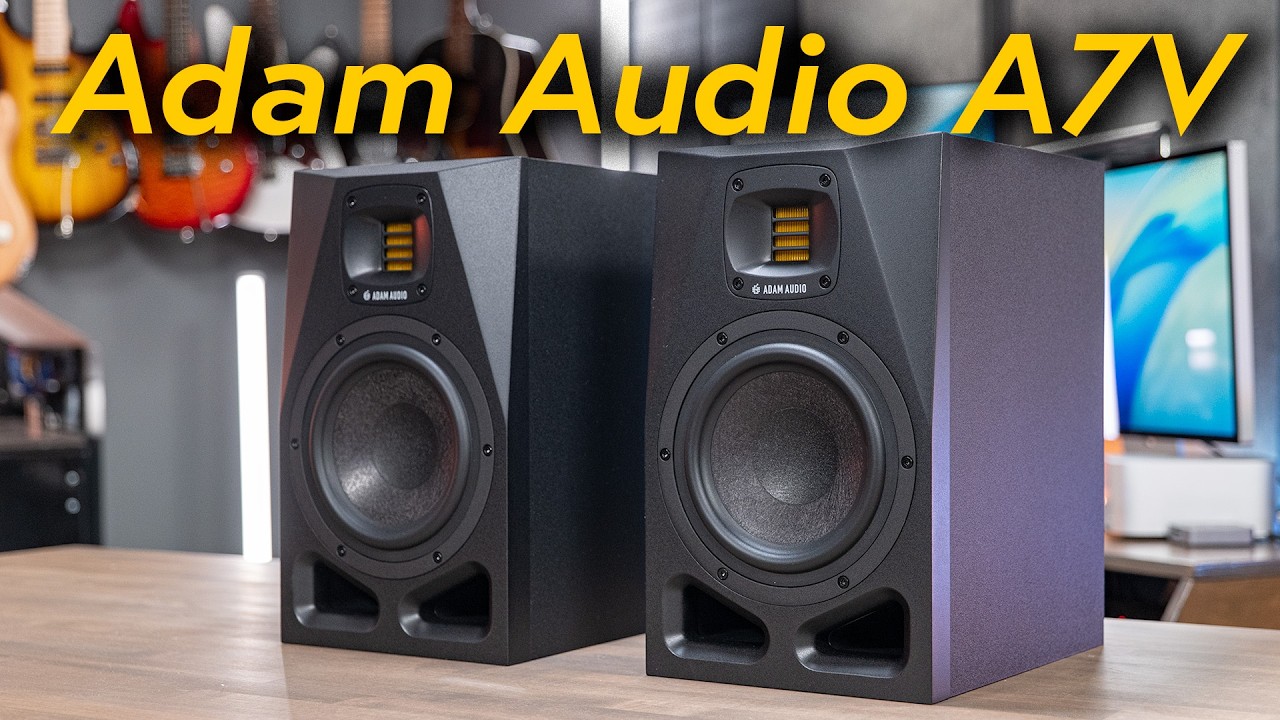
The A7V is a 7-inch two-way built around ADAM's X-ART ribbon tweeter, and it is the cheapest way to get genuinely professional high-frequency detail. Five dealers quote it at exactly $899.99 each, which tells you the street price is stable rather than negotiable.
Why it made the list
Ribbon tweeters resolve reverb tails and cymbal decay in a way dome tweeters at this price do not, and the A7V pairs that with a rotatable waveguide so you can run it horizontally without wrecking the imaging. It is the pick if your work lives or dies on hearing what the top end is actually doing.
Deep Dive: Who It's Really For
The ideal buyer: Anyone mixing dense material where the top octave matters: orchestral, metal, anything with a lot of cymbals or air. The detail is the product.
Where the money goes: Not into loudness. The A7V is not dramatically louder than the Focal below it. You are paying for resolution and for a tweeter that does not get harsh when you turn it up during a long session.
Room reality: A 7-inch woofer in a small untreated room will give you bass you cannot trust. If your space is under about 12 feet across and bare, treat it before you upgrade to these.
▶ Featured Review
Video Reviews & Tutorials
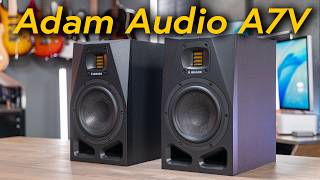
The Ultimate Studio Monitor? Adam Audio A7V Review
Full Review
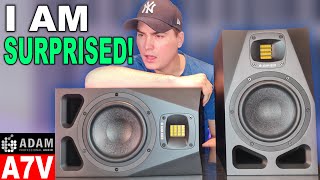
The BEST Monitors I've EVER tested! ADAM Audio A7V Review
Full Review
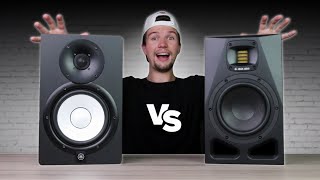
Which Studio Monitors Should You Buy? | Yamaha HS7 vs. Adam Audio A7V
Comparison
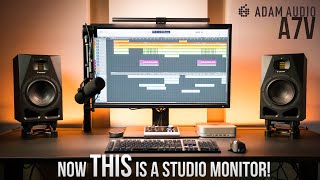
The BEST Home Studio Monitors I've Ever Owned - Adam Audio A7V
Review
Pros
X-ART ribbon tweeter, genuinely more detail Rotatable waveguide for horizontal placement Sealed cabinet keeps the low end tight in a small room Comfortable over long sessionsCons
A 7-inch woofer needs a room that can handle it You pay for resolution rather than level, so the upgrade is easy to miss on a first listen
Alpha 65 Evo
Best Midrange
Focal Alpha 65 Evo
Price history
We have been recording this product's price at its dealers since July. Player members see the 90-day trend, what it has been at its highest and lowest, and whether today is actually a good day to buy it.
The Alpha 65 Evo is a 6.5-inch two-way and the midpoint of this guide in both price and philosophy. Focal voices its monitors with a forward, present midrange, which is either exactly what you want or exactly what you do not.
Why it made the list
Vocals and guitars sit in the midrange, and the Alpha 65 Evo puts them under a microscope. If most of your work is songs with people singing on them, this is a more useful $465 than a flatter monitor that makes everything sound equally fine.
Deep Dive: Who It's Really For
The ideal buyer: Singer-songwriters, producers working with real instruments, anyone whose mixes get notes about the vocal sitting wrong.
The voicing tradeoff: Forward mids are a choice, not neutrality. Mix on these exclusively and you may pull vocals down further than you should, because they are easier to hear here than elsewhere. Check on something flatter before you commit.
Availability note: Only two of the dealers we track carry it, against five for the ADAM models. That is not a quality signal, but it does mean less price competition, so shop it around.
▶ Featured Review
Video Reviews & Tutorials
Focal Alpha 65 Evo Review: The NEW King of Mid-Range Studio Monitors?
Full Review
DSAUDIO.review || Focal Alpha 65 EVO vs Adam Audio A7X || sound.DEMO
Comparison
Getting ACTIVE: Focal Alpha 65 EVO Monitors
Review
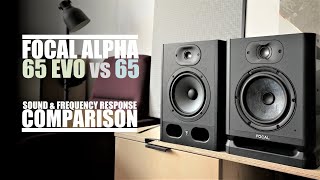
DSAUDIO.review || Focal Alpha 65 EVO vs Focal Alpha 65 || sound.DEMO
Comparison
Pros
Present, detailed midrange Strong build for the price Genuinely different voicing from the ADAM and Yamaha picksCons
Forward mids are a voicing choice, not neutrality Carried by fewer dealers, so less price competition
HS8
Best 8-Inch
Yamaha HS8
Price history
We have been recording this product's price at its dealers since July. Player members see the 90-day trend, what it has been at its highest and lowest, and whether today is actually a good day to buy it.
The HS8 is the 8-inch member of the same family as the HS5, and it is the cheapest honest route to real low-end extension. Same flat, unflattering Yamaha voicing, more woofer to deliver it.
Why it made the list
If you have outgrown 5-inch monitors and keep reaching for headphones to check the bass, the HS8 is the direct answer. At $339 each it costs less than half the ADAM A7V while moving considerably more air, and the midrange honesty that made the HS line famous is unchanged.
Deep Dive: Who It's Really For
The ideal buyer: Producers working in bass-forward genres who have a room big enough to justify an 8-inch woofer. In a small bedroom these will overload the space and lie to you.
The tradeoff against the smaller picks: More bass is not automatically better. An 8-inch woofer in an untreated 10-foot room produces a low end dominated by room modes, and you will mix against them. Space and treatment first, then size.
Where it sits in this guide: The HS8 is the value floor of the pro tier. It does not resolve like the A7V or correct like the Neumann, but it tells the truth about the midrange and reaches low enough to make decisions on.
▶ Featured Review
Video Reviews & Tutorials
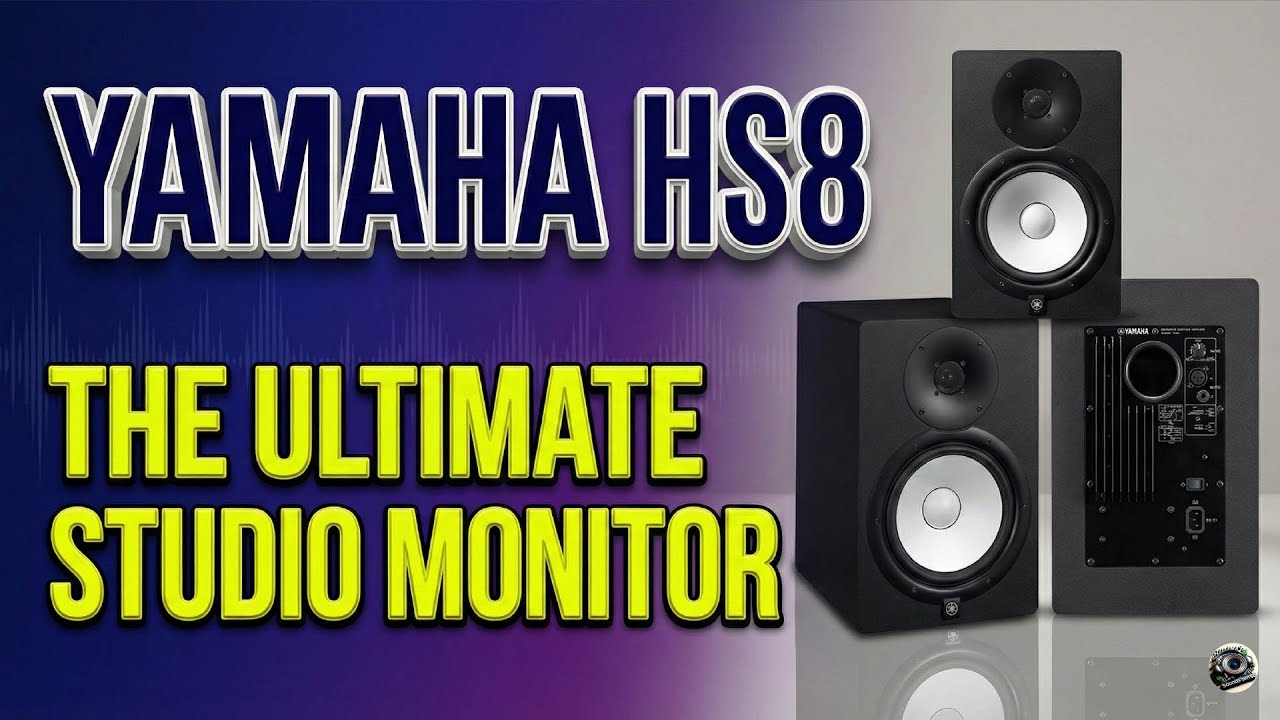
Yamaha HS8 Review: The TRUTH About These Studio Monitors (Watch Before You Buy!)
Full Review
Z Review - Yamaha HS8 (Sound like they Look)
Full Review
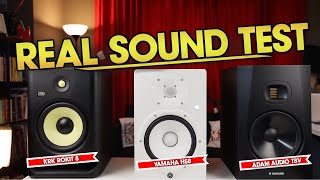
Adam Audio T8V vs Yamaha HS8 vs KRK Rokit 8 (STUDIO SPEAKER SOUND TEST)
Comparison
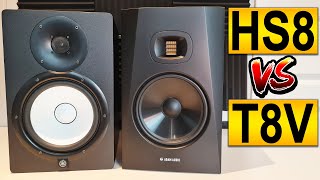
Yamaha HS8 VS ADAM Audio T8V - Which One Should You Buy?
Comparison
Pros
Real low-end extension for the money The flat, unflattering HS voicing Widely stocked, easy to audition Under half the price of the A7VCons
An 8-inch woofer needs a room that can take it No DSP room correction at this price
T7V
Best Entry
ADAM Audio T7V
Price history
We have been recording this product's price at its dealers since July. Player members see the 90-day trend, what it has been at its highest and lowest, and whether today is actually a good day to buy it.
The T7V is the entry point to this tier: a 7-inch two-way with ADAM's U-ART tweeter, the accessible relative of the ribbon in the A7V. Five dealers quote $289.99 each, putting a pair at $580.
Why it made the list
It gets you most of the way to the ADAM house sound for a third of the A7V's price. The U-ART tweeter is noticeably more detailed than the dome tweeters on comparably priced monitors, and a 7-inch woofer reaches low enough that you are not constantly second guessing the bass.
Deep Dive: Who It's Really For
The ideal buyer: Anyone whose 5-inch monitors are the weakest link but whose budget is not $1,800. This is the honest first step into the tier.
What you give up against the A7V: Resolution, mostly. The U-ART tweeter is good; the X-ART in the A7V is better, and the difference shows on reverb tails and cymbals. For most home studios the T7V is the right amount of monitor.
A note on the smaller sibling: The T5V appears in our under-$500 guide. The T7V is the same design philosophy with more woofer, so if you are choosing between them the question is room size, not quality.
▶ Featured Review
Video Reviews & Tutorials
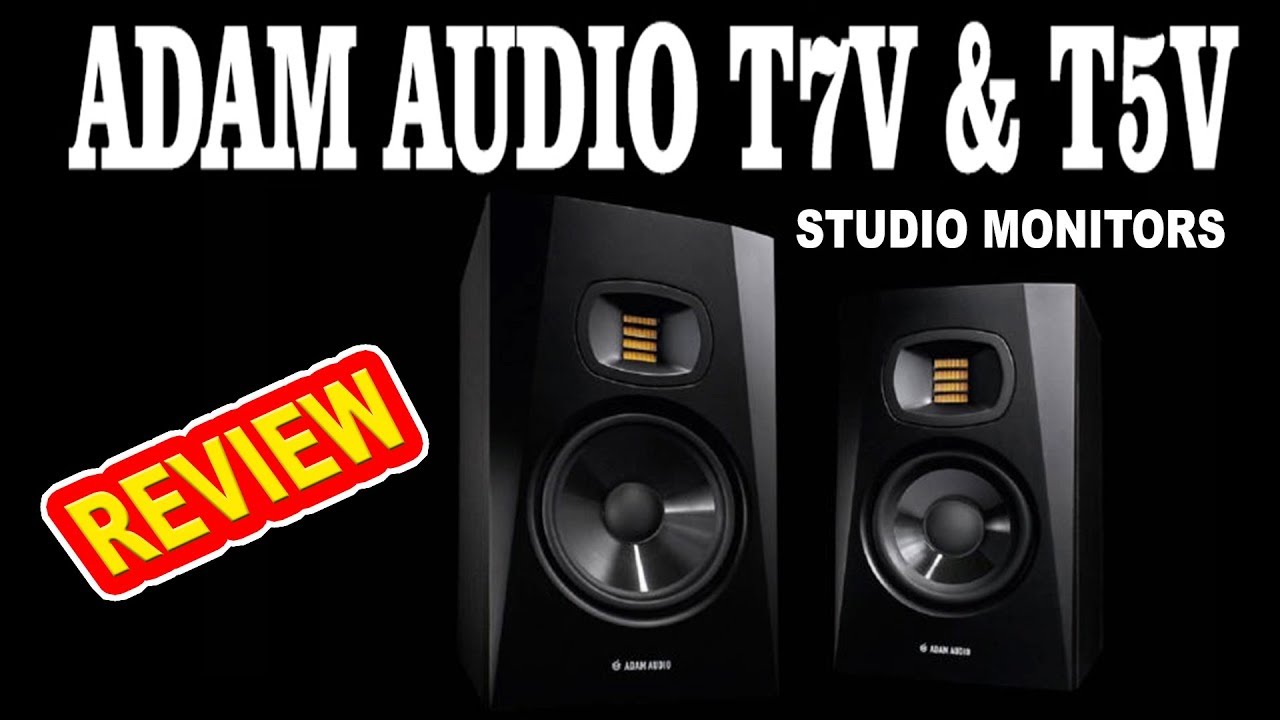
Best Entry Level Monitors? - ADAM Audio T7V Active Studio Monitor Review
Full Review
Z Review - Adam T-Series [ T5v & T7v -The New Benchmark-]
Full Review
Best Budget Studio Monitors | ADAM Audio T7V Review & Honest Opinion
Full Review
Which Studio Monitors Should You Buy? | Yamaha HS7 vs. Adam Audio T7V
Comparison
Pros
U-ART tweeter, more detail than rivals at the price 7-inch woofer for real low-end reach Consistent $289.99 across five dealers The cheapest honest entry to this tierCons
Resolution falls short of the A7V's ribbon tweeter Plastic-heavy build compared with the pricier picks