DSP
★ Top Pick
Neural DSP Archetype Plugins
Price history
We have been recording this product's price at its dealers since July. Player members see the 90-day trend, what it has been at its highest and lowest, and whether today is actually a good day to buy it.
Collaborations with actual guitarists (Tim Henson, Cory Wong, Tosin Abasi). Polished, immediate, mixed by pros. $99-$149.
Why it made the list
Neural DSP partners with professional guitarists to design signature tones, then builds plugins around them. You get a modular signal chain with presets dialed by actual artists. It's not “most flexible”; it's “most musical out of the box.”
Deep Dive: Who It's Really For
The ideal buyer: A guitarist who wants to plug in and sound like a record in about a minute. If your evenings disappear into tweaking rather than playing, the curation here is the product, not a limitation of it.
Archetype versus AmpliTube: Neural DSP gives you one artist's rig, dialled by the artist. AmpliTube gives you three hundred amps and the job of finding the good one. Buy Archetype if you know the sound you want and want it now, AmpliTube if the search is the fun part.
Real-world use: Pick the Archetype whose player is closest to your music, start from a preset, and change only the gain and the cabinet. The effects section is clean enough that you can print the whole chain rather than reamping later.
▶ Featured Review
Video Reviews & Tutorials
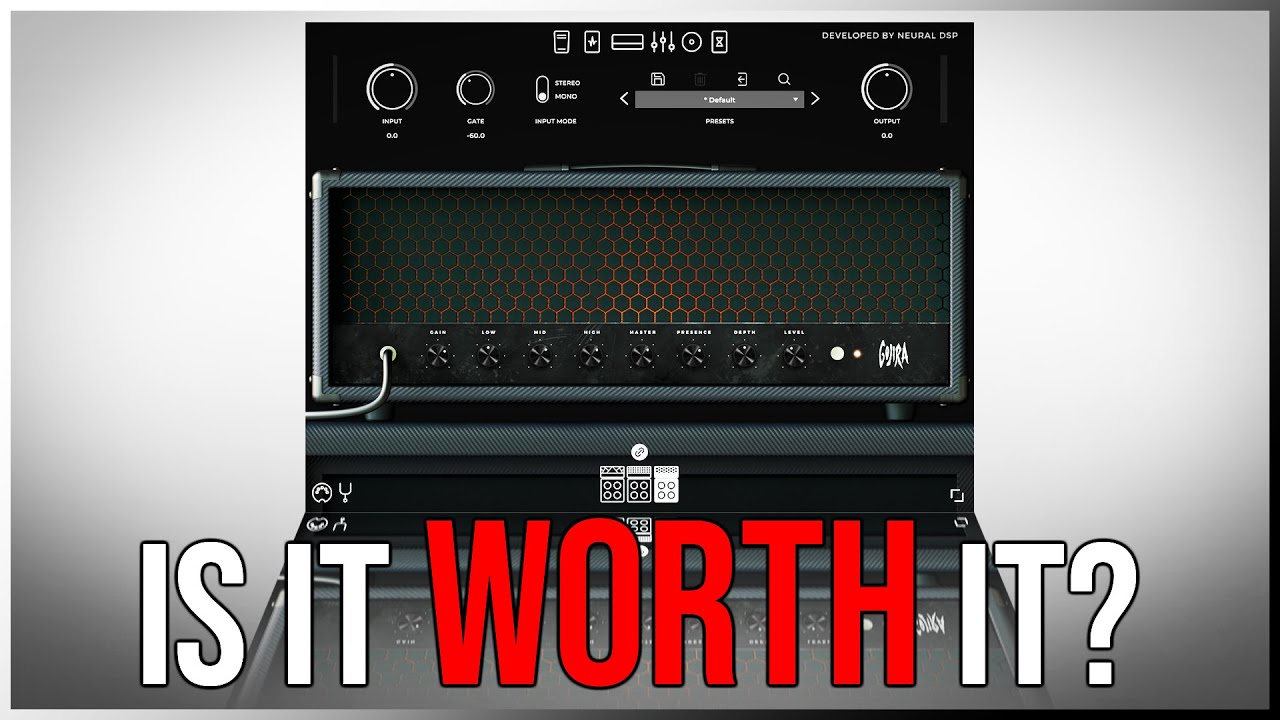
Neural DSP Archetype: Gojira - Is It Worth It? (DEMO/WALKTHROUGH/REVIEW)
Full Review

Guitar Plugins | What Are They & How To Use Them | Neural DSP
Tutorial

Archetype Tim Henson | Neural DSP
Review
NOLLY ARCHETYPE Plugin
Review
Pros
Artist-designed presets Polished sound quality Clean effects section Beautiful UI Strong communityCons
$99-149 premium pricing Limited flexibility by design Overkill for clean tonesMultimedia
Most Flexible
IK Multimedia AmpliTube 5
Price history
We have been recording this product's price at its dealers since July. Player members see the 90-day trend, what it has been at its highest and lowest, and whether today is actually a good day to buy it.
13 amps and 14 cabs in the standard tier, with cabinet impulse loading, effects and fully modular routing. Build the exact chain you imagine. $100-$300.
Why it made the list
AmpliTube is the Swiss Army knife of amp sims. The cabinet section is excellent, effects are crisp, and routing lets you build chains impossible in hardware.
Deep Dive: Who It's Really For
The ideal buyer: Someone who wants a specific amp and cabinet pairing, or who records several styles and would rather own one plugin than five. It rewards patience, and it punishes a producer who wants a good tone before the coffee is finished.
Why the cabinet section matters: Most of what you hear as amp tone is the speaker and the microphone in front of it. Impulse loading means you can bring in a cabinet you already like and keep the amp, which is the fastest fix when a preset sounds close but wrong.
Real-world use: Build two or three chains you trust and save them. The plugin is CPU heavy, so print the guitar to audio once the tone is right rather than leaving it live in a big session.
▶ Featured Review
Video Reviews & Tutorials

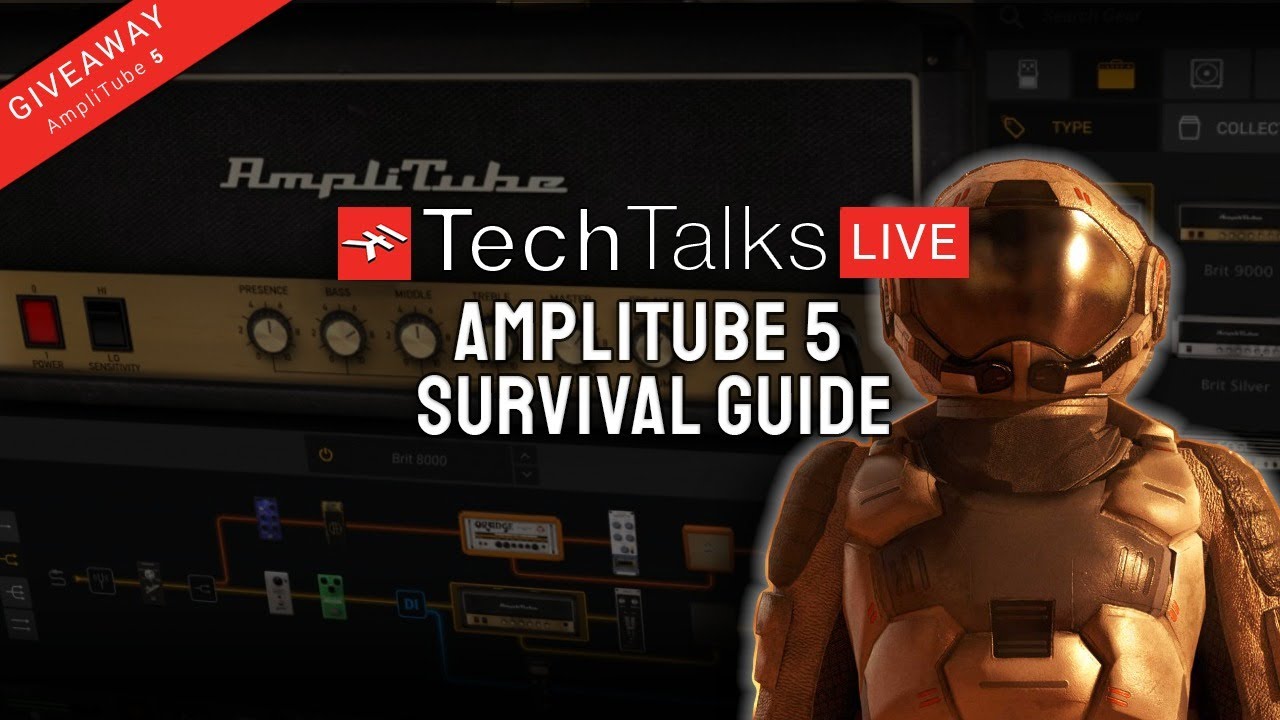
IK Tech Talks Live - AmpliTube 5 Survival Guide (Walk-through & tutorial)
Full Review

AmpliTube 5 - Overview
Overview
The Best Tones in AmpliTube 5
Review

PETE THORN for GUITAR WORLD - AMPLITUBE 5 REVIEW
Full Review
Pros
183 gear models in the standard tier Unlimited routing Cabinet impulse loading Best for controlCons
Overwhelming for beginners Long tweaking curve CPU-heavy $100-300 depending on tierAmp
Free & Excellent
Neural Amp Modeler
Free · Neural Amp Modeler
Price history
We have been recording this product's price at its dealers since July. Player members see the 90-day trend, what it has been at its highest and lowest, and whether today is actually a good day to buy it.
Free. Open-source deep learning amp modeling. Not a generic emulation: neural models trained on real amps. Surprisingly good.
Why it made the list
NAM uses deep learning to model real amps instead of traditional circuit simulation. The open community builds new models constantly. 100% free, no gatekeeping.
Deep Dive: Who It's Really For
The ideal buyer: Anyone curious about amp modeling who would rather spend nothing to find out, and anyone who already has a favorite amp captured by the community.
Free versus paid, honestly: The modeling holds up against paid suites; the packaging does not. You find and load captures yourself, and the interface assumes you know what a power amp and a cabinet do. That is the whole trade.
Real-world use: Load a capture, add an impulse response for the cabinet, and use your DAW's own reverb and delay. Treat it as the amp and let the rest of the session do the rest.
▶ Featured Review

Video Reviews & Tutorials

How to Use Neural Amp Modeler (NAM) and TONE3000. Free Guitar Tones | 2025 Guide
Full Review

Amp Sims are Over.
Review

This Guitar Amp Just Changed EVERYTHING
Review
PLAY MY AMP FOR FREE TODAY - Neural Amp Modeler
Review
Pros
Completely free Open-source Deep learning accuracy Community-built modelsCons
Smaller model library than paid options Learning curve Less polished UI