☆ Top Pick
Yamaha HS5
Price history
We have been recording this product's price at its dealers since July. Player members see the 90-day trend, what it has been at its highest and lowest, and whether today is actually a good day to buy it.
The 5-inch version of the legendary HS series. Brutally honest midrange, room controls that actually work, and the white woofer that announces you take this seriously.
Why it made the list
The HS series philosophy has never changed: if it sounds good here, it sounds good everywhere. The HS5 is ruthlessly honest in the mids, exactly where vocals, guitars, keys, and most important elements live. It won't flatter your mixes. That's the point. The Room Control and High Trim switches on the back compensate for placement near walls or shelves, which matters in 90% of home setups. The HS5 suits smaller rooms where an 8" woofer would create low-end buildup. Perfect if your mixing desk is under 6 feet from the speakers.
Deep Dive: Who It's Really For
The ideal buyer: Someone mixing in a small room who would rather hear the problems now than after the track is released.
Why 5-inch here: An 8-inch woofer in a small room creates low-end buildup that changes with where your head is, so the smaller driver is the more accurate choice rather than the cheaper compromise.
Real-world use: Use the Room Control and High Trim switches on the back if the speakers sit near a wall or on a shelf, which describes most home setups. Expect them to be unflattering, because that is what you are buying.
▶ Featured Review
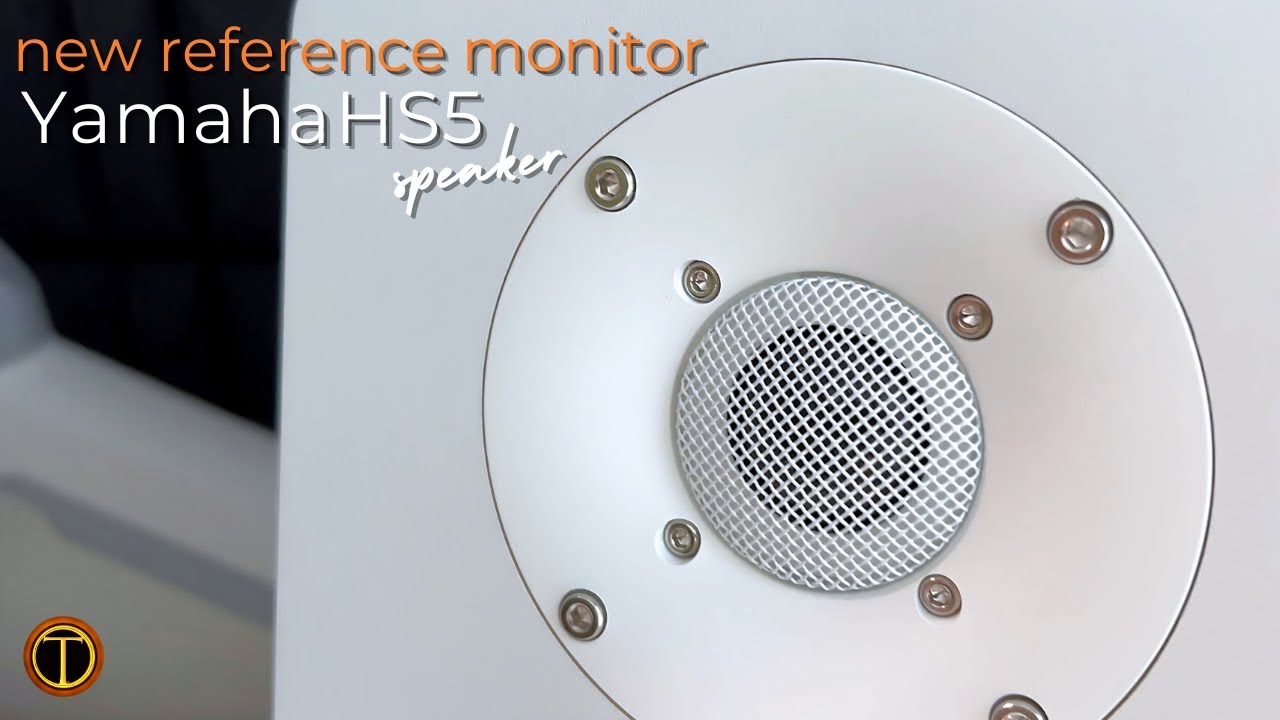
Video Reviews & Tutorials
Yamaha HS5 Studio Monitor Speaker Review
Full Review
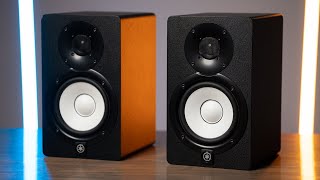
The Standard in Studio Monitors: Yamaha HS5 Powered Speaker Review
Review
Can the Yamaha HS5 hold up in a pro mixing environment?
Review
Pros
Flat, ruthless midrange Room control switches work in real setups Industry-standard reference Clear high end without harshness Works in smaller spacesCons
Limited low-end extension below 54Hz Unforgiving, bad mixes sound badBest Budget Entry
PreSonus Eris Studio 5
Check current price · Amazon / Sweetwater
Price history
We have been recording this product's price at its dealers since July. Player members see the 90-day trend, what it has been at its highest and lowest, and whether today is actually a good day to buy it.
The current Eris, and the replacement for the E5 XT this guide used to recommend. A 5.25-inch woofer with a silk-dome tweeter on a waveguide, acoustic tuning controls on the back, and both balanced and unbalanced inputs so it works with any interface.
Why it made the list
This entry changed for a simple reason: the Eris E5 XT is discontinued, and recommending a monitor you can no longer buy new is not advice. The Eris Studio 5 is the direct successor and keeps what made the older model the default budget pick, namely acoustic tuning controls that let you compensate for a desk against a wall, and a voicing that is closer to honest than exciting. It is the cheapest monitor here that is still a monitor rather than a consumer speaker.
Deep Dive: Who It's Really For
The ideal buyer: Someone buying their first pair, where the alternative is mixing on headphones or on consumer speakers that flatter everything.
Why not the E5 XT: Because it is discontinued. Buying the outgoing model to save money is reasonable when stock is real and warranty is intact, and a gamble when neither is certain.
Real-world use: Put the tuning controls to work rather than leaving them flat, since a desk against a wall is exactly what they exist for. Treat the room before you upgrade the speakers: our treatment guide covers the first panels.
▶ Featured Review
Video Reviews & Tutorials

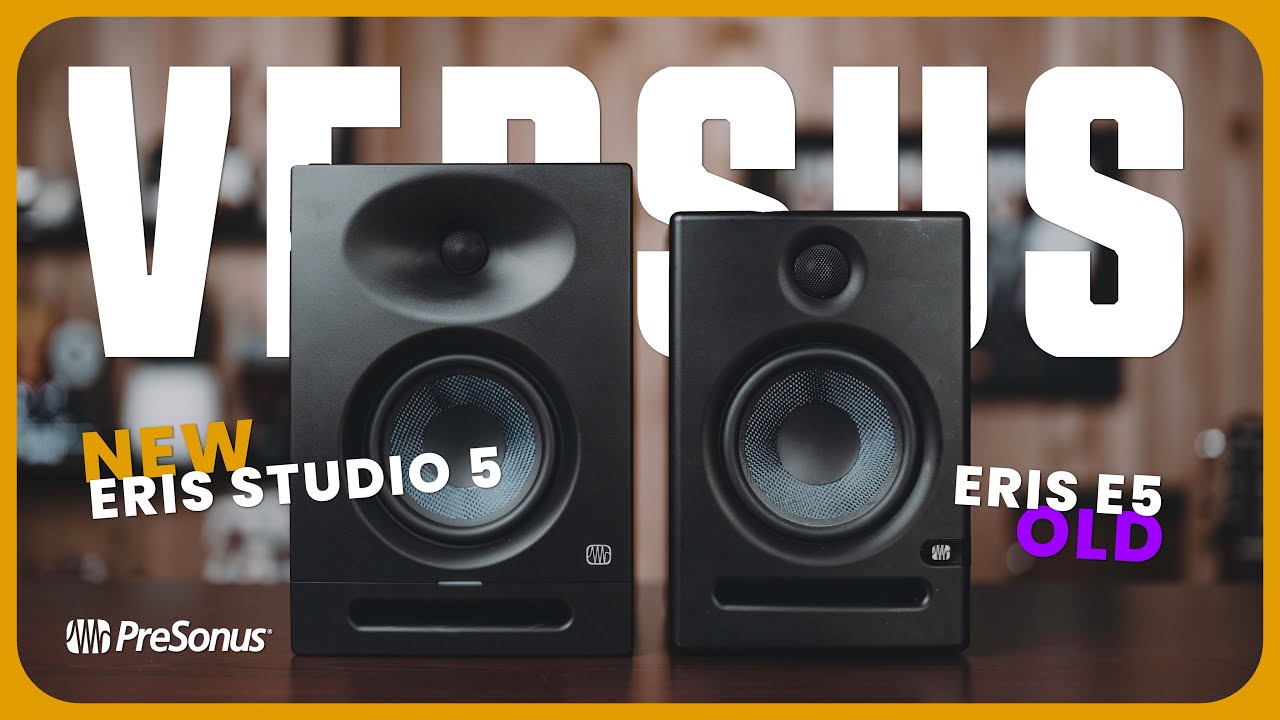
PreSonus Eris Studio 5 VERSUS Eris E5 Monitors - Hands-On In-Studio Comparison
Comparison

PreSonus Eris Studio 5 VERSUS Eris E5 XT Monitors - Hands-On In-Studio Comparison
Comparison

The New Eris Series Studio Monitors | PreSonus
Review
Pros
Acoustic tuning controls for real-world placement Balanced and unbalanced inputs, so any interface works Current model, not old stock The least money that still buys an honest speakerCons
Least low-end extension of the four A budget tweeter is still a budget tweeter You will outgrow it if you mix bass-heavy musicBest Midrange
ADAM Audio T5V
Price history
We have been recording this product's price at its dealers since July. Player members see the 90-day trend, what it has been at its highest and lowest, and whether today is actually a good day to buy it.
Ribbon tweeter for exceptional high-end imaging, 70W total per speaker, and about $240 each. The detail-oriented pick for producers who need to hear reverb tails and sibilance clearly.
Why it made the list
Adam's ribbon tweeter technology is borrowed from their $2,000+ reference monitors and scaled into the T5V. Ribbon tweeters image more precisely than dome tweeters: the high end is tighter, more extended (up to 25kHz), and easier to judge spatially. If you're mixing vocals, electronic textures, or anything where high-frequency decisions matter, the T5V reveals details the HS5 can miss. Wide sweet spot means you stay in the imaging zone even when you're not perfectly positioned.
Deep Dive: Who It's Really For
The ideal buyer: Someone who keeps being surprised by harshness that only shows up on other systems. The ribbon-style tweeter makes that audible while you can still fix it.
Detail is not the same as flattery: The extra high-frequency resolution shows you sibilance and cymbal edge earlier than a softer tweeter would, which is useful and tiring in equal measure on a long session.
Real-world use: Give your ears a week before trusting them, and check a mix you know well first. If the top end feels aggressive at the start, that is usually the monitors telling the truth rather than adding anything.
▶ Featured Review

Video Reviews & Tutorials
Adam Audio T5V Studio Monitor Review
Full Review

Adam Audio T5V Audio Monitors Review and Testing
Review
These Studio Monitors are QUALITY!! || Adam Audio T5V Studio Monitor (Unboxing & Review)
Review
Pros
Ribbon tweeter (detail beyond this price class) Extended to 25kHz Wide sweet spot 70W per speaker, 50W woofer plus 20W tweeterCons
About $480/pair Brighter character needs adjustment period Less flat in the mids vs. YamahaPro Upgrade
Focal Alpha 50 Evo
Check current price · Amazon / Sweetwater
Price history
We have been recording this product's price at its dealers since July. Player members see the 90-day trend, what it has been at its highest and lowest, and whether today is actually a good day to buy it.
Bi-amped, with a 5" Slatefiber woofer, a 1" aluminum inverted-dome tweeter, and the Focal accuracy that mastering engineers trust. About $329 each, so roughly $658 a pair.
Why it made the list
When accuracy is the non-negotiable, Focal Alpha Evo is the reference. The aluminum/magnesium woofer is stiffer than traditional materials: less resonance, more transient accuracy. The tweeter is Focal's own inverted dome design, which pushes the voice coil backwards and reduces distortion at high frequencies. These are the monitors you upgrade to when every mix decision needs to be correct, not just close. Used by mastering engineers because they don't color; they reveal.
Deep Dive: Who It's Really For
The ideal buyer: Someone who has treated the room, learned a cheaper pair, and can now hear what those speakers were not telling them.
Where the money goes: Into midrange resolution and how the speaker behaves off axis, neither of which appears usefully on a spec sheet and both of which change how long you can work before fatigue sets in.
Real-world use: This is the point where the room becomes the limit rather than the speaker. If the corners are still bare, spend on bass trapping first and buy these second.
▶ Featured Review
Video Reviews & Tutorials

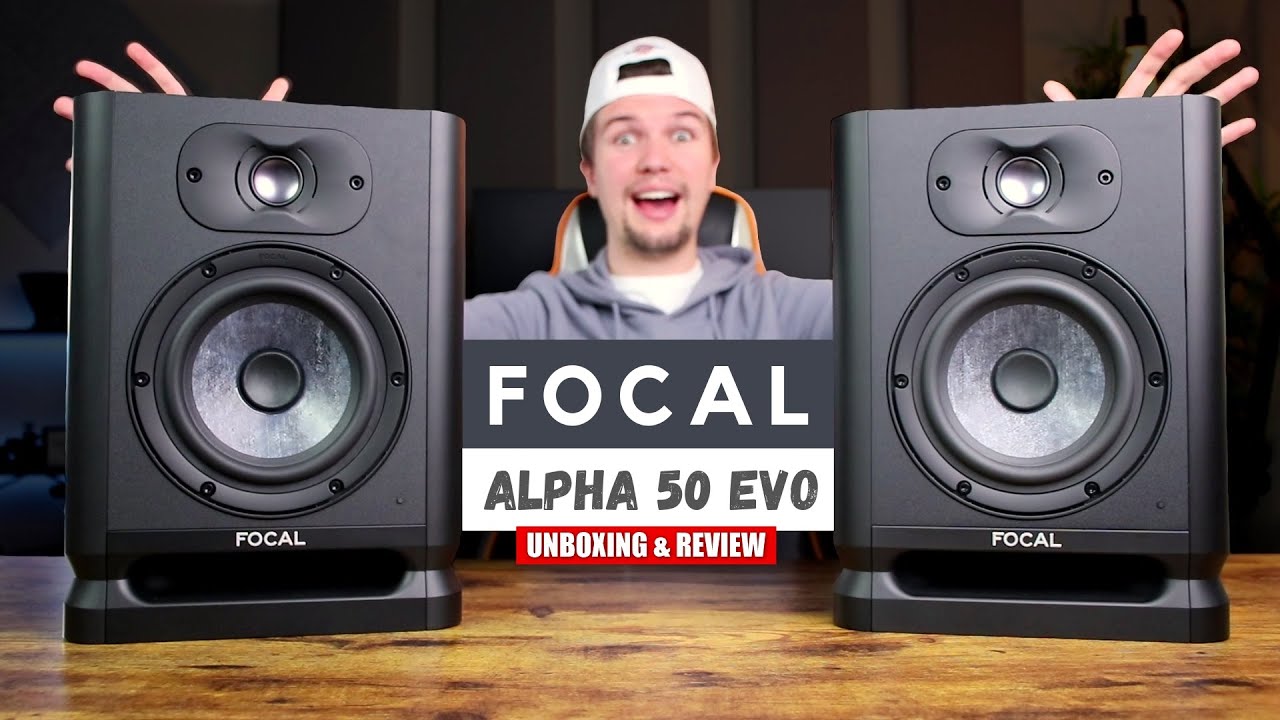
These Studio Monitors Sound INSANE!!! // Focal Alpha 50 Evo Studio Monitors (Unboxing & Review)
Unboxing

DSAUDIO.review || Focal Alpha 50 EVO vs Focal Alpha 65 EVO || sound.DEMO
Comparison

DSAUDIO.review || Focal Alpha 50 EVO vs Adam Audio T5V || sound.DEMO
Comparison

DSAUDIO.review || Focal Alpha 50 EVO vs KRK Rokit 5 G4 RP5G4 || sound.DEMO
Comparison
Pros
Bi-amped accuracy Slatefiber cone, stiff and well damped Mastering-grade translation LF and HF shelving to tune for the roomCons
$658/pair is a real step up from the rest of this list Requires treated room to perform correctly Overkill for bedroom beats