Scarlett Solo
★ Top Pick
Focusrite Scarlett Solo (4th Gen)
Price history
We have been recording this product's price at its dealers since July. Player members see the 90-day trend, what it has been at its highest and lowest, and whether today is actually a good day to buy it.
The Scarlett Solo is the most popular beginner interface on the planet for a reason. The 4th gen upgrade brings improved preamps, Air mode for a brighter high-end, and 24-bit/192kHz conversion, all at around $160. If you record vocals or one instrument at a time, this is the no-brainer buy.
Why it made the list
We picked the Scarlett Solo because it removes every excuse not to start recording. The 4th gen preamps are genuinely good, not "good for the price," just good. Air mode adds a subtle high-frequency lift that flatters vocals without sounding hyped. The included plugin bundle (Ableton Live Lite, Hitmaker Expansion) means you can go from unboxing to recording a finished track in the same afternoon. For anyone who records one source at a time (voice, guitar, synth), there's no reason to spend more.
Deep Dive: Who It's Really For
The ideal buyer: You're a singer-songwriter, podcaster, or bedroom producer who primarily captures one source at a time. You want something that works immediately, sounds pro, and doesn't require a manual. The Scarlett Solo nails that.
Compared to its siblings: The Solo is the 2i2 with one fewer mic input. If you ever think you might want to record guitar and vocals simultaneously, skip this and go straight to the 2i2. But if you're confident you're a one-at-a-time recorder, you'll never miss what you didn't buy.
Real-world use: Plug in your condenser mic, hit Air mode, and your vocal instantly sounds like it was tracked through a console worth 100x the price. The onboard monitoring controls mean zero latency on headphones during tracking. It's the reason Scarlett Solos are everywhere, because they just work.
▶ Featured Review
Video Reviews & Tutorials

Focusrite Scarlett Solo 4th Gen – Unboxing, Honest Review & Easy Setup Guide
Full Review

Focusrite Scarlett Solo 4th Gen – USB Audio Interface Review (Air Mode Audio Samples)
Sound Test

Scarlett Solo 3rd Gen | 5 Things That Make It So Popular | Review
Review
Pros
Best preamps in this price tier Bus-powered via USB-C Air mode adds clarity to vocals Huge community + plugin bundleCons
Only 1 mic input, no band recording Only one headphone output, so no separate cue mixScarlett 2i2
Best 2-Input Value
Focusrite Scarlett 2i2 (4th Gen)
Price history
We have been recording this product's price at its dealers since July. Player members see the 90-day trend, what it has been at its highest and lowest, and whether today is actually a good day to buy it.
The step up from the Solo: two mic/line inputs and the same improved preamp quality. If you ever record two sources simultaneously (guitar + vocals, duo session, a stereo room mic), this is the right call. Around $225 and worth every cent.
Why it made the list
The 2i2 is the sweet spot in Focusrite's lineup. The moment you want to record guitar and vocals at the same time (or run a stereo mic pair on an acoustic instrument), the Solo hits a wall. The 2i2 gives you two independent preamps with separate gain control, and the 4th gen sharpened the preamps and the metering. Neither Scarlett at this size has MIDI ports, so a keyboard controller connects over USB or you step up to the 4i4. That combination of flexibility and reliability at $225 is hard to beat. If there's any chance you'll outgrow a single input, start here.
Deep Dive: Who It's Really For
The ideal buyer: A home recording musician who wants to grow. You record acoustic guitar, you sometimes want a room mic, you have a MIDI keyboard. The 2i2 is the last interface you'll need to buy for a while.
Solo vs 2i2: The Solo saves you $60 but locks you to one input forever. The 2i2's extra input is almost always used eventually; by the time most Solo buyers upgrade, they've spent more than if they'd started with the 2i2. Buy right the first time.
Real-world use: Singer-guitarists love this unit. One input for the vocal mic, one for the DI guitar. Record both simultaneously, keep them on separate tracks. The Halo ring monitoring system (green for safe, red for clipping) gives you instant visual feedback so you stop looking at your DAW and just play.
▶ Featured Review
Video Reviews & Tutorials
Focusrite Scarlett 2i2 4th Gen | Audio Interface Review & Sound Quality Test
Full Review

Focusrite Scarlett 2i2 (4th Gen) USB Audio Interface Review / Explained
Review
Should you buy the Focusrite Scarlett 2i2 4th Gen!? | Review
Review
Pros
Two independent preamps with separate gain Halo ring monitoring is genuinely useful Rock solid driver supportCons
No hardware insert points No 4K-style character switch
Pro Sound on a Budget
SSL 2 MKII
Price history
We have been recording this product's price at its dealers since July. Player members see the 90-day trend, what it has been at its highest and lowest, and whether today is actually a good day to buy it.
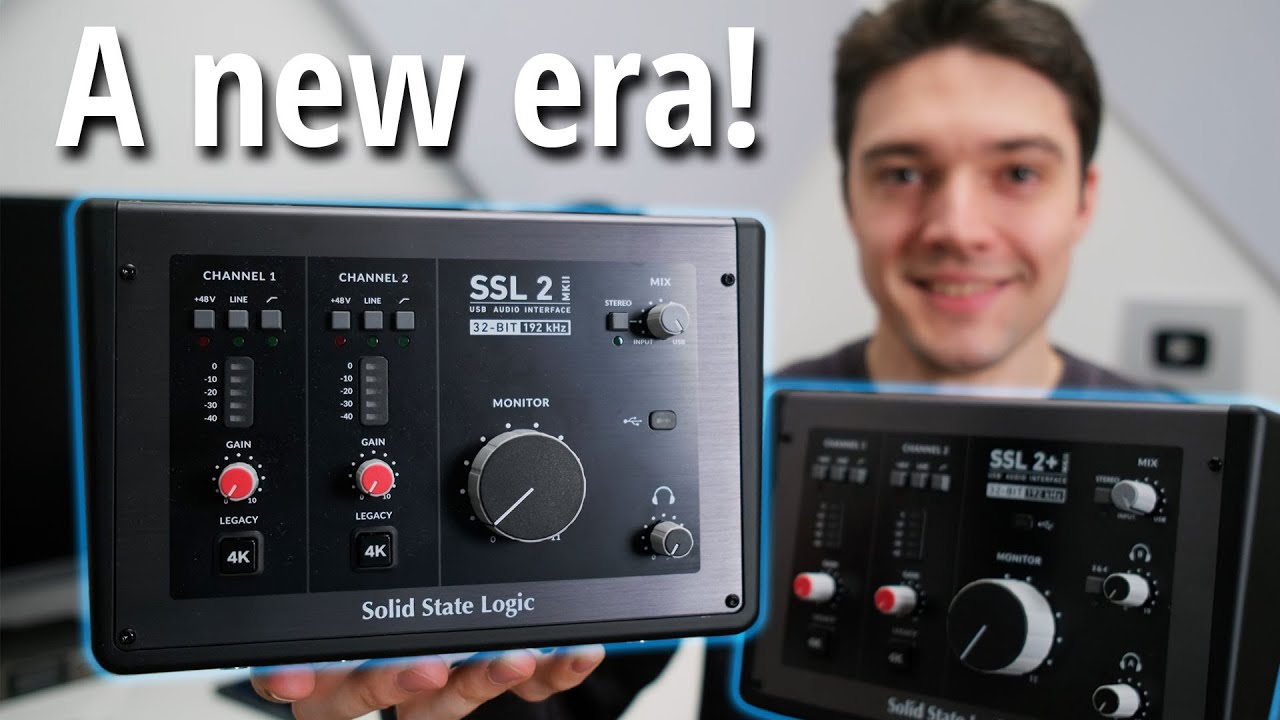
SSL replaced the original SSL 2 with the MKII in its second generation: new 32-bit converters, preamp gain up to 64dB, a loopback path for streaming, and a second headphone output, with the Legacy 4K button still doing its trick. Punch it and the channel adds that famous SSL console brightness and harmonic color.
Why it made the list
SSL consoles run $50K–$500K. The SSL 2 MKII puts their preamp DNA into a $230 box, and it's not just marketing. The 4K Legacy mode genuinely adds harmonic character to recordings: a subtle mid-range punch and top-end shimmer that sounds expensive. We include it here because if you care about the tone of your recordings (not just the specs), the SSL 2 delivers something the Focusrite lineup doesn't: flavor.
Deep Dive: Who It's Really For
The ideal buyer: A producer or engineer who's chased "vibe" their whole career. You know what SSL consoles sound like and you want some of that DNA without spending $300K. The SSL 2 MKII delivers a recognizable character: the kind that makes rock vocals punch and acoustic guitars shimmer.
SSL 2 vs Scarlett 2i2: The Focusrite is more transparent and neutral. The SSL 2 MKII has color. For pop, electronic music, or anything where you want a "clean" canvas, go Focusrite. For rock, indie, folk, R&B (anything where you want an edge baked into the source signal), try the SSL first.
Real-world use: Engage 4K Legacy mode on a vocal take and you'll hear the difference immediately; there's more presence, more air, more weight in the chest frequencies. It's subtle but it's real. Mix engineers who work with SSL-tracked material know what to listen for.
▶ Featured Review
Video Reviews & Tutorials
Solid State Logic SSL 2 MKII and SSL 2+ MKII Review (including DC coupled outputs now)
Full Review
SSL2 MKII: Features, Sound Quality, & Performance | Full Review
Review

SSL 2 - THE BEST AUDIO INTERFACE FOR GUITAR?
Review

Solid State Logic SSL2 and SSL2+ USB Audio Interfaces Overview
Overview
Pros
4K Legacy mode adds professional SSL color Two headphone outputs, and 32-bit converters Great software bundleCons
No MIDI, and no Auto Gain or Clip Safe like the Scarlett Second headphone out shares the first one's volumeBest for Live Performers
MOTU M2
Price history
We have been recording this product's price at its dealers since July. Player members see the 90-day trend, what it has been at its highest and lowest, and whether today is actually a good day to buy it.
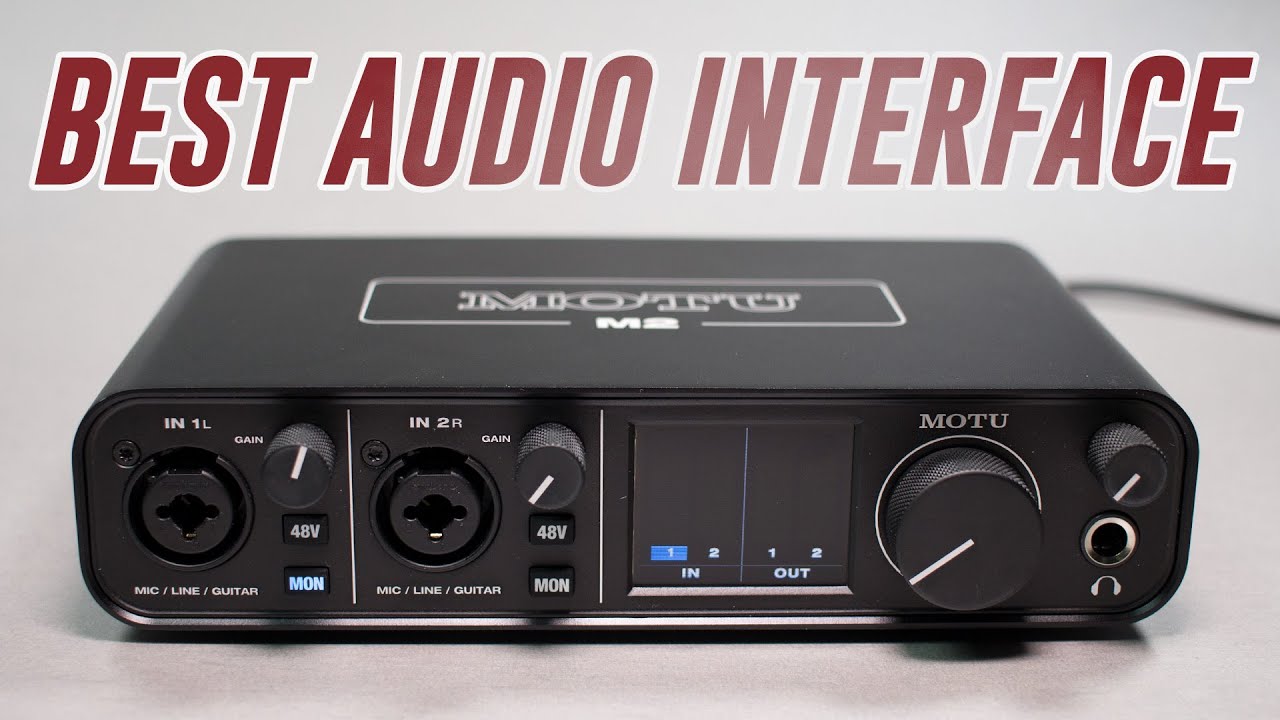
MOTU makes interfaces that engineers respect. The M2 punches above its class with ultra-low latency, a surprisingly detailed metering display, and two pristine preamps. If you care about accurate monitoring and latency during live performance or tracking, this is your pick under $200.
Why it made the list
The MOTU M2 earns its place on the technical merits alone: the ESS Sabre DAC inside is the same chip found in audiophile DACs costing 5x more, and the measured round-trip latency is the lowest in this entire price tier. The built-in LCD metering is also genuinely useful during recording; you can see levels at a glance without opening your DAW.
Deep Dive: Who It's Really For
The ideal buyer: A live performer who uses Ableton Live in a live rig, or a mixing engineer who tracks at home and cares about the accuracy of what they're hearing. The M2's measurement specs are genuinely audiophile-grade in a sub-$200 box.
MOTU M2 vs Focusrite: Focusrite wins on software bundle and community support. MOTU wins on pure technical performance: lower latency, more accurate playback, better display. Pick MOTU if you're a technical user who can set up drivers yourself. Pick Focusrite if you want plug-and-play and a huge support community.
Real-world use: Playing virtual instruments through the M2 feels immediate and responsive in a way that's hard to explain until you've experienced it. There's no perceptible "lag" between key press and sound. For anyone who's been frustrated by latency in their current rig, this is often the fix.
▶ Featured Review
Video Reviews & Tutorials
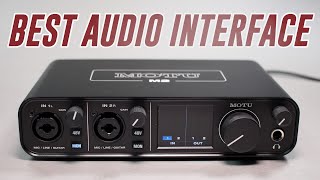
MOTU M2 Audio Interface Review / Test / Explained
Full Review

MOTU M2 Audio Interface – Everything You Need to Know!
Overview
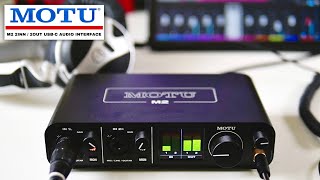
MOTU M2 USB-C Audio Interface Long Term Short Review
Long-term Review
Pros
Lowest latency in this price range Built-in ESS Sabre DAC (audiophile grade) Polished hardware + built-in displayCons
Slimmer software bundle Slightly pricier at ~$200Power User Pick
Universal Audio Volt 276
Price history
We have been recording this product's price at its dealers since July. Player members see the 90-day trend, what it has been at its highest and lowest, and whether today is actually a good day to buy it.
UA brings the UREI 1176-style compression circuit into a $299 interface, which is genuinely insane. Hit the "Vintage" button and you get 1176-style compression on your input signal in real time. Overkill for pure beginners, but if you're ready to invest in sound quality, the Volt 276 is the ceiling of this category.
Why it made the list
The Volt 276 is our "if you can stretch the budget" recommendation. Universal Audio's integration of an analog 1176-style compressor circuit directly into the input path means you can print compression to your recordings in real time, something that normally requires a separate $500+ hardware compressor. For vocals especially, engaging Vintage mode adds a polished, professional presence that's immediately audible.
Deep Dive: Who It's Really For
The ideal buyer: You've recorded before. You know what compression sounds like. You want to print compression to tape (the way records were made) rather than adding it in post. The Volt 276 is for that person.
Is the onboard compressor actually good? Yes, within its limits. It's not a true discrete 1176 (the circuit is solid-state and simplified), but the character it adds is clearly 1176-adjacent: fast attack, that snappy release, the presence bump in the upper mids. Experienced ears will recognize the vibe immediately.
Real-world use: Tracking vocals through the Volt 276 with Vintage mode at moderate compression ratios gives a forward, intimate sound that sits right in a mix without much processing. Rock vocals, R&B, hip-hop: anything where the voice needs to be front and center benefits immediately. Just don't over-compress: aim for 3–6dB of gain reduction.
▶ Featured Review
Video Reviews & Tutorials

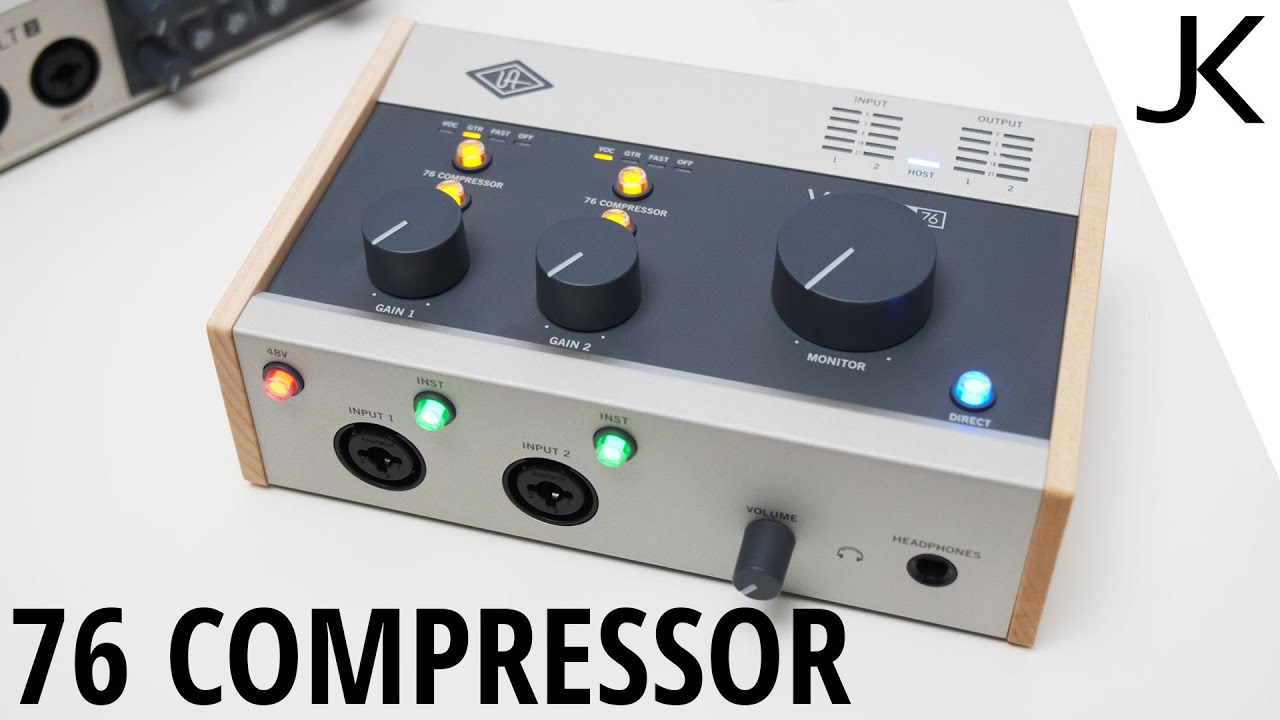
Universal Audio VOLT 276 – Review (Compressor and Vintage Mode Audio Samples)
Full Review
Audio Interface I Wish I Bought Sooner – Volt 276 Review
Review
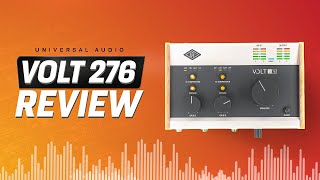
FULL REVIEW | Discover what the Volt 276 can do for YOUR Sound!
Review
Pros
Built-in 1176-style compressor is legit UA plugin ecosystem access Beautiful hardware designCons
$299, at the very top of this guide Compressor is pre-ADC onlyU-Phoria
Best Budget + Simplicity
Behringer U-Phoria UMC202HD
Price history
We have been recording this product's price at its dealers since July. Player members see the 90-day trend, what it has been at its highest and lowest, and whether today is actually a good day to buy it.
Two XLR inputs, USB power, metal construction, and zero software bloat. Clean preamps, direct monitoring, and a headphone output, for under $90.
Why it made the list
Two preamps with gain control, direct monitoring, and a headphone output. No frills, just audio in and out. The preamps are clean, not colored. At $87, it's the floor for studio-quality recording.
Deep Dive: Who It's Really For
The ideal buyer: Someone recording their first songs who needs two real preamps and nothing else. If the alternative is not recording at all, this is the interface that ends the wait.
Where the money went: Into the preamps and the metal box, not into software or MIDI. That is a fair trade at this price, and it is also why you should check whether you need MIDI before you buy.
Real-world use: Two inputs is a voice and a guitar at the same time, which covers most singer-songwriter recording. Use direct monitoring while tracking so you are not fighting latency, and spend what you saved on a stand and a pop filter.
▶ Featured Review

Video Reviews & Tutorials

Behringer UMC202HD review (with noise measurement)
Full Review
Behringer U-PHORIA UMC202HD USB Interface Review
Full Review

Comparing the Behringer U-PHORIA UMC202HD vs UMC204HD audio interface (works on Linux too!)
Comparison

Behringer UMC202HD Review by Dillio
Full Review
Pros
Cheapest way into two real XLR preamps Metal chassis Direct monitoring Class-compliantCons
No MIDI Minimal software bundle Clinical preampsiD4
Best for Guitarists
Audient iD4 MkII
Price history
We have been recording this product's price at its dealers since July. Player members see the 90-day trend, what it has been at its highest and lowest, and whether today is actually a good day to buy it.
One XLR + one 1/4" input with Audient's legendary preamp DNA. USB-C, direct monitoring, dual headphone outputs. ~$200.
Why it made the list
Audient's preamps are used on records you love. The iD4 puts one in a portable box for about $299. Built like a tank, clean conversion, and dual headphone outputs for overdubbing.
Deep Dive: Who It's Really For
The ideal buyer: A guitarist or a solo vocalist who records one source at a time and cares more about how it sounds than how many things it can do at once.
One input, deliberately: The iD4 costs more than two-input interfaces because the money went into the preamp rather than a second channel. If you will ever record voice and guitar together, that is the wrong trade and the Scarlett 2i2 is the better buy.
Real-world use: The two headphone outputs are the quiet advantage: you can overdub with someone else listening without a splitter, and the scroll wheel makes level changes without reaching for the mouse.
▶ Featured Review
Video Reviews & Tutorials

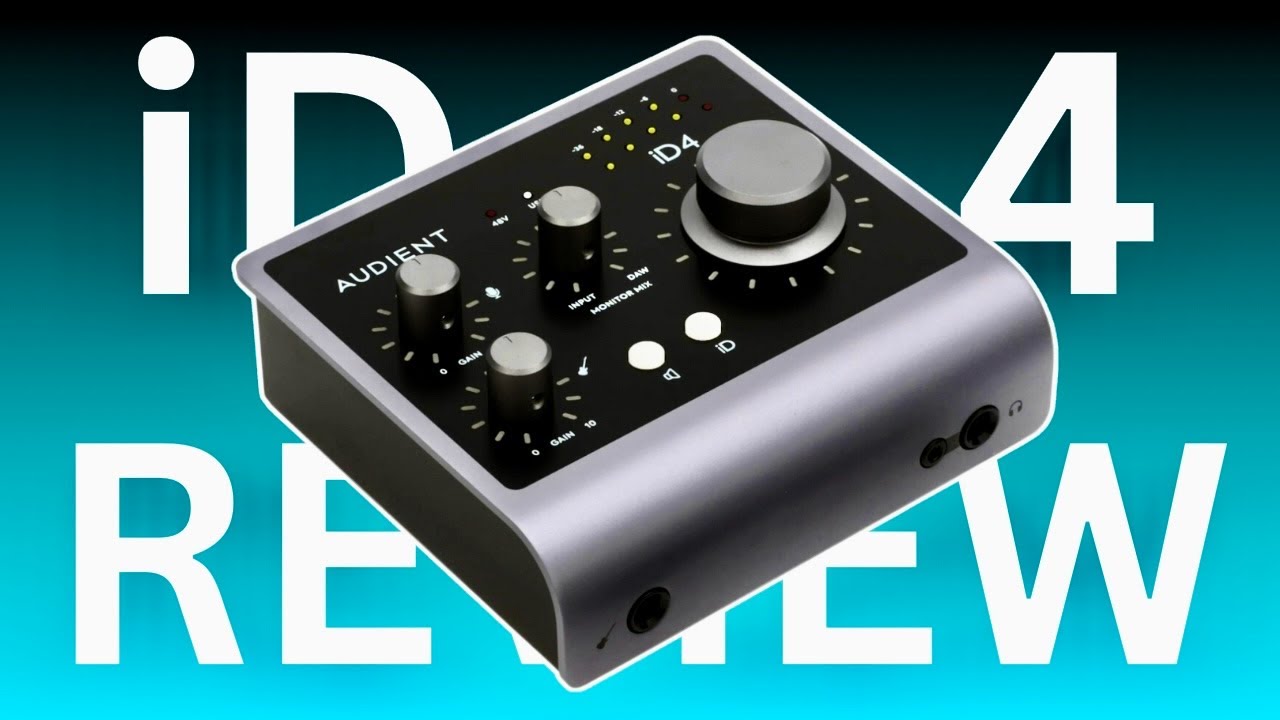
Audient iD4 MKII: Best Interface Under $200?
Full Review

How to set up an Audient iD4 MkII Audio Interface
Tutorial

Audient iD4 MKII and iD14 MKII - Audio Interface Review
Full Review

Audient iD4 MkII Feature Overview
Overview
Pros
Best preamp at this price Dual headphone outputs Scroll wheel is genius Audient reliabilityCons
One input (no simultaneous tracking) No MIDI Premium pricing for feature setAudio
Best Portable
Universal Audio Volt 1
Price history
We have been recording this product's price at its dealers since July. Player members see the 90-day trend, what it has been at its highest and lowest, and whether today is actually a good day to buy it.
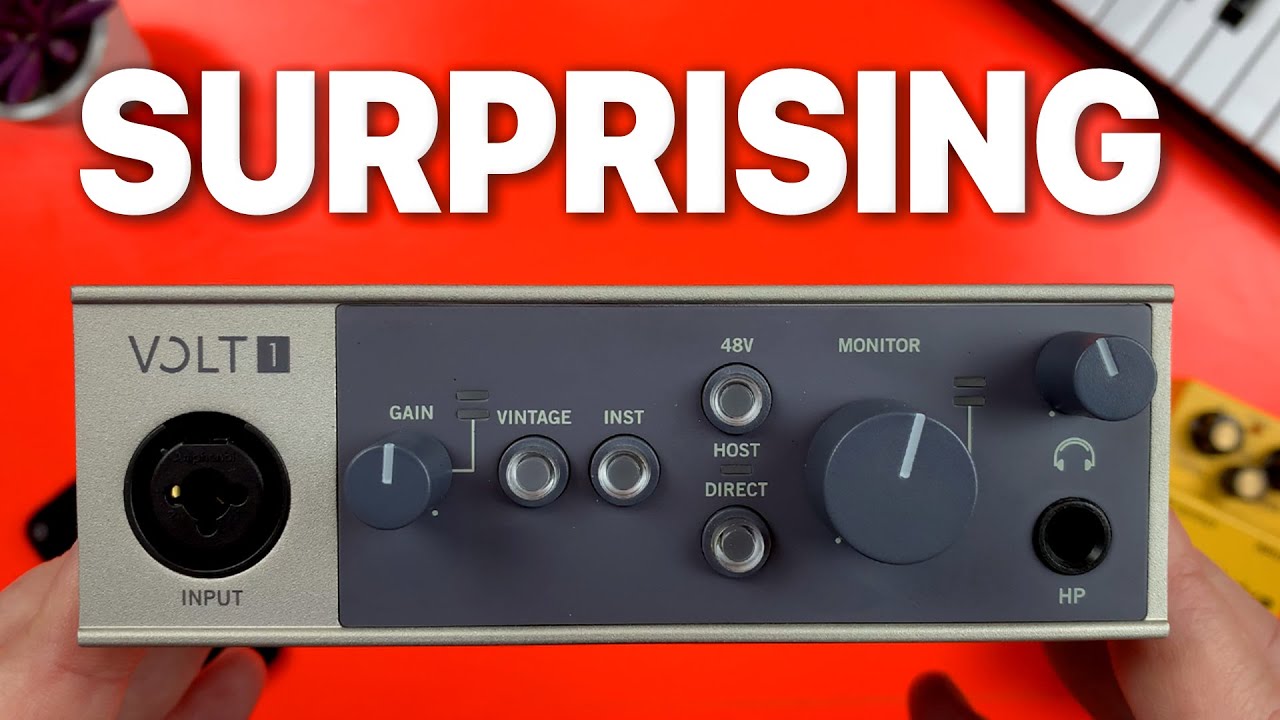
USB-powered, backpack-sized, Vintage mode on the preamp adds warmth. 24-bit/192kHz conversion. $139.
Why it made the list
You need something that sounds good and weighs less than a sandwich. The Volt 1 delivers. Vintage mode engages a UA 610 tube preamp emulation adding harmonic character.
Deep Dive: Who It's Really For
The ideal buyer: A producer who records away from the desk, on a laptop, in hotel rooms and spare bedrooms, and wants the takes to still be usable at home.
Vintage mode in practice: It is a preamp emulation, so it is a decision you print rather than one you can undo. On a thin voice or a clean electric it adds body; on an already dark source it is the wrong tool. Record a test take both ways.
Real-world use: Bus powered means one cable and no adapter to forget. The plastic front panel is the compromise, so treat it as luggage rather than road gear.
▶ Featured Review
Video Reviews & Tutorials

Universal Audio Volt 1: Audio Interface with a SECRET...
Full Review

DON’T BUY ONE OF THESE! Universal Audio Vs Focusrite
Comparison

Universal Audio VOLT Hands on Demo, Features, EVERYTHING you need to know
Sound Demo

Home Recording just got EASIER! Universal Audio VOLT
Review
Pros
Tiny and light Vintage mode sounds incredible Bus-powered Clean conversion Best valueCons
One input only No MIDI Front panel is plastic over a metal chassis