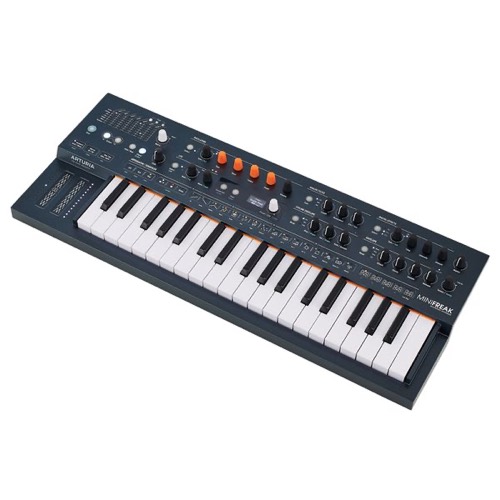
MiniFreak
☆ Top Pick
Arturia MiniFreak
Price history
We have been recording this product's price at its dealers since July. Player members see the 90-day trend, what it has been at its highest and lowest, and whether today is actually a good day to buy it.
The MiniFreak is a 6-voice hybrid: two digital sound engines offering 22 oscillator modes between them, running into analog filters. Those modes cover virtual analog, FM, wavetable, granular, additive, sample-based, Karplus-Strong and formant synthesis, and Engine 2 can process Engine 1's output rather than just sit beside it. Add three effects slots with 13 algorithms each, a 64-step sequencer with four modulation automation lanes, and a 37-note slim keybed with aftertouch, and at $599 it covers more ground than anything else on this page.
Why it made the list
If you can only own one hardware synth, own this one. Most instruments at this price commit to a single flavour of synthesis and ask you to love it. The MiniFreak refuses to choose: the same box gives you a warm analog-filtered pad, a metallic FM bell and a granular texture, and the modulation matrix means you can automate the journey between them. For a producer building tracks rather than chasing one specific vintage sound, that breadth is worth more than any single engine done perfectly.
Deep Dive: Who It's Really For
The ideal buyer: A producer who wants one instrument to cover synth duties across a whole track: bass, lead, pad and texture.
The honest caveat: The slim keys are not a pianist's keybed. They are fine for parts and terrible for performance if you have real technique.
Worth knowing before you buy: The digital engines mean this is not an analog synth with an analog character. The filters are analog; the sound sources are not.
▶ Featured Review
Video Reviews & Tutorials
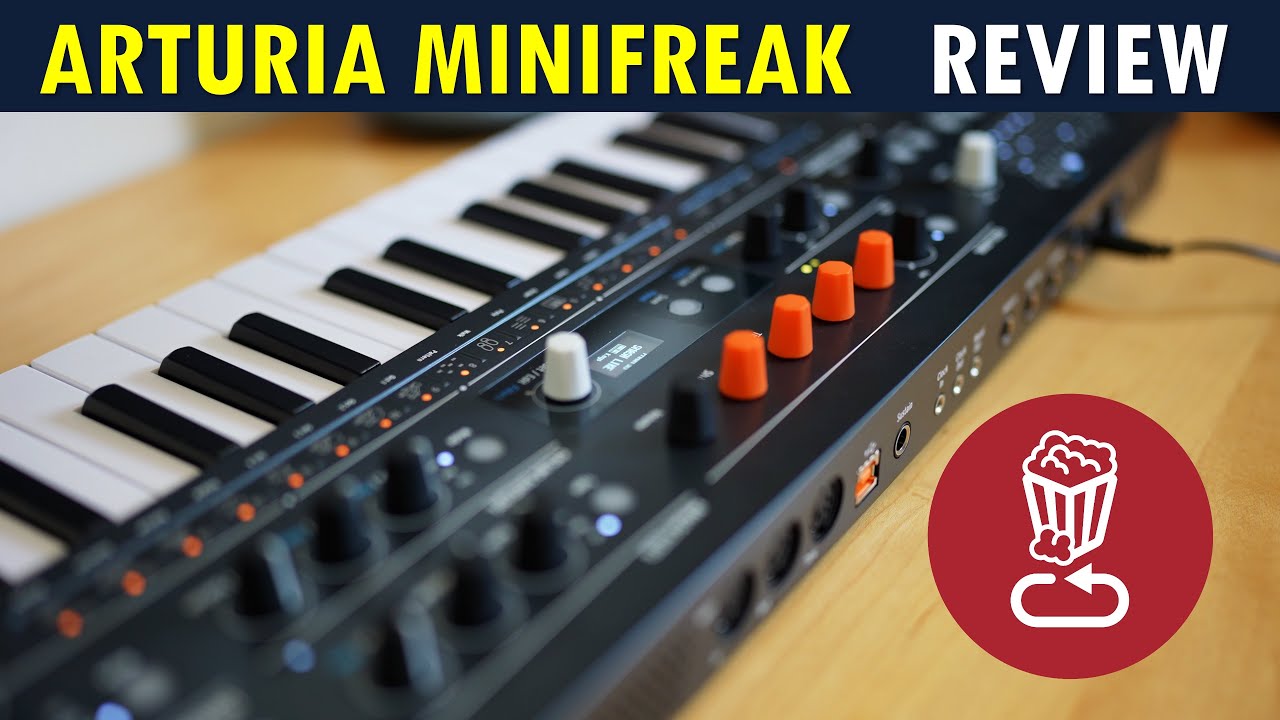
Arturia MiniFreak Review // vs MicroFreak // Playing 250+ presets // Pros, cons & full tutorial
Full Review
Arturia Minifreak: My favorite synthesizer (Microfreak) gets an upgrade
Review
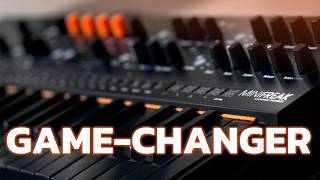
Why the MiniFreak Is Changing the Synth Game · 2025 Review
Full Review
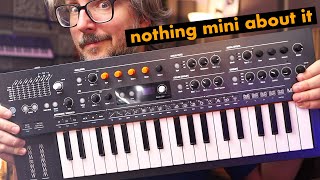
Arturia MiniFreak sounds massive! · First Look & lots of Sound Demos
Sound Demo
Pros
22 oscillator modes across two engines Analog filters on digital sources Deep modulation matrix and 64-step sequencer Aftertouch on the keybed at this priceCons
Slim keys, not full-size Not a true analog synth if that is what you want The sheer breadth takes time to learn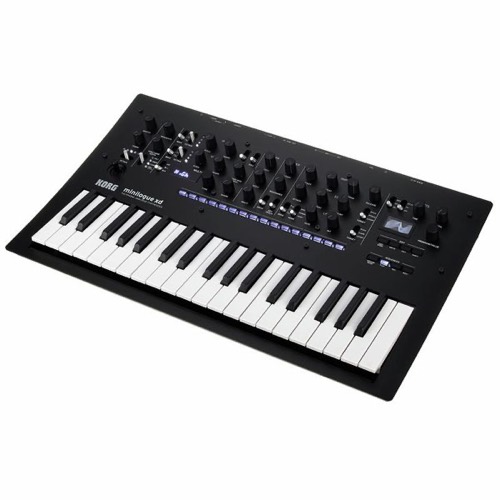
minilogue xd
Best Analog Polysynth
Korg minilogue xd
Price history
We have been recording this product's price at its dealers since July. Player members see the 90-day trend, what it has been at its highest and lowest, and whether today is actually a good day to buy it.
Four voices of genuine analog polyphony, built as 2 VCO plus a digital multi-engine, into 1 VCF, 2 EG, 1 VCA and 1 LFO per voice. That third digital oscillator is what separates the xd from the original minilogue: it runs noise, a VPM/FM oscillator with 16 types, and 16 user oscillator slots you can load your own code into. Effects are 32-bit floating point DSP covering modulation, reverb and delay, with 16 user effect slots, and the 16-step polyphonic sequencer records motion on up to four knobs per step.
Why it made the list
Analog polyphony under $700 is still rare, and this is the one that does it without feeling like a compromise. Four voices is enough for real chord work, the analog filter has the weight you buy analog for, and the digital multi-engine quietly fixes the one thing analog polysynths are bad at: bright, metallic, detailed timbres. The user oscillator slots also mean the instrument keeps growing after you buy it.
Deep Dive: Who It's Really For
The ideal buyer: Anyone whose tracks need pads and chord stabs with actual analog low-end weight underneath them.
The honest caveat: Four voices runs out faster than you expect. Hold a four-note chord and there is nothing left for a passing note.
▶ Featured Review
Video Reviews & Tutorials
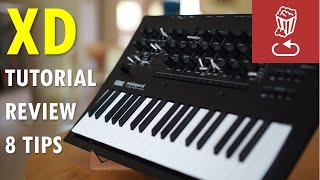
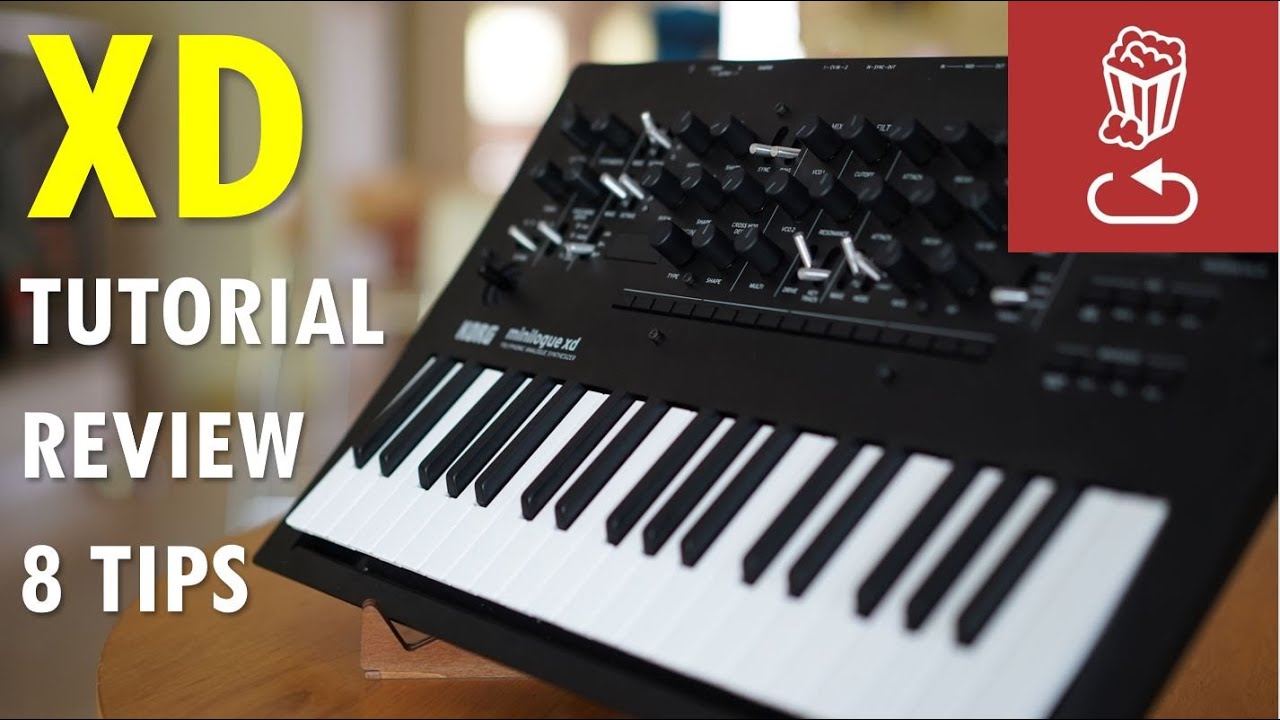
Korg Minilogue XD Review, tutorial and 8 patch ideas by Loopop
Full Review
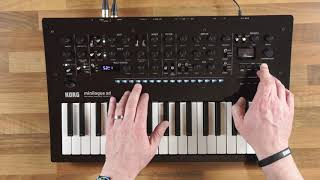
Korg Minilogue XD Demo
Sound Demo
Bad Gear - Korg Minilogue
Review
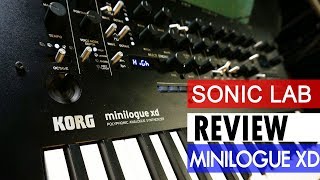
Korg Minilogue XD - SonicLAB Review
Full Review
Pros
Genuine four-voice analog polyphony Digital multi-engine adds FM and wavetable timbres Motion sequencing on four knobs per step User oscillator and effect slots keep it currentCons
Four voices is limiting for dense chord work Slim keybed One LFO per voice restricts complex modulation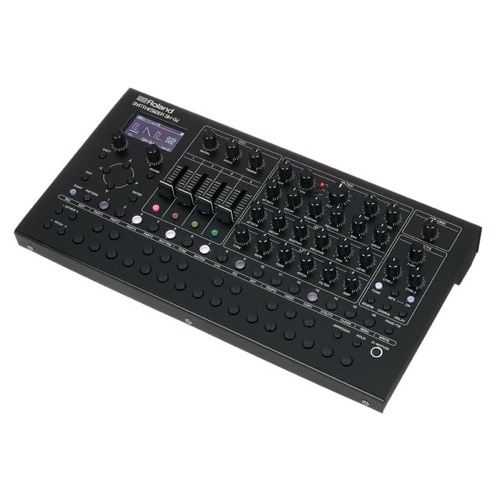
SH-4d
Best All-in-One
Roland SH-4d
Price history
We have been recording this product's price at its dealers since July. Player members see the 90-day trend, what it has been at its highest and lowest, and whether today is actually a good day to buy it.
The SH-4d is four independent synth parts plus a dedicated rhythm part, sharing up to 60 voices of polyphony. Roland gives you 13 oscillator models including the SH-4d's own engine, wavetable, cross FM, and modeled JUNO-106 and SH-101 voices, so the four parts can each be a different instrument. The rhythm part carries 49 preset kits with 26 instruments each and 64 user slots, and the sequencer holds 128 patterns of up to 64 steps with pattern chaining. It runs on USB-C or four AA batteries for roughly four to five hours.
Why it made the list
This is the pick if what stops you finishing music is the setup, not the sounds. Four multitimbral parts and a drum machine in one battery-powered box means an idea goes from nothing to an arranged loop without a computer in the room. The modeled JUNO-106 and SH-101 engines are also the cheapest honest route into those two specific Roland sounds, which normally cost several times this.
Deep Dive: Who It's Really For
The ideal buyer: Producers who want a self-contained sketchpad, and anyone who writes better away from a screen.
The honest caveat: Depth costs immediacy. Four parts, 13 models and a deep sequencer on one small panel means menu diving, and the workflow takes real commitment to internalise.
Worth knowing before you buy: It doubles as a USB-C audio and MIDI interface, so it can go straight into a DAW when you do want one.
▶ Featured Review
Video Reviews & Tutorials
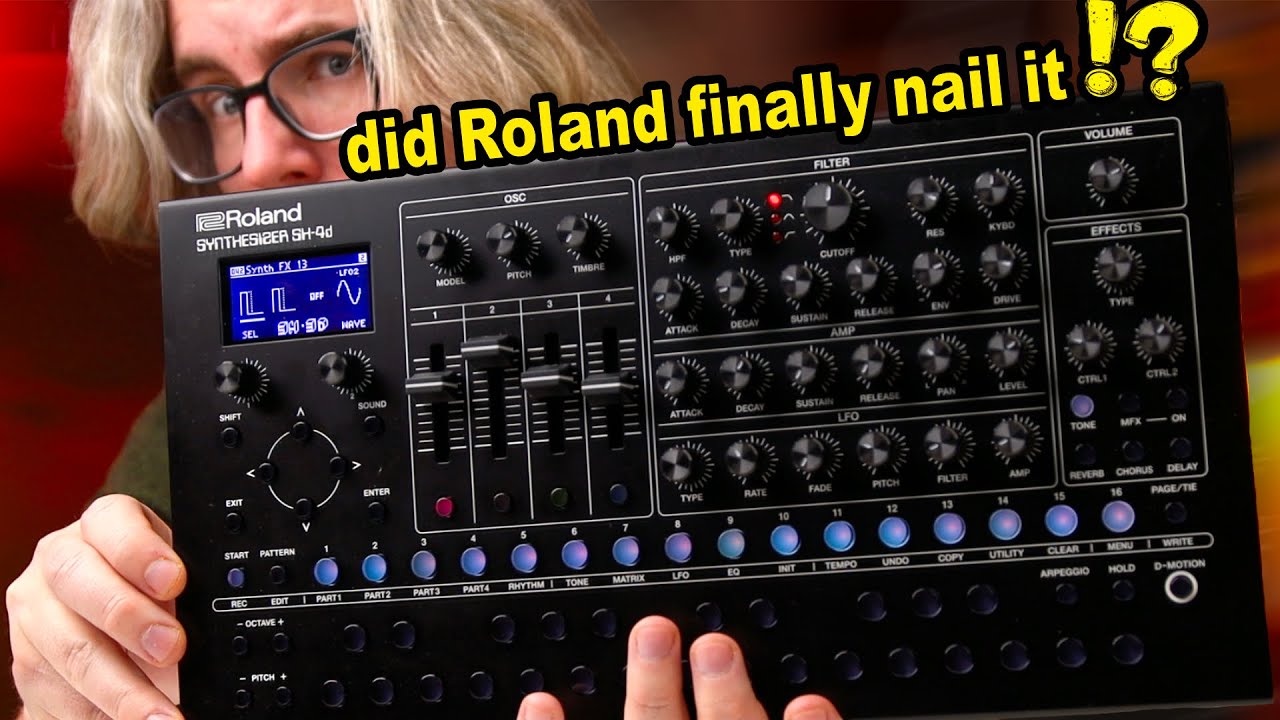
ROLAND SH-4d // Rolands best synthesizer groovebox yet?!
Full Review
Roland SH-4d Review: The multi-engine synth battle heats up! // Full SH4d tutorial
Tutorial
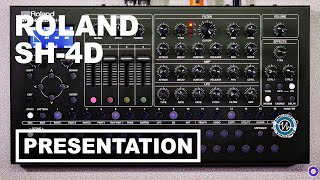
Roland SH-4D 1st Look - Sonic LAB
Review
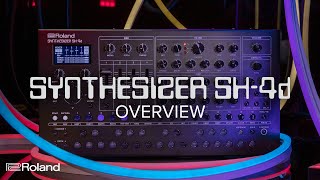
Roland SH-4d Desktop Synthesizer Overview
Overview
Pros
Four multitimbral parts plus a drum part 13 oscillator models including JUNO-106 and SH-101 Battery powered and genuinely portable Works as a USB audio and MIDI interfaceCons
Steep learning curve for the workflow Small controls for the depth on offer The most expensive pick here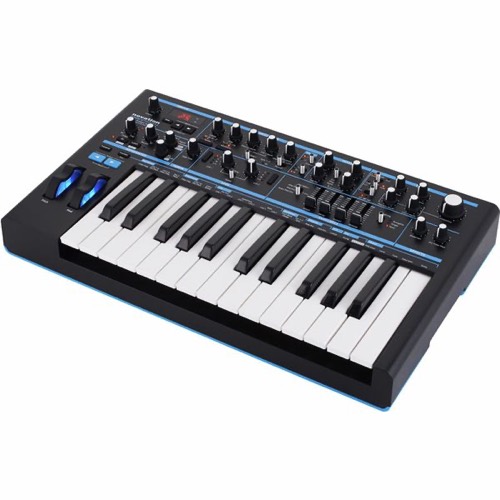
Bass Station II
Best Analog Monosynth
Novation Bass Station II
Price history
We have been recording this product's price at its dealers since July. Player members see the 90-day trend, what it has been at its highest and lowest, and whether today is actually a good day to buy it.
A true analog signal path with two oscillators offering four waveforms each, a dedicated sub oscillator, plus noise and ring modulation. The reason to buy it is the filter section: two distinct analog filters, a state-variable Classic filter and a 24 dB per octave Acid filter, with overdrive and distortion after them. It has 25 full-size velocity-sensitive keys with aftertouch, octave shift from -5 to +4, a 32-step sequencer with four memory slots and a 32-step arpeggiator with swing.
Why it made the list
Monophonic synths are an easy sell to skip and a mistake to skip. One voice with a real analog filter and a sub oscillator will give you a bass line with more weight and presence than a polysynth playing the same note, because every part of the instrument is doing one job. The Acid filter in particular is not a general-purpose tool: it is a specific, aggressive, resonant sound that sits in a mix instantly. This is also the only synth here with full-size keys.
Deep Dive: Who It's Really For
The ideal buyer: Producers whose bass lines sound thin, and anyone chasing acid, techno or classic electro leads.
The honest caveat: One voice is one voice. This will never play a chord, and it is not the instrument to buy first if you have no synth at all.
▶ Featured Review
Video Reviews & Tutorials
Novation Bass Station 2 Review - Best Analog Mono Synth under $500!
Full Review
Novation // Bass Station II Performance
Review
Novation Bass Station 2 Review
Full Review
Bad Gear - Bass Station 2
Review
Pros
Genuine analog signal path with a sub oscillator Two analog filter types including the Acid filter Full-size keys with aftertouch Built-in overdrive and distortionCons
Monophonic, so no chords at all 25 keys is a short playing range The interface leans on shift functions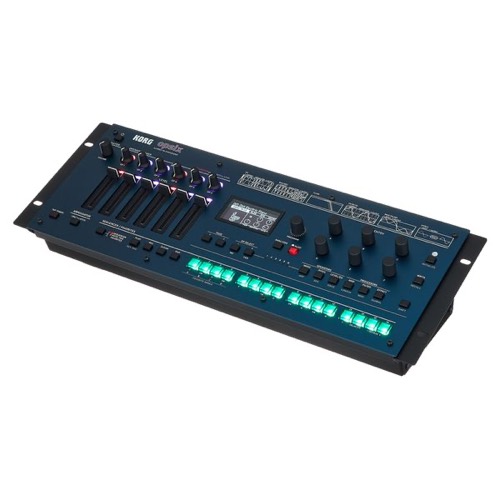
opsix module
Best FM Synth
Korg opsix module
Price history
We have been recording this product's price at its dealers since July. Player members see the 90-day trend, what it has been at its highest and lowest, and whether today is actually a good day to buy it.
Six-operator FM, which is the same architecture as the classic DX7, with the parts that made the DX7 miserable to program replaced. Korg calls it Altered FM: 40 preset algorithms plus user algorithms, an operator mixer laid out like a small mixing desk, and 11 filters including MS-20 and Polysix models sitting after the FM engine. There are three EGs, three LFOs and 12 virtual patches for modulation, three blocks of 30 effect types, and a 16-step polyphonic sequencer taking up to six notes per step with motion sequencing. This is the keyboard-less desktop module, so it needs a MIDI controller.
Why it made the list
FM is the sound most home producers cannot get from anything else they own, and it is the sound most of them give up on because programming it traditionally means editing numbers. The operator mixer is the fix: the faders show you what each operator is doing and let you move it, so FM becomes something you can dial in by ear. Choosing the module over the keyboard version also saves real money if you already own a controller, which most producers reading this do.
Deep Dive: Who It's Really For
The ideal buyer: Anyone who already has a MIDI controller and wants the one flavour of synthesis their setup is missing.
The honest caveat: No keyboard. Budget for a controller if you do not have one, and the saving disappears.
Worth knowing before you buy: The keyboard version of this instrument is now the opsix mk II. The original keyboard opsix is end of line, so buy the module or the mk II, not old stock.
▶ Featured Review
Video Reviews & Tutorials
Korg Opsix Module and Keystage Controller - All Playing, No Talking
Full Review
Korg OPSIX Review, tutorial and 10 patch ideas // 250 presets played // FM synthesis explained
Tutorial
Bad Gear - Korg OpSix
Review
Korg Opsix - All Presets (No Talking) | Thomann
Review
Pros
True six-operator FM made genuinely programmable 11 filters including MS-20 and Polysix models Deep modulation and a six-note-per-step sequencer Cheaper than the keyboard versionCons
No keyboard, so you need a controller FM is still the hardest synthesis to master Desktop format means shallow hands-on key control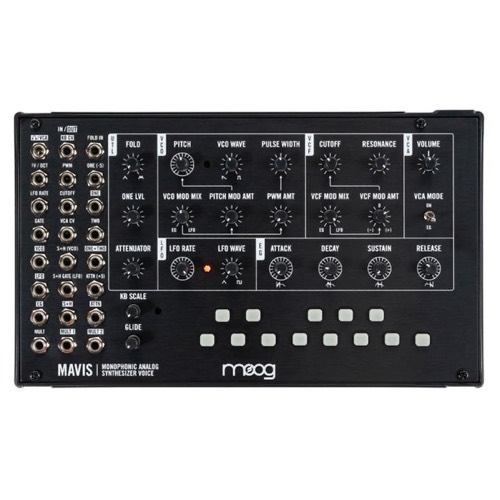
Mavis
Best Budget Pick
Moog Mavis
Price history
We have been recording this product's price at its dealers since July. Player members see the 90-day trend, what it has been at its highest and lowest, and whether today is actually a good day to buy it.
Mavis is a semi-modular analog monosynth built around Moog's own oscillator and filter circuits, with a diode wavefolder that was the first analog wavefolder Moog put in an instrument. It ships as an easy-to-assemble kit, works standalone thanks to its one-octave keyboard, and comes out of its case as a 24-point, 44 HP Eurorack module if you go further. At $299 it is by some distance the cheapest way onto this page.
Why it made the list
Semi-modular is the best way to actually learn synthesis, because the patch bay makes the signal path physical instead of abstract. Mavis works without a single cable plugged in, so nothing is gated behind understanding it, and every cable you add teaches you one more thing. The wavefolder is the bonus: it produces harmonically rich, slightly unhinged tones that a normal subtractive synth at this price simply cannot make.
Deep Dive: Who It's Really For
The ideal buyer: Someone buying their first analog synth, or a producer wanting a Eurorack toe-dip without committing to a case.
The honest caveat: The one-octave keyboard is a control surface, not a playable keybed, and one voice with no presets means nothing you make is saved.
▶ Featured Review
Video Reviews & Tutorials
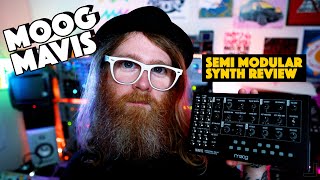
Best Beginner Synth?? Moog Mavis semi modular Review
Full Review
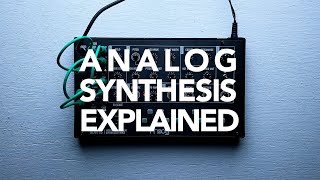
An Introduction to Analog Synthesizers (featuring Moog Mavis)
Review
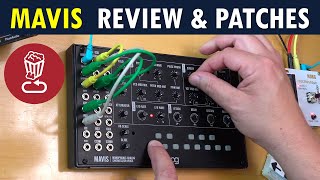
Review: MOOG's MAVIS goes west! // 18 modular and wavefolding patch ideas explored // Full tutorial
Tutorial
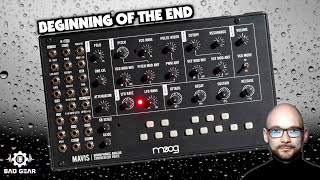
Bad Gear - Moog Mavis
Review
Pros
Real Moog oscillator and filter circuits Diode wavefolder for tones nothing else here makes Doubles as a 44 HP Eurorack module By far the cheapest entry pointCons
Monophonic with no patch memory at all One-octave keyboard is minimal Requires assembly out of the box