HX Stomp
☆ Top Pick
Line 6 HX Stomp
Price history
We have been recording this product's price at its dealers since July. Player members see the 90-day trend, what it has been at its highest and lowest, and whether today is actually a good day to buy it.
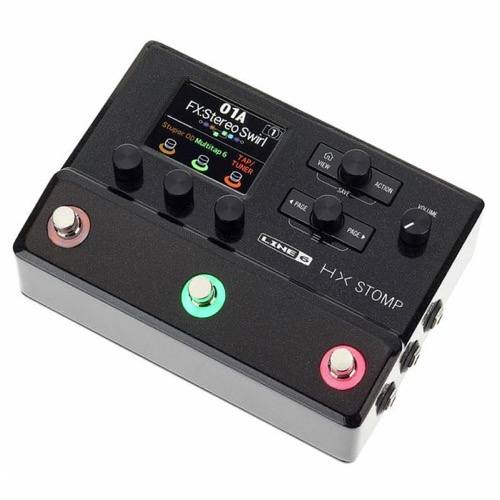
The HX Stomp runs the same HX modeling engine as the flagship Helix, in a chassis barely bigger than two stompboxes. Line 6 counts over 300 amps, cabs and effects drawn from Helix, the M-Series and the older Line 6 modelers, and you can chain up to six of them at once. A stereo effects loop makes four-cable-method rigs possible, the 2.4 inch color LCD keeps you out of menus, and the three footswitches are capacitive, so touching one jumps straight to that block.
It is also a 24-bit/96 kHz USB interface with DI and re-amping built in, which is the part that matters if you are recording at home rather than gigging. Plug a guitar in, record the dry DI and the processed tone at the same time, and you can change your mind about the amp next week without replaying the part.
Key Specs
- Over 300 amps, cabs and effects from Helix, M-Series and legacy Line 6
- Up to six simultaneous processing blocks
- 2.4 inch color LCD, three capacitive-touch footswitches
- Stereo effects loop for four-cable-method rigs
- 24-bit/96 kHz USB audio interface with DI and re-amping
- IR loading, extensive MIDI control
Why it made the list
Nothing else at this price puts flagship modeling in a box this small without cutting the engine down. The HX Stomp is not a lite version of Helix running simplified models: it is the same component and behavioral modeling, the same cab and IR engine, running on less DSP. What you give up is quantity, not quality, and that is a much better trade than the reverse.
At $599.99 it is the second most expensive pick here, and the one most likely to still be on your board in five years. Line 6 has shipped free firmware updates to this platform for years, adding models and features to a pedal people bought in 2018. That track record is worth real money on a device whose entire value is software.
Deep Dive: Who It's Really For
The ideal buyer: A home recordist or gigging player who already owns an amp they like and wants one pedal that covers everything else, or a producer who wants studio-grade guitar tone straight into a DAW with no mic, no room and no neighbors to consider.
The six-block limit, honestly: Six blocks sounds generous until you count. An amp, a cab, a drive, a delay, a reverb and a noise gate is six, and you are done. There is no room for the modulation you wanted, and the amp plus cab pair eats two of them. If you build dense rigs, look at the XL model or at the Boss units below, which have the headroom. If you build a handful of good sounds, six is plenty.
Recording with it: The USB interface is the sleeper feature. It presents multiple channels, so your DAW can capture the processed stereo tone and the untouched DI simultaneously. Re-amping later goes back out of the same box. For a bedroom setup, that removes the interface, the mic and the treated room from the equation, which is the whole reason a modeler beats a real amp at home.
▶ Featured Review
Video Reviews & Tutorials
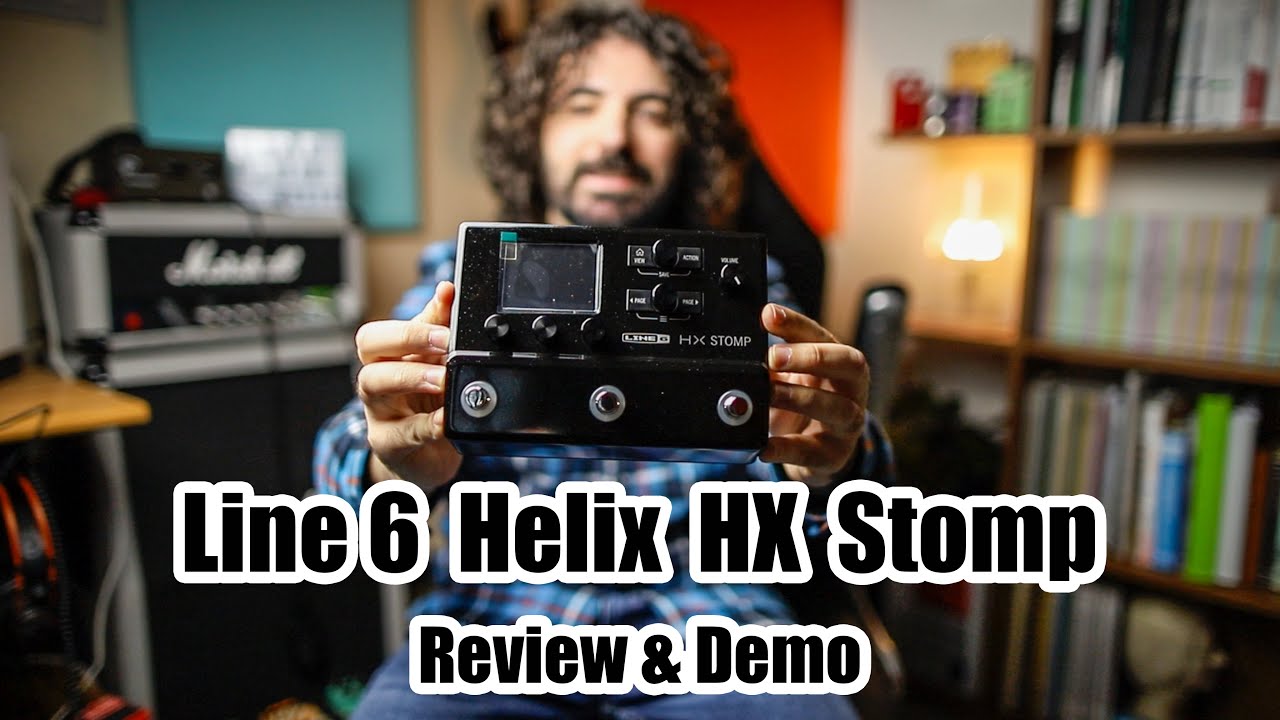
Line 6 Helix HX Stomp | Review & Demo
Full Review
Line 6 HX Stomp Demo
Sound Demo
Line 6 HX Stomp | Pete Thorn Unboxing and Demo
First Look
Pros
Same HX modeling engine as the flagship Helix Fits on any pedalboard, and runs a four-cable-method rig 24-bit/96 kHz USB interface with DI and re-amping Years of free firmware updates on the same hardwareCons
Six blocks runs out fast on complex rigs $599.99 is real money for a pedal this size Small screen means more scrolling than a floor unit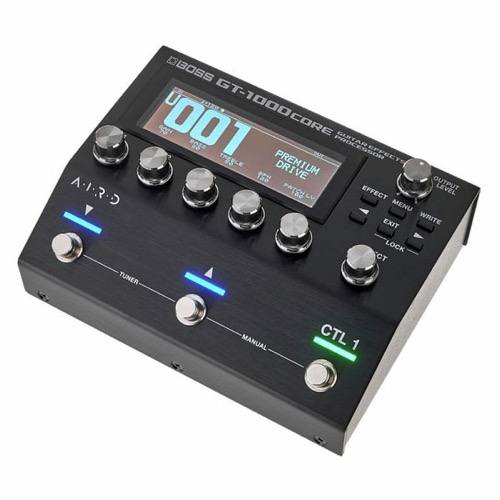
GT-1000CORE
Best for Pedalboards
Boss GT-1000CORE
Price history
We have been recording this product's price at its dealers since July. Player members see the 90-day trend, what it has been at its highest and lowest, and whether today is actually a good day to buy it.
The GT-1000CORE is the flagship GT-1000's processing put into a stompbox, and Boss did not cut the DSP to get it there. You get the same AIRD amp modeling, over 140 amp and effect types, and up to 24 simultaneous effect blocks. That last number is the reason to buy it: where the HX Stomp makes you choose, this one does not.
It is a multi-channel USB audio and MIDI interface as well, with a recording mode that offers built-in speaker and mic types and accepts your own WAV impulse responses. Three footswitches, dual effects loops and full MIDI mean it slots into a pedalboard as the brain rather than as another pedal.
Key Specs
- 32-bit AD/DA with 32-bit floating-point processing
- AIRD amp modeling, over 140 amp and effect types
- Up to 24 simultaneous effect blocks
- Three footswitches, dual effects loops, full MIDI
- Multi-channel USB audio and MIDI interface
- Custom WAV impulse response import
- Three AIRD bass preamps and eight bass overdrive types
Why it made the list
This is the pick for anyone who has hit a block limit and resented it. Twenty-four simultaneous blocks is more than most players will ever chain, and it changes how you build a patch: you stop budgeting and start experimenting. The 32-bit floating-point processing means the headroom holds up when you do.
The catch is the interface. There is no screen worth the name, so real editing happens on a computer or phone through the Boss app, and the learning curve is steeper than anything else here. At $659.99 you are paying for processing, not convenience. If you want to tweak on the floor, buy the GX-100 below instead.
Deep Dive: Who It's Really For
The ideal buyer: A player who already has a pedalboard and an amp they like, and wants one box to handle amp modeling, effects and the interface without taking over the whole board or the whole workflow.
GT-1000CORE vs HX Stomp: They cost within sixty dollars of each other and they are aimed at different people. Line 6 gives you the friendlier screen, the bigger third-party IR and preset community, and a model set most players find easier to dial in fast. Boss gives you four times the blocks, 32-bit floating-point processing and bass amp modeling that is genuinely good rather than an afterthought. Pick Line 6 if you want to work on the pedal; pick Boss if you want to work on the computer.
Bass players, read this one: Three AIRD bass preamps and eight bass overdrives is not a token gesture, and almost nothing else in this guide takes bass seriously. If you record both instruments, this is the one box that covers both properly.
▶ Featured Review
Video Reviews & Tutorials
Boss GT 1000CORE | Review | Tom Quayle
Full Review

Boss GT-1000Core - Sound Demo (no talking)
Sound Demo
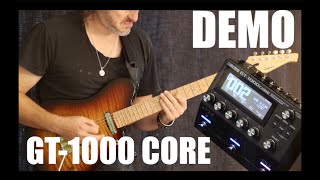
Boss GT-1000 Core Demo by Alex Hutchings
Playing Demo
Pros
Up to 24 simultaneous blocks, so you stop rationing 32-bit floating-point processing, flagship GT-1000 engine Genuinely good bass amp modeling, not an afterthought Dual effects loops and full MIDI for hybrid rigsCons
No usable screen: real editing happens on a computer or phone Steepest learning curve in this guide $659.99 with no expression pedal in the box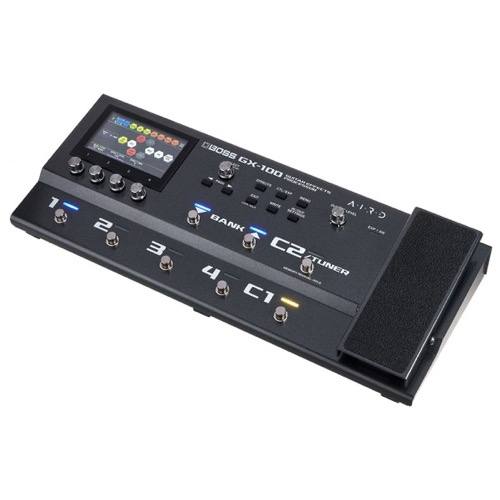
GX-100
Best All-in-One
Boss GX-100
Price history
We have been recording this product's price at its dealers since July. Player members see the 90-day trend, what it has been at its highest and lowest, and whether today is actually a good day to buy it.
The GX-100 is the GT-1000CORE's engine wrapped in the thing that pedal lacks: a color touchscreen, eight footswitches and an expression pedal with a toe switch. Boss lists 23 amp types and over 150 effects, derived from the flagship GT-1000, running at 32-bit floating point with 24-bit AD/DA at 48 kHz.
Everything is assignable. The footswitches ship set up for patch and bank selection plus per-patch control, and you can reassign any of them. For a player who wants to build and edit sounds standing up, at rehearsal, without opening a laptop, this is the one.
Key Specs
- 23 amp types and over 150 Boss effects, from the GT-1000 line
- AIRD amp modeling technology
- 24-bit AD/DA, 32-bit floating-point processing, 48 kHz
- Color touch display for on-the-floor editing
- Eight assignable footswitches
- Expression pedal with toe switch
Why it made the list
The touchscreen is the whole argument. Every modeler in this guide can make the sounds; the difference is how much friction sits between wanting a change and hearing it. On the GX-100 you touch the block you want and turn a knob. That sounds trivial until you have spent an evening scrolling a two-inch screen with your foot.
It is also the only pick here with an expression pedal built in, which is not a small thing: buying one separately costs real money and takes up board space. At $659.99 it prices the same as the GT-1000CORE, and for most players walking into this category cold, it is the easier recommendation of the two.
Deep Dive: Who It's Really For
The ideal buyer: A player replacing an amp and a pedalboard with one object, especially one who plays live and needs to change a sound between songs without a computer anywhere in the room.
The price has moved, and it is worth knowing: The GX-100 launched well under what it costs today. We read $659.99 on Amazon and $669.99 at Chuck Levin's the day this guide was written, both in stock. That is a real increase over its launch price rather than a sale ending, so do not wait for it to fall back to what an older review told you it cost.
What you give up versus the GT-1000CORE: Block count, mostly, and the flagship's 32-bit AD/DA converters drop to 24-bit here. Neither is audible in a mix at bedroom volumes. What you gain is an interface a human can use, and eight footswitches you do not have to buy separately.
▶ Featured Review
Video Reviews & Tutorials
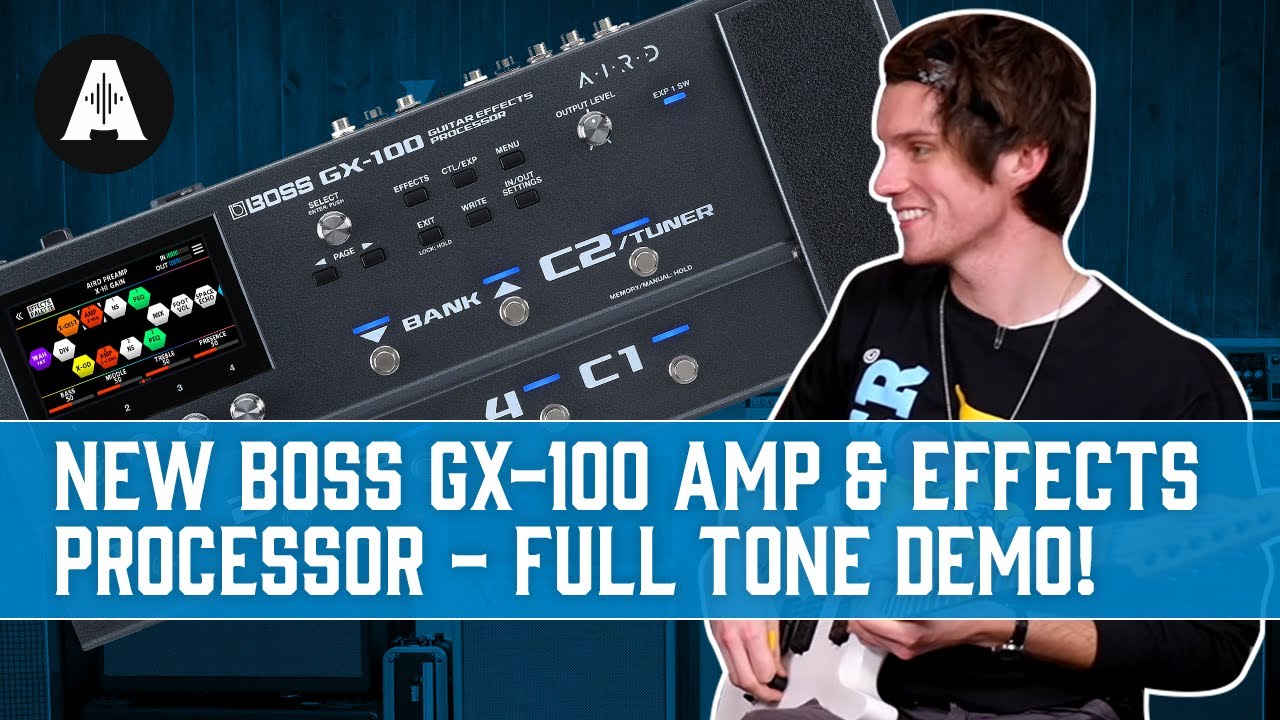
NEW Boss GX-100 Amp & Effects Processor - Full Overview & Tone Demo!
First Look
BOSS GX 100: Detailed Review (with demo song | vs real tube amps: Marshall Fender)
Comparison
![BOSS GX100 - WHAT WORKS & WHAT DOESN'T - Full Review With [FREE RIG DOWNLOADS!]](https://img.youtube.com/vi/4p2cEk-SW7w/mqdefault.jpg)
BOSS GX100 - WHAT WORKS & WHAT DOESN'T - Full Review With [FREE RIG DOWNLOADS!]
Long-term Review
Pros
Color touchscreen makes editing genuinely fast Eight assignable footswitches and an expression pedal included Amp and effect models derived from the flagship GT-1000 Works standalone: no computer needed at any pointCons
Big and heavy next to the stompbox-format picks 24-bit AD/DA rather than the GT-1000CORE's 32-bit Costs noticeably more now than at launchA note on prices
Prices in this category moved upward through 2025 and 2026, and several of these units now cost meaningfully more than the review you read last year says they do. Every figure on this page was read off a live retailer page the day it was published, and our tracker re-reads them daily, so the numbers here stay current even when the prose around them does not.
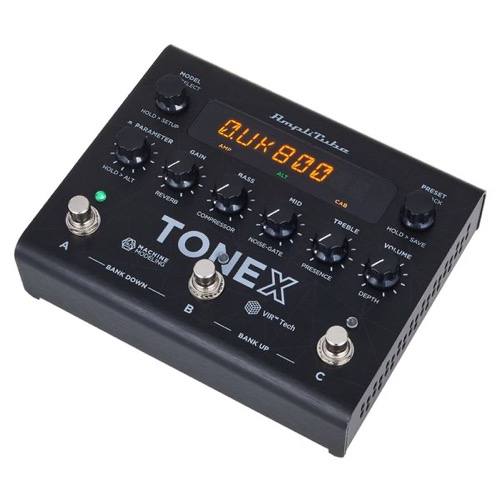
TONEX Pedal
Best Amp Captures
IK Multimedia TONEX Pedal
Price history
We have been recording this product's price at its dealers since July. Player members see the 90-day trend, what it has been at its highest and lowest, and whether today is actually a good day to buy it.
TONEX works differently from everything else here. Instead of modeling an amp circuit by circuit, it captures a specific amp as it sounded on a specific day, through machine learning, and plays that back. IK ships it preloaded with over 1,100 tone models, it holds 150 at a time, and ToneNET gives you thousands more made by other players, free.
Around the captures sit 15 effects: two delays, chorus, flanger, tremolo, phaser and rotary with tap tempo, six reverbs, a compressor and a noise gate, with seven FX blocks you can place before or after the amp and cab. Stereo outs, headphone out, USB and MIDI are all there, and the chassis is aluminum.
Key Specs
- Over 1,100 preloaded tone models, 150 loadable at once
- AI machine modeling: captures a real amp rather than simulating a circuit
- Free ToneNET library of community and artist captures
- 15 effects across seven assignable pre or post FX blocks
- Stereo outputs, headphone out, USB, MIDI in and out
- Aluminum chassis, power supply included
Why it made the list
At $329.99 this is the cheapest way to get a capture-based modeler that plays in the same league as the Kemper and Quad Cortex units costing four and five times as much. If your goal is one amp sound, exactly, and you would rather have that one than three hundred approximations, captures beat modeling every time.
The free ToneNET library is the part people underrate. Somebody has already captured the amp you want, often the exact rig from a record you like, and downloading it costs nothing. It turns a $330 pedal into an ongoing supply of new tones rather than a fixed set.
Deep Dive: Who It's Really For
The ideal buyer: A recording guitarist who knows what they want to sound like. Captures reward a specific target and punish browsing, so if you enjoy hunting for a sound you have not heard yet, a modeling unit will suit you better.
Captures versus modeling, plainly: A capture is a photograph of one amp at one setting. It is extremely accurate at that setting and it does not move: turning the virtual gain knob is not the same as turning the real one, because the real one was never turned. A modeled amp is a simulation of the circuit, so its controls behave like controls, at the cost of never being quite as exact as a good capture. Neither is better. They answer different questions.
What it is not: It is not a complete rig replacement in the way the Boss GX-100 is. The effects are decent rather than excellent, and there are seven FX blocks rather than twenty-four. Buy it for the amp sound and treat the effects as a bonus.
▶ Featured Review
Video Reviews & Tutorials
IK Multimedia ToneX Pedal: detailed demo / review (vs Friedman, Quad Cortex, Kemper)
Comparison
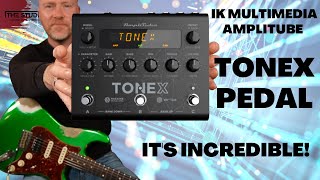
IK Multimedia TONEX PEDAL - It's Incredible!
Full Review
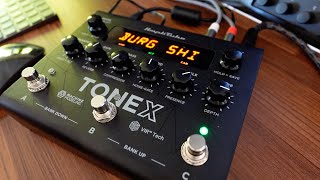
IK Multimedia: TONEX PEDAL. No-Chat Jam Demo
Playing Demo
Pros
Capture accuracy usually reserved for far pricier units Over 1,100 models included, thousands more free on ToneNET Cheapest serious modeler in this guide Aluminum chassis and a power supply in the boxCons
Captures are fixed: a virtual gain knob is not the real one Effects are adequate, not a reason to buy it Only 150 model slots, so you will curate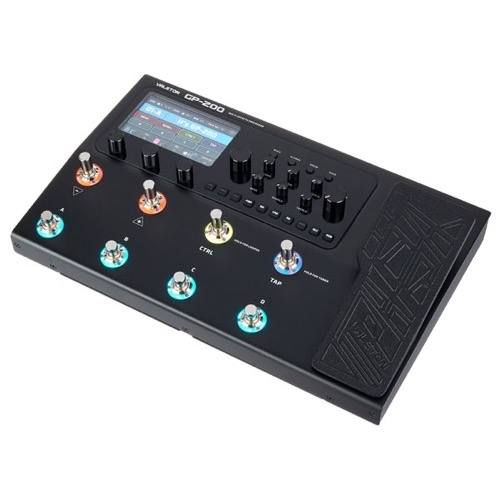
GP-200
Best Value
Valeton GP-200
Price history
We have been recording this product's price at its dealers since July. Player members see the 90-day trend, what it has been at its highest and lowest, and whether today is actually a good day to buy it.
The GP-200 is the cheapest thing here that does not feel like a compromise. Amp modeling, IR cabinet loading, a full effects set, an expression pedal, an FX loop, MIDI in and out, stereo I/O and a USB audio interface, in a floor unit costing about half what the Boss units do.
The models will not fool anyone against a real Soldano in a shootout, and the reviewers who have run that test say so. What they also say is that in a mix, at bedroom volume, through an interface, the gap closes to something most listeners will never hear.
Key Specs
- Amp modeling with IR cabinet simulation and custom IR loading
- Built-in expression pedal
- FX loop, MIDI in and out, stereo I/O
- USB audio interface for direct recording
- Guitar and bass signal paths
- Onboard looper and drum machine
Why it made the list
Around $315, the GP-200 gives a beginner every feature that matters and asks them to give up only the last ten percent of realism. That is the correct trade for a first modeler. Nobody learning to build patches needs a flagship; they need something that will not run out of features in six months, and this does not.
It also holds the highest review volume of anything in this guide by a distance, 997 ratings on Amazon at 4.6 and 186 at Thomann at the same figure. Two independent pools that size agreeing is stronger evidence than a glowing review from anyone, us included.
Deep Dive: Who It's Really For
The ideal buyer: Someone buying their first modeler who does not yet know which features they will care about, or an experienced player who wants a spare rig for rehearsals and does not want to carry six hundred dollars of pedal onto a bus.
Where the money went, and did not: The feature list is complete because features are cheap; the modeling is where the budget shows. Expect the high-gain sounds to be the weakest, as they are on almost every budget modeler, and the cleans and low-gain sounds to be genuinely fine. Loading a good third-party IR closes most of the remaining distance, and costs nothing.
Naming, because this catches people out: Valeton sells a GP-200, a GP-200LT and a GP-200R, and they are different units at different prices. The LT drops the expression pedal. Check which one a review or a listing is actually talking about before you buy from it.
▶ Featured Review
Video Reviews & Tutorials
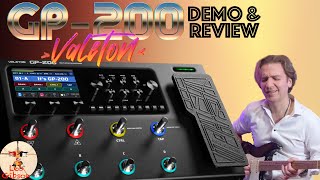
Valeton GP 200: demo and review (with comparison vs real Soldano, Plexi, Fender Deluxe)
Comparison
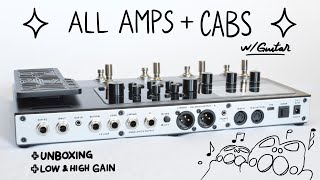
Valeton GP-200 Unboxing & Demo! | ALL AMPS and CABS w/ guitar | No talking/effects, RAW TONE review!
Sound Demo
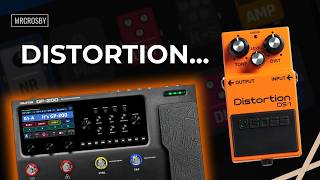
Distortion & Bass Overdrives - Valeton GP-200 ⚡️ Tone Test & Demo
Full Review
Pros
Every feature that matters, at roughly half the price Expression pedal, FX loop, MIDI and USB recording included Nearly 1,200 reviews across two retailers, all landing at 4.6 Custom IR loading closes most of the tone gap for freeCons
High-gain models are the weakest part, as usual at this price Easily confused with the GP-200LT and GP-200R No zZounds listing, so Amazon is the only retailer we link